Key Takeaway:
- Hybrid bike on trails offers a versatile, efficient ride on paved paths, gravel, and light off-road routes—bridging commuting comfort with casual adventure.
Hybrid bike on trails might sound unusual, but this versatile ride meets the needs of those who balance speed, comfort, and stability where pavement ends and gravel begins.
Whether you crave eco-friendly commutes or weekend explorations, understanding when and how hybrids shine will help you pick the perfect model for mixed-terrain fun.
Are hybrid bikes good for trails? That’s a question that’s been on the minds of many bikers lately. After all, hybrids are designed to be efficient and comfortable commuting vehicles, so they might not be ideal for tough off-road conditions.
Need a Few Practical Extras for Your Next Ride?
Browse cycling-related clothing and simple bike accessories that may help with comfort, visibility, storage, or everyday riding.
Paid links. As an Amazon Associate we earn from qualifying purchases.
However, there are a few hybrid models that have been specifically designed for trails, so it depends on the bike you choose.
In this article, we’ll take a look at the pros and cons of using hybrids for trails, and we’ll help you decide if this type of bike is right for you.

What is a Hybrid Bicycle?
A hybrid bicycle, as its name suggests, is a fusion of features from different bike types – primarily road and mountain bikes. This combination results in a bicycle that offers an impressive versatility. It allow the bike to adapt to various terrains and cycling conditions.
If you’re looking for a bike that can smoothly transition from city streets to country trails, a hybrid bicycle could be your perfect companion.
Key Features of a Hybrid Bicycle
- Optimized Tires: Unlike the knobby tires found on mountain bikes, hybrid bikes boast smoother, faster-rolling tires, similar to those found on road bikes. This feature makes them highly efficient on paved surfaces, facilitating a quicker, smoother ride.
- Wider Gear Range: Hybrid bikes come with a broader gear range than traditional road bikes. This expanded gear selection makes them well-equipped to handle the challenges of inclines and rougher terrains, similar to mountain bikes.
- Lack of Suspension Systems: Generally, hybrid bicycles don’t come equipped with advanced suspension systems. While this might make them slightly less comfortable on rocky trails compared to typical mountain bikes, it adds to their efficiency and lightness, making them more maneuverable and easier to handle.
- Versatile Design: The design of a hybrid bicycle is such that it accommodates both commuting and trails. Its upright seating position provides a comfortable ride over longer distances, while its robust hybrid bike frame design can withstand the demands of off-road trails.
Why Choose a Hybrid Bike for Trails?
If you’re an adventure enthusiast who seeks to conquer both city streets and challenging trails, a hybrid bike is a fantastic choice. Its unique combination of road and mountain bikes features not only makes it incredibly versatile but also caters to a wide range of cycling needs.
Whether you’re commuting to work, exploring the countryside, or taking on a challenging trail, a hybrid bike ensures that your journey is efficient, comfortable, and enjoyable.

Are Hybrid Bikes Good for Trails?
Yes and no. Hybrid bicycles are excellent for dirt roads, paved bike paths, gravel paths, and cobblestone streets.
On the one hand, hybrids are designed for efficiency and comfort, which makes them ideal for long rides on smooth surfaces.
On the other hand, some hybrid models have been specifically designed for trail riding, so they’re equipped with features that make them more capable to handle rough terrain.
Hybrid Bikes on Gravel
You bet! Hybrid bikes are a fantastic choice for riders who love to explore different terrains, and that includes gravel paths. While hybrid bikes are designed to be versatile, the type of hybrid bike and tire width will make a difference in how well it handles on gravel.
Hybrid bikes with wider tires (≥38 mm) provide better stability and traction on gravel surfaces. The larger surface area in contact with the ground gives you better grip and control. Additionally, hybrid bikes with front fork suspension will help absorb the impact of bumps and vibrations while riding on gravel paths.
Read also our article on gravel bike vs. hybrid bike
Hybrid Bikes on Grass
Yes, a hybrid bike can ride on grass. But here’s the catch — it depend on the length and thickness of the grass. Hybrid bikes are designed for a mix of on-road and light off-road use and can handle some uneven terrain.
If the grass is short and well-manicured, a hybrid bike with wider tires will have enough traction and control to ride comfortably. But, if the grass is long and thick, it can be challenging to ride a hybrid bike. In this case, a bike with knobby tires and a more aggressive geometry, closer to mountain bikes, would be more suitable.
Hybrid Bikes on Mountain Trails
While hybrid bikes are a great all-around bike, they are not the best choice for mountain bike trails. Mountain bike trails have more technical features, such as rocks, roots, and steep descents, which require a real mountain bike with specialized components.
Hybrid bikes are designed with a more upright riding position and have a lower gear range than road bikes, making them suitable for paved roads and light off-road trails. They are not equipped with the suspension, aggressive tires, and geometry needed for mountain biking.
If you’re interested in mountain biking, it’s best to invest in a dedicated mountain bike specifically designed for the terrain. It will provide you with the necessary components and geometry to tackle more challenging trails safely.
Ultimately, it’s up to you to decide if a hybrid bike is right for your needs. If you’re primarily interested in riding on trails, you might want to consider a mountain bike or a fat bike instead. However, if you’re looking for a versatile bike that can handle pavement and dirt, a hybrid is the answer.

Types of Hybrid Bikes
There are three main types of hybrid bicycles: Mountain bike-based, road bike-based, and commuter hybrid bikes.
Mountain Bike-Based Hybrids
These hybrids are the trailblazers of the hybrid bike family. Drawing significant design features from mountain bikes, they’re built to handle light off-road riding with grace and stability.
Typically, these hybrids sport wider tires for increased traction and control on uneven surfaces, making them a reliable companion on trails. Their sturdy frames and adaptable gear ranges further equip them to handle the rigors of off-road cycling.
Road Bike-Based Hybrids
Road bike-based hybrids blend the speed and efficiency of road bikes with the ruggedness of mountain bikes. These hybrids, often equipped with smoother, narrower tires, are designed for optimum performance on paved roads.
However, don’t let their road bike pedigree fool you. These bikes are perfectly capable of handling light off-roading, offering riders an opportunity to experience the thrill of easy trails without compromising on speed or efficiency.
Commuter Hybrid Bikes
The commuter hybrid bikes are the all-rounders of the hybrid bike world. They’re the embodiment of versatility, designed to serve multiple purposes from commuting to recreational riding.
With a balance of features from both mountain and road bikes, commuter hybrids deliver a comfortable, efficient ride on city streets while still being rugged enough to tackle weekend trail adventures. They often come equipped with features like mudguards and pannier racks, making them a practical choice for daily riders.
Summary: Types of Hybrid Bikes
| Type | Key Characteristics | Best For |
|---|---|---|
| Mountain Bike–Based Hybrid | – Wider, grippy tires – Sturdy frame – Often front suspension | Light off-road trails, gravel paths, beginner trail riding |
| Road Bike–Based Hybrid | – Narrower, smooth tires – Lightweight frame – Higher-gear ratios | Fast pavement rides with occasional light trail detours |
| Commuter Hybrid | – Balanced tire width – Accessories like fenders & rack mounts – Comfortable upright posture | Daily city commuting, errands, and weekend trail jaunts |



Research-Based Insights
Performance and Suitability
Research shows that hybrid bikes perform best on paved bike paths, carriage roads, and gravel trails, offering greater speed than mountain bikes while maintaining sufficient grip for safety (Bike Station, 2021). Specific hybrid models with front suspension or rigid forks are now designed to handle forest trails and rough landscapes, making them viable for less technical off-road riding. However, hybrids generally struggle on singletrack or steep terrain, where obstacles like roots and rocks can lead to discomfort compared to full-suspension mountain bikes.
Trail Impact and User Experience
Comparing mountain biking versus hiking impacts indicates that mountain biking—even on hybrids—causes limited trail widening and deepening, suggesting a relatively low environmental footprint when riders stick to appropriate surfaces. User surveys reveal mixed perceptions: some praise the versatility and speed of hybrids on smoother trails, while others stress the necessity of mountain bikes for demanding routes.
Safety and Health Aspects
While e-MTB research (Hall et al., 2021) highlights that electric bikes deliver health benefits similar to traditional cycling and improve accessibility, hybrid bikes without suspension can increase wrist and back strain on rough trails. Riders seeking comfort on mixed terrain should consider suspension seatposts or models with front fork dampening to reduce physical fatigue.

Difference Between a Hybrid and a Mountain Bike

Frame Geometry
Hybrid bikes are designed with an upright riding position in mind. This helps reduce strain on the rider’s neck and shoulders, making it comfortable for longer rides or commutes. The frame of a hybrid bike is typically lighter than a mountain bike frame, contributing to its efficiency on paved paths and light trails.
Mountain bikes, conversely, have a more aggressive frame geometry, designed to handle rough trails. They position the rider in a way that offers the best control and maneuverability over rocky or steep terrains.
Bike Tires
One of the biggest differences between hybrid bikes and mountain bikes is the tires. Mountain bike tires are wider and have more tread, making them better suited for off-road riding.
Hybrid bike tires are narrower and have less tread, making them more efficient on pavement. However, some hybrid bikes have tires that are just as wide as mountain bike tires, making them more capable in rough terrain.
Suspension
Most hybrid bikes don’t have suspension (suspension fork and rear suspension), particularly those leaning more towards the road bike spectrum, making them less comfortable on bumpy trails.
Some hybrid models, especially comfort hybrids, might feature front suspension to handle bumps on light trails or uneven city streets.
Mountain bikes often feature front and sometimes rear suspension to absorb shock from rough terrains, enhancing rider comfort and control. Suspension travel (the amount of movement in the suspension) can vary significantly on mountain bikes, depending on their intended use.
However, suspension can add weight and complexity to a bike, so it’s not always ideal for commuting or long rides on pavement.

Handlebar Position
Mountain bikes have handlebars positioned higher than the seat, which puts the rider in a less aerodynamic position.
Hybrid bikes have handlebars that are positioned lower than the seat, which makes them more efficient on pavement. However, some hybrid bikes have handlebars as high as mountain bike handlebars.
Long Distance Riding
Mountain bikes are not as efficient as hybrid bikes on pavement, so they’re not ideal for long-distance riding.
Hybrid bikes are more comfortable than mountain bikes for long rides on paved roads. However, some hybrid bike models have been specifically designed for comfort, so they might be as comfortable as a mountain bike on rough terrain.
Brakes
Both hybrid and mountain bikes usually come equipped with disc brakes (mechanical disc brakes or hydraulic disc brakes), known for their reliable stopping power in various weather conditions. However, some lower-end hybrid models may use rim brakes, which are lighter but might perform less effectively in wet conditions.
Gears
Hybrid bikes offer a wide gear range, often have gearing more similar to road bikes. This makes them ideal for efficient riding on flat or moderately inclined surfaces but might be less suited to steep hills, rugged trails.
Mountain bikes also have a wide range of gears to handle varied terrains, from steep uphill climbs to fast descents. Their gear systems are designed to withstand the rough conditions of off-road trails.
Summary: Difference Between a Hybrid and a Mountain Bike
| Feature | Hybrid Bike | Mountain Bike |
|---|---|---|
| Frame Geometry | Upright, comfort-focused; lighter for efficiency | Aggressive, control-focused; robust for rough trails |
| Tires | Narrower, smoother tread (28–45 mm) | Wider, aggressive tread (2.1–2.5 in) |
| Suspension | Often rigid or front only (≤ 80 mm travel) | Front and/or rear; higher travel (100–160 mm+) |
| Handlebar Position | Mid-height/drop-house; comfort and visibility | Higher/flat bars; more leverage and control |
| Riding Posture | More upright; reduces neck/back strain | Forward-leaning; optimized for stability on descents |
| Terrain Suitability | Paved paths, gravel, light dirt trails | Technical singletrack, roots, rocks, steep descents |
| Weight | Lighter (10–14 kg) | Heavier (13–18 kg+) |
| Gear Range | Wide range but geared toward flat/moderate grades | Wide range geared for steep climbs and quick drops |
| Brakes | Often mechanical or hydraulic disc | Typically hydraulic disc for stronger, consistent stop |
| Primary Use-Case | Commuting, fitness rides, mixed-terrain recreation | Off-road trail riding, technical mountain biking |
Read also our article on mountain bike vs hybrid bike.

Tips To Making Your Hybrid Bike More Suited For Off-Road Trips
If you’re planning on taking your hybrid bike on more off-road trips, you can do a few things to make it more capable.
1. Reduce Tire Pressure
Reduced tire air pressure in your tires will give you more traction and make it easier to ride on rough trails.
2. Install Wider Tires
Installing wider tires will give you more traction and make your hybrid bike more capable in rough trails.
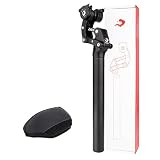
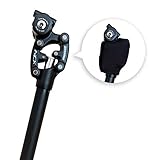
3. Install a Suspension Seatpost
A suspension seatpost is like a shock absorber for your bike, allowing you to glide over rough terrain without feeling every bump and vibration. It’s especially handy on rocky or uneven terrain where bumps can cause discomfort or even injury. Plus, it can make your ride smoother, making it easier to focus on the trail ahead.

4. Avoid Jumps and Rocky Trails
A hybrid bike’s suspension, if any, is not designed for jumping, so avoid doing any big jumps on your hybrid bike. Avoid any trails that are too rocky or have large roots, as these can damage your bike.
Get Better At Off-Road Trails
The best way to make your hybrid bike more capable on off-road trails is to get better at riding them. Practice makes perfect, so the more you ride, the better you’ll become at navigating rough terrain.
Road Bike vs. Mountain Bike vs. Hybrid Bike: Which is Best For You?

The type of bike you choose should be based on the kind of riding you want.
If you’re mostly riding on pavement, a road bike or hybrid bike is a good choice.
If you’re planning on doing more off-road riding, a dedicated mountain bike is a better choice.
The best way to decide which type of bike is right for you is simply trying out all three and seeing which you like best. There’s no substitute for getting out there and riding!
Frequently Asked Questions
Can I ride hybrid bikes in the woods?
A hybrid bike can be used to ride on pavements, dirt trails, and gravel paths. It is versatile and can be ridden in various terrain, including the woods. However, they’re not as capable as mountain bikes.
Is a hybrid bike good for mountain biking?
A hybrid bike is also an excellent way to get started with mountain biking by riding your local city bike park.
What is a hybrid bike suitable for?
A hybrid bike is a cross between a mountain bike and a road bike. They’re suitable for riding various terrains on paved surfaces, dirt paths, and gravel.
How do mountain bike-based hybrids perform on trails?
Mountain bike-based hybrids are designed to perform well on trails. They have wider tires for better control and grip on uneven surfaces, and their sturdy frames and versatile gear ranges allow them to handle the rigors of off-road cycling.
Are hybrid bikes good for long-distance trail rides?
Yes, hybrid bikes are suitable for long-distance trail rides. Their comfortable upright riding position reduces strain over longer distances, and their blend of features from road and mountain bikes ensures efficiency and stability on varied terrains.
How does a road bike-based hybrid perform on trails?
While road bike-based hybrids are primarily designed for paved surfaces, they can handle light off-roading. Their narrower, smoother tires may not offer as much traction on uneven surfaces, but their lightweight frames and efficient design allow for a smooth ride on mild trails.
What makes a commuter hybrid bike good for for trails and city streets?
Commuter hybrid bikes balance features from both road and mountain bikes, providing a comfortable, efficient ride on paved streets and the durability to tackle light trails. Features like mudguards and pannier racks also make them a practical choice for daily commuting and recreational riding.
Are hybrid bikes good for trails for beginners?
Hybrid bikes can be an excellent choice for beginners due to their versatility and ease of handling. Their combination of road bike speed, mountain bike stability, and comfortable riding position make them a great introductory bike for those starting to explore trail riding.
Final Thoughts: So Are Hybrid Bikes Good For Trails?
Yes, hybrid bikes can be ridden on trails. However, they’re not as capable as mountain bikes. If you’re planning on doing more off-road riding, a proper mountain bike is a better choice.
No matter what type of bike you choose, the best way to get better at riding is to simply get out there and practice!