Best Mountain Bike Brakes in 2026
- Best for All-Style Riding: Shimano SLX M7100
- Best for Trail Riding: SRAM Unisex’s Guide T Front
- Best Budget: Shimano Deore M6100
- Best Caliper Option: Magura MT Trail Sport
- Best for All-Mountain: Shimano Deore XT M8100
- Best for Cross Country Racing: SRAM Level Ultimate
- Best for Rugged Terrain: SRAM Code RSC
- Best for Downhill: SRAM G2 Ultimate
- Best for Technical Riding: Magura MT7
- Best for Cross Country Riding: Magura MT5
Best mountain bike brakes help you ride steep trails, loose corners, and long descents with more control. If your current brakes feel weak, noisy, vague, or tiring on your hands, the right brake set can make your bike feel safer and easier to manage.
Mountain bike brakes allow bikers to enjoy rides at impressive speeds.
Without brakes, riders would be too scared to accelerate downhill for fear of losing control and crashing.
If you ride trail, enduro, XC, or rough mixed terrain, you need reliable stopping power, smooth modulation, and a setup that matches your riding style. You also need brakes that fit your frame, fork, rotor size, and mounts.
Need a Few Practical Extras for Your Next Ride?
Browse cycling-related clothing and simple bike accessories that may help with comfort, visibility, storage, or everyday riding.
Paid links. As an Amazon Associate we earn from qualifying purchases.
Here are the 10 best mountain bike disc brakes. Browse through and see which one fits you best.
Quick Decision Tree: Which MTB Brake Type Fits You?
Use this before you buy.
Choose trail / all-round brakes if you:
- ride mixed terrain
- want a balance of power and control
- care about value and easy setup
Choose enduro / downhill brakes if you:
- ride steep descents
- brake hard and often
- want more power, more heat control, and usually 4-piston calipers
Choose XC brakes if you:
- care more about low weight
- ride long distances
- want enough power without adding too much bulk
Still unsure?
- If your hands get tired on descents, look at stronger 4-piston brakes.
- If your bike feels fine except on long descents, try bigger rotors first.
- If your brakes feel weak because they rub, squeal, or fade, you may need pads, a bleed, or rotor changes before a full brake upgrade.
Comparison Table: Best Mountain Bike Brakes at a Glance
| Brake Model | Best For | Brake Feel | Piston Setup | Fluid | Good Match |
|---|---|---|---|---|---|
| Shimano SLX M7100 | All-style riding | Balanced and easy to control | 2-piston | Mineral oil | Trail, light all-mountain |
| SRAM Unisex’s Guide T Front | Trail riding on a budget | Smooth and steady | 4-piston | DOT | Trail riders wanting value |
| Shimano Deore M6100 | Budget upgrade | Predictable and simple | 2-piston | Mineral oil | Newer riders, budget trail builds |
| Magura MT Trail Sport | Front/rear mixed setup | Strong front bite, lighter rear feel | 4-piston front / 2-piston rear | Mineral oil | Trail riders who want balance |
| Shimano Deore XT M8100 | Fast trail / all-mountain | Light, crisp, clean lever feel | 2-piston | Mineral oil | Riders who value low weight and control |
| SRAM Level Ultimate | XC racing | Light and precise | XC-oriented hydraulic setup | DOT | Race-focused XC riders |
| SRAM Code RSC | Rugged terrain | Powerful with strong control | 4-piston | DOT | Enduro, bike park, rough terrain |
| SRAM G2 Ultimate | Downhill / aggressive trail | Stronger than light trail brakes, still easy to tune | 4-piston | DOT | Aggressive trail, light gravity use |
| Magura MT7 | Technical riding | Very high power | 4-piston | Mineral oil | Steep, technical descents |
| Magura MT5 | Powerful value option | Strong and stable | 4-piston | Mineral oil | Trail, enduro, heavier riders |
Note: SRAM states that current Guide, G2, Level, and Code DOT systems use DOT 5.1 or DOT 4 brake fluid. Shimano SLX M7100 and XT M8100 2-piston brakes are positioned around lighter XC/trail use, while Shimano’s 4-piston options are the more downhill-focused versions. MAGURA markets the MT5 toward trail, enduro, and E-MTB use, and the MT7 Pro toward enduro and gravity-focused control.
Compatibility Checklist Before You Buy
Check these first so you do not buy the wrong brake set.
- Rotor size: 140 mm, 160 mm, 180 mm, 203 mm
- Mount type: post mount or flat mount
- Frame and fork clearance: make sure your frame and fork support your chosen rotor size
- Front or rear brake orientation
- Hose length
- Brake fluid type: mineral oil or DOT
- Pad shape and rotor compatibility
- Lever clamp or cockpit fit
- Adapter needs for bigger rotors
Simple rule:
If you want more power, do not look at calipers only. Check rotor size, mounts, and fit first. A brake upgrade that does not fit your bike is not an upgrade.

27,207
Customer Reviews

17
Testing Hours

10
Tested Products

15
Sources Researched
- Best Mountain Bike Brakes in 2026
- Quick Decision Tree: Which MTB Brake Type Fits You?
- Comparison Table: Best Mountain Bike Brakes at a Glance
- 10 of the Best Mountain Bike Brakes
- Types of MTB Brakes
- How to Choose the Right Brake for Your Riding Style
- What to Look for When Buying MTB Brakes
- 2-piston vs 4-piston
- Should you upgrade rotors first or brakes first?
- Most Commonly Asked Questions
- Can you mix Shimano and SRAM brakes?
- Are SRAM and Shimano brakes better?
- What are the best MTB rotors?
- Why are hydraulic brakes often considered the best choice for mountain biking?
- How do I maintain my mountain bike brakes for best performance?
- Is it possible to upgrade my mountain bike with better brakes?
- Are there significant differences between popular mountain bike brake brands like Shimano and SRAM?
- Conclusion
10 of the Best Mountain Bike Brakes
Shimano SLX M7100
Best for All-Style Riding: Made to fit the rider who wants to try a bit of everything
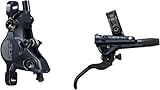
- Aluminum lever and caliper material
- 2-piston brake caliper
- Post mount type
- Adjustable reach lever
- Mineral oil
The Shimano SLX M7100 lever has an adjustable reach and contact point. It has a stiffer brake lever design that provides additional support for the adventurous rider.
Servo wave technology delivers a quick braking response. Downhill gives a solid and stable stopping power. There is a uniform contact point. Deceleration is smooth and consistent.
Modulation is excellent. It is easy to control the brakes, even on wet and slippery rocks. It comes with metal pads that can last more miles of riding.
This is an outstanding brake with a lovely tag price.
Why this pick makes sense: The SLX M7100 works well for riders who want one brake set for mixed riding. It is not the strongest gravity brake in this list, but it gives a nice mix of control, price, and easy ownership. Shimano also describes the M7100 2-piston setup as a lightweight, reliable option with quick and easy assembly, which helps explain why it feels like a smart all-round choice rather than a pure downhill pick.
May not be best for: heavy riders doing long, steep descents every ride
SRAM Unisex’s Guide T Front
Best for Trail Riding: Ideal brake for trail riders on a limited budget

- Direct mount
- Steel-backed organic pad
- 4-piston dual-diameter caliper
- S4 caliper with Bleeding Edge and Heat Shield technologies
- DOT brake fluid
The quad-calipers with bleeding edge and heat shield technology deliver good modulation. These SRAM brakes do not give you that strong and fast braking power on descents. But it does provide consistent deceleration.
The four-piston dual-diameter caliper is weight-saving. This helps reduce the overall weight of the bike, making it more convenient for climbs.
The brake lever is a simple direct link model. Pulling on the lever compresses the piston directly without a cam.
Setting up the brake is fast and convenient. This SRAM braking system can be routed internally.
Why this pick makes sense: Guide T is a fair pick for riders who want a trail brake with 4-piston stopping support without jumping to a higher price tier. SRAM’s service information confirms it as a hydraulic MTB brake using DOT fluid. It is a better fit for trail riders who want steady power and decent value than for riders chasing top-end downhill force.
Skip it if: you want the strongest brake here for long gravity runs
Shimano Deore M6100
Best Budget: Affordable and reliable
No products found.
The Shimano Deore M6100 provides high performance without creating a hole in your pocket.
These brakes deliver consistent power and uniform deceleration times.
With Shimano’s servo wave technology, the pads move quickly to the rotor contact point even with minimal lever pull. This provides for a broader range of lever stroke while the pads are on the surface of the rotors. Thus, better modulation.
On steep terrain, the Shimano Deore is still able to deliver excellent braking power. Even with a heavier load on the brakes, the brake power is still easy to modulate, and the bite point remains consistent.
Overall, this is an excellent brake at this price point.
Buyer note: This is a smart choice if your stock brakes feel weak and you want a simple upgrade without spending too much. It will not replace a true gravity brake for hard enduro use, but it gives many riders the value sweet spot.
Magura MT Trail Sport
Best Caliper Option: Excellent control and modulation for trail rides
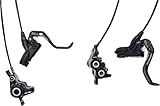
- 4-piston front caliper & 2-piston rear caliper
- MagnetiXchange piston
- Carbotecture composite
- Aluminum 1-finger HC lever
- Recommended rotor: Storm HC
Magura’s MT Trail Sport strikes the perfect balance between trail-shredding power and everyday affordability. The four pistons up front deliver confident bite on steep pitches, while the two-piston rear unit keeps overall weight in check.
You’ll love the short, one-finger HC lever—it lets you feather braking force precisely without sacrificing safety or comfort. Swapping pads is a breeze thanks to MagnetiXchange pistons, so you can stay on the trail instead of in the workshop.
Whether you’re railing berms or tackling tight singletrack, the MT Trail Sport gives you Magura’s signature modulation and fade resistance without breaking the bank.
Why riders may like this setup: The mixed front/rear design suits trail riders who want stronger front-wheel braking without making the whole system feel too heavy or too harsh. That makes this a useful middle ground for riders who want more than a light XC brake but less bulk than a full gravity setup.
Shimano Deore XT M8100
Best Brakes for All-Mountain: Light, crisp brake for fast trail and all-mountain riders who care about control

- Post type mount
- Mineral oil
- 2 caliper-piston
- Aluminum lever
The Deore XT delivers powerful braking performance in all conditions.
The twin-piston is light making it easier to ride hilly terrain. The brake provides a forceful, fast, and precise bite. It also comes with servo wave technology. This allows better modulation and a cleaner brake feel.
The levers look sleek and are highly ergonomic. Assembly is quick and easy. It has banjo type connection and inside hose routing.
Overall, this is a great brake for the general mountain rider.
Why this section changed: Shimano’s official M8100 2-piston brake pages frame this model around reduced weight and XC-tuned stopping feel. So it makes more sense to present it as a light, fast trail/XC-adjacent brake than as a budget all-mountain powerhouse. Riders who want more downhill power should compare it with 4-piston options instead.
SRAM Level Ultimate
Best for Cross Country Racing: Ultra-light, precise and tough

- Lever: carbon
- Lever Adjustability: reach
- Actuation: hydraulic
- Caliper: 4-piston, forged aluminum
- Mount Type: post
The SRAM Level Ultimate delivers unrivaled performance on the trail while keeping weight low for race-minded riders.
SRAM focused on making this brake model as slim and as light as possible. Both the caliper and the lever have slim designs. The direct link carbon lever comes with a carbon fiber blade and titanium bolt kit.
Despite the lightness, the Level Ultimate still comes with the same powerful brake as heavier models.
On the trail, these brakes work with pinpoint precision. The bite point is always consistent. Lever action is always precise, resulting in smooth and uniform deceleration.
Overall, its power and modulation stand out for XC use.
Buyer note: This is the kind of brake you buy when low weight, clean lever feel, and race-day control matter more than max downhill force. It is not the best match for repeated long descents with a heavy rider or loaded bike.
SRAM Code RSC
Best for Rugged Terrain: A complete package with outstanding performance

- Four phenolic plastic pistons
- Steel-backed metal sintered type
- Bleeding edge design
- Post mount type
- DOT brake fluid
With the perfect balance of power and modulation, the SRAM Code RSC delivers maximum braking force without locking the wheel.
The lever looks sleek. It has a tool-free adjust and a contact adjuster. Also, SRAM’s Swing Link and Pivot Bearing Technologies give the lever a smooth and progressive feel. This is regardless of how hard you pull on the lever.
On trails, the Code RSC has a smooth and uniform bite point. Even on long descents, its power and modulation remain consistent.
This brake can handle long, heavy-duty braking with the added 15% extra piston power and 30% volume in the lever reservoir.
This is the ultimate brake for lovers of rugged and technical trails.
Buyer note: If you ride steep, rough trails and want a brake that stays calm under repeated hard braking, this type of model makes more sense than lighter trail brakes. SRAM lists Code in its DOT brake family, which fits its gravity-ready reputation.
SRAM G2 Ultimate
Best for Downhill Riding: Powerful and durable for long rides or extended descents

- Four-piston caliper
- Carbon-fiber lever blade & alloy body
- Titanium hardware
- Post mount type
- DOT brake fluid
SRAM pulled out all the stops with the G2 Ultimate—nicknamed the “Mini-Code” by testers. Every component is optimized for downhill performance, from the carbon lever blade and titanium bolts to the stiff two-piece caliper that resists flex under heavy loads.
You’ll notice the smooth yet powerful modulation the first time you squeeze the lever, and the pivot bearing keeps each lever stroke feeling crisp, even when your grip starts to tire. Despite its feather-light build, the four-piston setup bites harder than many heavier brakes, giving you the confidence to blast through rock gardens and hairpin turns.
Quick-reach and bite-point adjustments let you dial in your perfect feel before each run. If you live for gravity-fed trails, the G2 Ultimate delivers premium stopping power in a surprisingly lightweight package.
Important trust fix: SRAM’s current documentation says G2 brakes use DOT fluid, not mineral oil. That correction matters because using the wrong fluid can damage seals and make a brake unsafe.
This is a better fit for aggressive trail and lighter gravity use than for riders who want the absolute biggest, burliest downhill brake possible.
Magura MT7
Best for Technical Riding: A brake that defies gravity

- 4-piston brake caliper
- Carbon fiber assembly
- Customizable levers
- Tool-free reach adjust
- Mineral oil
The Magura MT7 demonstrates the efficiency of German technology at its best.
The carbotecture levers are light but durable. It is designed to promote both comfort and efficiency. It also comes with a reach and bite-point adjuster.
On the trail, the Magura MT7 delivers an insane amount of power. The two independent sets of magnetized brake pads allow the caliper body to be braced instantly. This makes an emergency stop possible even while speeding downhill.
Modulation is great. Subtle flicks on the lever trigger a smooth response from the brakes. Deceleration is gradual and consistent.
This is a magnificent brake fit for the daring rider.
Why this pick still works: MAGURA positions the MT7 Pro around maximum braking power, precise control, and enduro-focused use. That supports its place here as one of the strongest options for steep and technical riding.
Magura MT5
Best for Cross Country Riding: Reliable and powerful value pick

- Ergonomic, 2-finger, aluminum brake lever body
- Carbotecture housing and handlebar clamp
- Adjustable lever reach All-in-one
- 4-piston brake caliper with banjo
- Mineral oil
The Magura MT5 boasts power and precision at a bargain.
This brake is capable of slowing down the speed at a smooth and uniform pace even when exposed to water. Its performance in wet and dry conditions remains uniform, making it a good choice for all-terrain riding.
Its carbotecture levers carry an ergonomic design and are super light. It looks sleek and has a comfortable feel.
Modulation is great. It delivers consistent power even when braking late downhill and into corners.
This is a well-balanced brake made for riders who love to explore.
Why this section changed: MAGURA markets the MT5 as a strong 4-piston brake for trail, enduro, and E-MTB riders. That makes it a better value-power pick than a pure XC brake recommendation.

Types of MTB Brakes
Rim Brakes (V-Brakes)
V-Brakes, also known as rim brakes, are the traditional type of mountain bike brakes. They function by applying friction directly to the rim of the bike wheel.
These brakes have low weight, simple design, and are easy to maintain, which makes them a popular choice among casual riders and beginners. However, rim brakes have reduced stopping power in wet or muddy conditions and can lead to faster wear and tear on the bike rim.
Disc Brakes
Mountain bike disc brakes are the standard for most modern mountain bikes, offering superior stopping power and performance in various conditions. They work by applying friction to a rotor attached to the wheel hub, rather than the rim.
Mountain bike disc brakes are classified into two:
- Hydraulic mountain bike disc brake; and
- Mechanical mountain bike disc brake.
Mechanical Disc Brakes
Mechanical disc brakes, also known as cable-operated disc brakes, operate via a cable that activates the brake caliper. These brakes are generally more affordable and easier to maintain than hydraulic brakes.
However, they offer less modulation and require more manual force to achieve the same stopping power.
Hydraulic Disc Brakes
Hydraulic disc brakes use a sealed fluid system, much like the braking system in a car, to apply force to the brake caliper. These brakes offer the highest level of stopping power and excellent modulation, making them the preferred choice for serious mountain bikers and professionals.
They also require less manual force to operate than mechanical disc brakes. However, hydraulic disc brakes can be more expensive and require professional servicing when the hydraulic fluid system needs bleeding. They are also more reliable in terms of biking under unpredictable weather and terrain. This is because mechanical disc brakes tend to lose power when exposed to water and mud.
The type of mountain bike brakes in this section pertains only to hydraulic disc brakes.

How to Choose the Right Brake for Your Riding Style
Trail Riding
Most trail riders do best with a balanced brake. You want enough power for short descents, but you also want good control in corners and less hand strain. Trail riders often do well with a strong 2-piston brake or a moderate 4-piston brake.
Enduro and Downhill
If you ride steep descents, rough rock gardens, or long gravity runs, power matters more. This is where 4-piston brakes and larger rotors become more useful. You want strong bite, better heat control, and a brake that stays steady when you keep dragging or reapplying power on long descents.
XC Riding
XC riders often want lower weight and a clean lever feel. They still need power, but they do not always need the biggest caliper in this guide. A lighter brake can make more sense when speed, climbing, and long-distance efficiency matter most.
Heavier Riders or Loaded Bikes
If you are a heavier rider, ride an e-MTB, or carry more load, you may need stronger brakes or larger rotors even if your terrain is not extreme.

What to Look for When Buying MTB Brakes
Rotor size
The rotor sizes available on the market are:
- 140mm;
- 160mm;
- 180mm; and
- 203 mm.
Larger rotors are heavier but offer better power.
Smaller rotors are lighter and offer better modulation.
When riding downhill, larger rotors: those around 180mm to 203 mm is recommended. When rotors are larger, the braking surface is wider. This allows heat to dissipate more efficiently. A reduction in temperature delivers better braking power.
In cross-country riding, good modulation is essential. This is because of the varying terrain the rider is exposed to. With smaller rotors, the bite force and contact point are more consistent. This provides better control over the brakes with every lever movement.
Rotor size affects stopping power and modulation. So, it is crucial to choose your rotor size depending on the terrain and the kind of riding you do.
Many riders do the opposite: a larger front rotor and a smaller rear rotor. That setup often gives more front-wheel stopping power, which matters most in hard braking.
Pain point to remember: If your brakes feel weak, bigger rotors may solve the problem before a full brake swap does.
Brake pads
Mountain brake pads are categorized into three based on the materials used to manufacture them. The three types are:
- Organic pads: Superior modulation and quiet operation—best for dry conditions and riders focused on precise brake feel.
- Sintered metallic pads: Exceptional durability and heat management—ideal for wet weather and long descents, though they can be noisier.
- Semi-metallic pads: Balanced performance and wear rates—fits all-weather riding.
Organic pads are made from non-metallic components such as glass, carbon, rubber, and Kevlar. These pads have an excellent bite and create little braking noise. With these pads, rotor wear is slower. However, resin pads wear quickly.
Sintered brake pads are made of metallic fillers such as iron, steel, and copper. They provide efficient and powerful braking at high temperatures. These pads do not wear out quickly. The downside is that this type of brake pad material wears out the rotor fast. It also has poor bite when it is cold.
Semi-metallic pads are a mixture of organic and metal fillers. These pads exhibit a balance of the features of both the organic and sintered pads. Braking with a semi-metallic pad material is less noisy than metallic pads. However, it is not as quiet as an organic pad. Semi-metallic pads also have a decent performance in both cold and high temperatures.
Organic brake pads are good when riding flat terrain. They provide sufficient biting power and is cheaper.
If you like riding long rides and downhill rides, sintered pads are a better option. These brake pads deliver stronger and more consistent power even when wet. Moreover, it does not wear out immediately.
Semi-metallic pads are your best choice if you are into all-terrain riding. The balanced features of these pads make them more adaptable to varying terrain.
Overall, your choice of brake pads depends on the terrain where you intend to ride. It is also good to consider the weather and the kind of riding you intend to do.
2-piston vs 4-piston
This is one of the biggest buyer pain points.
- 2-piston brakes are often lighter and simpler. They work well for XC and many trail riders.
- 4-piston brakes usually give more power and better heat control. They suit steeper riding, heavier riders, and longer descents.
- Do not assume 4-piston is always better for everyone. If you ride mild terrain, a lighter 2-piston brake may feel better and cost less.
Brake fluid
A hydraulic braking system will not work without a brake fluid. The brake fluid is an essential component of the mechanism that transfers the force you apply on the lever to the caliper, pads, and rotor.
There are two main types of brake fluid:
- DOT fluid; and
- Mineral oil.
DOT is hygroscopic. It absorbs moisture from outside. This feature prevents the pooling of water anywhere in the braking system. DOT is also widely available and cheaper than mineral oil.
The biggest problem with DOT is that it is corrosive. Also, its ability to absorb water decreases its boiling point. This, in turn, can weaken its braking power.
Mineral oil is hydrophobic. Because of this nature, the boiling point of mineral oil remains constant. This makes stopping power consistent and reliable at all times. Also, mineral oil is non-corrosive and has a long shelf-life.
The disadvantage of mineral oil is that any water that enters the braking system will pool in the lower areas. This can result in a decreased boiling point of the entire braking system. If this happens, braking power is diminished. The water that pools on the lower end of the brake system may also cause corrosion of the calipers.
The choice of whether to use DOT or mineral oil actually does not depend on you. It depends on the type of brake set you buy.
Shimano, Magura, and TRP use mineral oil in their brake system. SRAM and Avid use DOT.
Always use the type of brake fluid recommended by the manufacturer. Using the wrong brake fluid may damage the entire braking system. SRAM’s official support says current Guide, G2, Level, and Code DOT systems use DOT 5.1 or DOT 4.
Before you buy, confirm these:
- pad and rotor compatibility
- post mount or flat mount
- front and rear rotor size limits
- adapter needs
- hose length
- whether the brake is sold as front, rear, or either
Should you upgrade rotors first or brakes first?
Try rotors or pads first if:
- your brake power is okay on short rides
- you only struggle on long descents
- your bike has very small rotors
- your current pads are worn or glazed
Try a full brake upgrade if:
- your current brakes feel weak even after service
- you want less hand fatigue
- you are riding steeper terrain than before
- you want more control at speed
Empirical Data on Braking and Performance
A study found mean brake power during simulated XC racing at 800.8 ± 216.4 W, with higher brake power correlating to faster lap times (r = –0.446, p < 0.05). Riders averaged 28.0 ± 6.4 s braking per lap, and longer brake time predicted slower laps (r = 0.477, p < 0.05). A combined braking–propulsion model explained 93.5 % of lap time variance (r² = 0.935) versus propulsion alone (r² = 0.826).
What this means for buyers: The best mountain bike brakes are not always the biggest or strongest ones. Riders also need control, timing, and a brake feel they can trust. In real life, the “best” brake is often the one that lets you slow down with less panic, less hand strain, and better corner entry.
Most Commonly Asked Questions
Can you mix Shimano and SRAM brakes?
The safer rule is this: do not mix parts unless you fully understand fluid type, hose fit, caliper design, and compatibility.
This is particularly true with SRAM and Shimano brake sets. SRAM brake sets use DOT 5.1 brake fluid. On the other hand, Shimano uses mineral oil.
Although SRAM’s DOT 5.1 is less corrosive than other types of DOT, it is still corrosive. Using this on a Shimano brake set can damage the entire brake system. This is because the Shimano brake system is manufactured to be mineral oil compatible.
Doing it the other way around can result in damage to the SRAM brake set. Since mineral oil is hydrophobic, the seals in the caliper of the SRAM brake set would fail.
So, mixing hydraulic brake components from Shimano and SRAM is a definite NO!
Are SRAM and Shimano brakes better?
SRAM and Shimano are two of the most dominant bike parts manufacturers. The majority of the bike components available in the market are from these two brands.
Many bikers have tested different models of brake sets from these brands. And the results are generally the same. Brake sets manufactured by these brands offer exceptional performance. It is excellent both in the area of presentability and functionality.
Overall, it might be safe to say that SRAM and Shimano brakes are better than most.
But brake set performance usually is on a model-to-model basis. Also, the type of riding should be considered. For example, in the case of downhill or technical riding, Magura manufactures brake set models that are on par with those by SRAM and Shimano.
Simple answer: Neither brand wins for everyone. Shimano often appeals to riders who want easy ownership and a familiar feel. SRAM often appeals to riders who want strong tuning options and powerful gravity-focused choices. The better brand is the one that matches your riding style, service comfort, and brake feel preference.
What are the best MTB rotors?
Some of the best MTB rotors are:
a. SRAM Centerline;
b. Shimano Deore XT M8000;
c. Shimano RT-86 Ice-tech;
d. Shimano Dura-Ace SM-RT900;
e. Hope floating rotor.
There are a lot of other outstanding mountain bike rotors in the market. It is tough to say which ones are the best. This is because how good a rotor performs affected by the other components of the brake set.
As a general rule, it is best to buy rotor brands from the same manufacturer of your brake set. This prevents any compatibility issues.
Also, it is vital to choose the type and size of your rotor based on your biking preferences.
Why are hydraulic brakes often considered the best choice for mountain biking?
Hydraulic brakes are often considered the best for mountain biking due to their powerful stopping ability and superior modulation. Unlike mechanical disc brakes or v-brakes, hydraulic brakes utilize a sealed fluid system, which reduces maintenance and offers consistent braking in all weather conditions, making them an ideal choice for rigorous mountain biking trails.
How do I maintain my mountain bike brakes for best performance?
Regular maintenance of your mountain bike brakes ensures optimal performance and longevity. This includes checking the brake pads for wear and replacing them when needed, bleeding the hydraulic system if your lever feel spongy, and keeping the brake discs clean and free of oil or dirt. Remember, the better you take care of your brakes, the better they’ll take care of you on the trails.
Is it possible to upgrade my mountain bike with better brakes?
Absolutely. Upgrading your mountain bike brakes is a worthwhile investment that can significantly improve your riding experience. Most modern mountain bikes can accommodate a range of brake systems, allowing you to customize your bike based on your performance needs and budget. However, always ensure compatibility with your bike frame and wheelset before purchasing new brakes.
Are there significant differences between popular mountain bike brake brands like Shimano and SRAM?
Shimano and SRAM are two leading brands in mountain bike brakes, and each has its own strengths. Shimano brakes are well-regarded for their reliability, ease of maintenance, and value for money. On the other hand, SRAM brakes are often praised for their high stopping power and modulation, especially in their high-end models. Both brands offer a range of options catering to different price points and riding preferences.
Conclusion
Brakes are a rider’s first line of defense against injuries. Without functional brakes, a fun ride can instantly turn into a tragedy.
Buying a brake should not only be based on what is cheapest. It is more important to think about where you plan to bike. Also, consider the type of riding you want to do.
If you are just planning to ride generally on flat terrain, then buying a budget brake would be fine. But if you have plans of riding steep descents and technical trails, it is best to purchase good enduro or XC brakes. If you are on a limited budget, it best to wait and save up. Your safety is not something you should be putting on a budget.
With all these, the Shimano SLX M7100 is the best all-style riding brake set – a quick braking response, solid and reliable stopping power with metal pads that ensure long-lasting use.
But the better way to choose is this:
- Pick a light, balanced brake if you ride XC or mixed trail.
- Pick a stronger 4-piston setup if you ride steep descents or want less hand fatigue.
- Check rotor size and mounts before you buy.
- Do not ignore pads, rotors, and maintenance. Sometimes the fix is smaller than a full brake swap.
To sum up, the essential thing to keep in mind when buying your mountain bike brakes is your safety.