Key Takeaway
- BMX vs Mountain Bike: BMX bikes excel in short, explosive tricks and races on smooth surfaces, while mountain bikes offer versatility, suspension, and endurance for off-road trails.
When deciding between a BMX vs mountain bike, understanding their core design and purpose is key for riders who seek both fun and function in urban and trail settings.
Okay, so maybe you’re not an avid cyclist, and you’re looking to get into biking, but you’re not sure where to start.
You might be wondering what the difference is between mountain biking and BMX. Well, wonder no more!
Need a Few Practical Extras for Your Next Ride?
Browse cycling-related clothing and simple bike accessories that may help with comfort, visibility, storage, or everyday riding.
Paid links. As an Amazon Associate we earn from qualifying purchases.
Here’s a breakdown of the key differences between the two types of cycling.

What is a mountain bike?

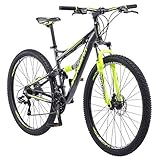
A mountain bike is, quite simply, a bicycle designed for riding on mountains.
Mountain bikes usually have wide knobby tires to provide grip and traction on uneven or loose surfaces, as well as front and rear suspension to absorb the bumps and jolts from rough terrain.
Mountain biking can be done recreationally (for enjoyment) and competitively (in races).



What is a BMX bike?

On the other hand, a BMX bike is a bicycle designed for racing on a dirt track.
BMX bikes are smaller and lighter than mountain bikes, with thinner tires and no suspension.
The lack of suspension makes them easier to maneuver, and the smaller size makes them easier to transport.
BMX racing is a highly competitive sport, and BMX bikes are not designed for recreational use.


What is the Difference Between a Mountain Bike and BMX?
The main differences between mountain bikes and BMX bikes are their purpose, design, and components.
Mountain bikes are designed for recreational or competitive riding on rough terrain, while BMX bikes are designed specifically for racing on a dirt track.
Mountain bikes have wide tires and suspension to absorb the bumps and jolts from riding on uneven surfaces, while BMX bikes have thin tires and no suspension for easier maneuverability.
Frame
The frame is the main structure of the bike, and it plays a big role in the overall performance and feel of the bike.
Mountain bikes have a wide variety of frame designs, but they all share some key features. Mountain bike frames are made from steel, aluminum, or carbon fiber, making them lightweight and durable.
BMX frames are made from either steel or aluminum, and they are often smaller and lighter than mountain bike frames. They can tolerate some bumps and jumps, but they are not designed for riding on rough terrain.
Geometry
The geometry of a bike is the shape and size of the frame. This plays a big role in how the bike handles and feels.
Mountain bikes have a geometry designed for stability and comfort on rough terrain. The frame is typically longer and wider, which gives the rider more control. The headtube angle is often slacker, around 63 to 66 degrees, which makes the bike more stable at high speeds.
BMX bikes have a geometry that is designed for agility and maneuverability. The frame is typically shorter and narrower, making the bike easier to maneuver. The headtube angle is often steeper, around 74 to 76 degrees, making the bike more responsive to steering input.
Wheels
Mountain bikes have larger wheels, usually around 29 inches in diameter. The large wheels provide more traction and stability on rough terrain. 26 and 27-inch wheels are also common on mountain bikes.
Mountain bike tires are wider than BMX tires, and they have deeper treads for more grip on loose or uneven surfaces. The tires are typically around 2.5 inches wide.
BMX bikes have smaller wheels, usually 20 inches in diameter. The small wheels make the bike more maneuverable and responsive. 18 and 24-inch wheels are also common on BMX bikes.
BMX tires are thinner than mountain bike tires, and they have shallower treads for less grip on loose or uneven surfaces. BMX tires are typically around 1.75 inches wide.
Brakes
Mountain bikes have either hydraulic disc brakes or mechanical disc brakes. Disc brakes provide more stopping power than rim brakes, and they are less affected by mud and water.
BMX bikes usually have V-brakes. V-brakes are less powerful than disc brakes but lighter and more responsive. Coaster brakes are also common on BMX bikes.
Suspension
The suspension absorbs the bumps and jolts from riding on rough terrain. Mountain bikes have suspension forks in the front, and some also have suspension in the rear.
BMX bikes do not have suspensions. This makes them easier to maneuver, and the smaller size makes them easier to transport.
Uses of a Mountain Bike
Mountain bikes are generally used for riding off-road and narrow trails. They are versatile and can be used for various activities, including trail riding, cross-country riding, and downhill riding.
- XC (cross-country) bikes: lightweight and designed to go fast on smooth terrain.
- All-mountain bikes: designed to tackle more technical terrain and include features such as longer travel suspension, burlier components, and a stronger frame.
- DH bikes: built for speed and sacrificing pedalling efficiency. They typically have the longest travel, slackest angles, and strongest components.
- Trail/Enduro bikes: a blend of XC and all-mountain bikes, these bikes are designed to tackle technical terrain while still being efficient enough to pedal up the hill.
- Fat bikes: essentially a mountain bike with extra-wide tires to provide greater traction and floatation over snow, sand, and other soft surfaces.
Advantages of a Mountain Bike
- Can be ridden on a variety of terrain
- More comfortable to ride than a BMX bike
- More stable and easier to control at high speeds
- Suspension absorbs bumps and jolts
Disadvantages of a Mountain Bike
- Heavier and less maneuverable than a BMX bike
- More expensive than a BMX bike
Uses of a BMX Bike
BMX bikes are generally used for riding on smooth surfaces, such as concrete and asphalt. They are also used for stunts, tricks, and jumps. Here are some of the most popular BMX types:
- Freestyle BMX: for performing tricks such as jumping ramps and doing grinds.
- Dirt Jumping BMX: designed for performing aerial tricks on dirt mounds.
- Racing BMX: built for speed and agility with small frames, one gear, and lightweight components.
- Flatland BMX: performing flatland tricks such as spinning and balancing on two wheels.
- Street/Park BMX: designed for street riding, grinding rails, and hitting jumps in skate parks.
Advantages of a BMX Bike
- More maneuverable than a mountain bike
- Less expensive than a mountain bike
- Lighter and more responsive than a mountain bike
Disadvantages of a BMX Bike
- Cannot be ridden on rough terrain
- Less stable and more difficult to control at high speeds
- Absence of suspension makes it less comfortable to ride
Summary Table: BMX vs Mountain Bike
| Aspect | BMX Bike | Mountain Bike |
|---|---|---|
| Primary Purpose | Short, explosive sprint races; tricks and jumps in skate parks or dirt tracks | Endurance riding on off-road trails, technical terrain, climbing and descending |
| Wheel Size | 20 inches (also 18 ″ or 24 ″ occasionally) | 26–29 inches (commonly 26 ″, 27.5 ″, or 29 ″) |
| Frame & Geometry | Small, lightweight steel or aluminum frame; steep head-tube angle (74°–76°) for agility | Larger, sturdier steel, aluminum, or carbon frame; slacker head-tube angle (63°–66°) for stability |
| Tires & Traction | Narrow (≈1.75 ″), shallow tread for maneuverability on smooth surfaces | Wide (≈2.2–2.5 ″), deep knobby tread for grip on loose, uneven terrain |
| Suspension | None (rigid frame) | Front suspension fork; many models also have rear shock (hardtail or full suspension) |
| Gearing | Single-speed | Multi-speed drivetrains (typically 24–27 gears) |
| Brakes | V-brakes or coaster brakes | Hydraulic or mechanical disc brakes |
| Typical Uses | Freestyle tricks, dirt jumps, flatland maneuvers, skate-park riding | Trail riding, cross-country (XC), all-mountain/enduro, downhill (DH), fat-bike riding, commuting |
| Physiological Focus | Peak power output (~200 W) in short (<5 s) explosive efforts | Higher sustained power and aerobic capacity (VO₂max 65.3–69.6 mL·kg⁻¹·min⁻¹); sustained efforts ≥15 s (5.8–6.3 W·kg⁻¹) |
| Cost & Maintenance | Generally less expensive, simpler maintenance; fewer components | Typically higher cost, more complex maintenance (suspension servicing, drivetrain upkeep) |
| Pros | Highly maneuverable; lightweight; affordable; excellent for tricks | Versatile on varied terrain; comfortable over bumps; stable at speed; suitable for long rides |
| Cons | Not suited for rough terrain or long distances; no suspension | Heavier; more expensive; requires regular suspension/drivetrain maintenance |

Physiological & Performance Differences
Studies comparing cyclists show that cross-country mountain bikers have higher aerobic capacities (VO₂max: 65.3–69.6 mL·kg⁻¹·min⁻¹) and anaerobic capacities (1.7–1.8 L), while BMX and downhill riders record lower VO₂max (52.4–55.3 mL·kg⁻¹·min⁻¹) and anaerobic capacity (0.9–1.3 L). Mountain bikers sustain higher mean power outputs for efforts ≥15 s (5.8–6.3 W·kg⁻¹), whereas BMX athletes deliver peak power (~200 W) in sprints under 5 s—highlighting BMX’s focus on explosive strength over endurance.
Bike Design and Usage
BMX bikes feature 20″ wheels, a lightweight frame, and no suspension—ideal for tricks, sprint races, skate parks, and dirt jumps—but limited on rough terrain and distance.
Mountain bikes</mark> come with 26–29″ wheels, suspension forks (and often rear shocks), 24–27-speed drivetrains, and durable frames—suited for long rides, climbs, descents, commuting, and varied terrain. They offer shock absorption and stability but are heavier, costlier, and demand more maintenance.
Performance & Safety Research Trends in BMX
Current literature on BMX emphasizes performance optimization, injury prevention, protective gear design, and risk-taking behaviors, also noting a gender gap in participation.


Final Thoughts on BMX vs Mountain Bike
So, which bike is right for you? If you’re looking to get into tricks and jumps, then a BMX bike is the way to go. But if you’re just looking to enjoy a leisurely ride on some trails, then a mountain bike is the better choice.
No matter what you’re looking to do, both mountain bikes and BMX bikes have unique advantages that make them great choices for different activities.