Key Takeaway: Types of road bikes range from nimble racing machines to versatile gravel and commuter models—choose based on your goals (speed, comfort, adventure) and terrain needs.
Types of road bikes cover everything from lightweight racing frames to rugged gravel explorers—so whether you’re commuting through the city, chasing group-ride PBs, or tackling mixed-surface adventures, here’s what you need to know about picking the perfect ride!
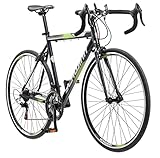


This article will explain the different types of road bikes available and what they are best used for. So, whether you’re just getting into biking or looking to upgrade your current ride, read on for all you need to know about the different types of road bikes out there!

Road Bike Types
Adventure/All-Road/Gravel Bike
An adventure road bike, also called an all-road or gravel bike, is suitable for commuting, road touring, and light-off road rides.
Need a Few Practical Extras for Your Next Ride?
Browse cycling-related clothing and simple bike accessories that may help with comfort, visibility, storage, or everyday riding.
Paid links. As an Amazon Associate we earn from qualifying purchases.
An adventure bike, also known as an all-road or gravel bike, combines the versatility of a cross-country (XC) mountain bike and the speed of a road bike. It is a bike that is designed for riding on pavement and off-road.
These bikes are usually equipped with wider and knobby tires than traditional road bikes, giving them more traction and stability on loose or uneven surfaces.
They are a good choice for someone who wants to do some light off-road riding but who doesn’t want to sacrifice the speed and efficiency of a road bike. With drop handlebars, they also provide a more aerodynamic riding position.
Some adventure bikes have suspension forks, making them better suited for rough terrain. However, this will also add some weight to the bike and can make pedaling less efficient.
Aero Road Bike
An aero bike is great for riding competitions and riding tours.
An aero road bike is a type of road bike that is designed for speed and efficiency. These bikes are built with aerodynamics in mind and are often equipped with deep-section wheels that help to reduce drag.
Aero road bikes usually have a more aggressive riding position than other road bikes, which helps to reduce drag even further.
Many professional cyclists choose Aero road bikes for competition. If you’re looking for a bike that will help you go fast, an aero road bike is good.
Commuter Road Bike
A commuter bike is a good choice if you want to ride to work or school.
A commuter road bike is a type of road bike designed for commuting. These bikes are usually equipped with features that make them more practical for riding in an urban environment, such as fenders and lights.
Commuter road bikes often have a more relaxed riding position than other road bikes, making them more comfortable for riding long distances.
Many commuter road bikes also have wider tires than traditional road bike tires, which gives them more grip and stability on city streets.
Cyclocross Bike
A cyclo-cross bike is good for racing and riding cyclo-cross trails and courses.
Cyclo-cross is a cycling discipline that involves racing on different types of terrain and obstacles. The races are usually short, and they can be very muddy. Riders often sprint to the finish line in these races.
Cyclo-cross bikes are built to be lightweight and fast, with features that make them easy to maneuver through tight turns.
Endurance/Sportive Road Bike
An endurance road bike is good for long-distance riding and racing.
Endurance road bikes, also called sportive bikes, are designed for comfort and long days on the road. These bikes often have a more relaxed frame geometry than other types of road bikes, which makes them more comfortable to ride for extended periods.
Endurance road bikes also usually have wider tires than other road bikes, which helps to smooth out the ride.
If you’re looking for a road bike that you can take on long rides or even use for racing, an endurance road bike is a good option.
E-Road Bike
An e-road bike is equipped with an electric motor. These bikes are designed to assist when pedaling, making riding up hills and headwinds easier.
E-road bikes usually have a throttle that allows you to control how much assistance you receive from the motor. Some models also have a pedal-assist feature that provides power based on how hard you’re pedaling.
E-road bikes can be a good option for riders who want a little extra help when riding or those who want to ride longer distances than they could on a traditional road bike.
Hybrid Road Bike
A hybrid road bike is suitable for all-purpose riding on various terrains. Thanks to its features on both road bikes and mountain bikes.
Hybrid road bikes usually have wider tires than traditional road bikes, which gives them more grip and stability on uneven surfaces. They also often have suspension forks, which help smooth out the ride.
Many hybrid road bikes also have disc brakes, which provide more stopping power than traditional rim brakes.
If you’re looking for a versatile bike that you can take on a variety of terrain, a hybrid road bike is a good choice.
Performance Road Bike
A performance bike has lighter and more aerodynamic frames and higher-end components that provide a smoother ride and better performance.
A performance bike is a good choice if you’re looking for a road bike to help you go fast. Performance bikes are designed for riders who want the best of the best.
Performance bikes can be a good option for riders looking to race or who want the fastest bike possible.
However, these bikes can be more expensive, so they might not be the best choice for everyone.
Racing Bike
A racing bike is designed for speed and performance in competitions.
Racing bikes have lightweight frames and components and aerodynamic features that help the rider go faster.
A racing bike is a good option if you’re looking for a road bike to use in races.
However, these bikes can be more expensive and might not be the best choice for everyone.
Time Trialing (TT)/Triathlon Bike
A time trial bicycle is a racing bike that has been built to compete against the clock in an individual race.
A time trial bike is designed to be as aerodynamic as possible, making it faster than other road bikes.
These bikes often have special features that help the rider go even faster, such as aero bars and disc wheels.
If you’re looking for a road bike to use in time trials or triathlons, a TT/triathlon bike is a good option.
Track Bike
A track bike is a racing bicycle designed to be ridden on a velodrome, a special type of racetrack. A velodrome is a stadium that has a steeply banked oval track.
Track bikes have fixed gears, which means that the pedals and wheels are always moving when the bike is in motion.
Track bikes also have no brakes, which makes them illegal to ride on public roads.
If you’re looking for a road bike to use on a velodrome, a track bike is a good option.
Touring Bike
A touring road bike is good for long-distance riding and is equipped with features suitable for carrying gear.
Touring bikes often have a more upright riding position than other road bikes, making them more comfortable for riding long distances. They also have features that make it easy to attach panniers and other bags, so you can carry everything you need on your ride.
If you’re looking for a road bike for touring or long-distance riding, a touring bike is a good choice.
Summary: Types of Road Bikes
| Road Bike Type | Description | Ideal Use | Key Features |
|---|---|---|---|
| Adventure / Gravel | Versatile drop-bar bike for mixed surfaces | Light off-road, bikepacking | 40–45 mm tires, disc brakes, mounting points |
| Aero Road | Highly aerodynamic frame and components | Competitive rides, flat courses | Deep-section wheels, integrated cables, aggressive geo |
| Commuter | Practical urban bike with utility features | Daily commuting | Fenders, lights, relaxed geometry, wider tires |
| Cyclocross (CX) | Lightweight, maneuverable bike for mixed-terrain racing | Cyclocross events, mud, grass | Knobby tires, clearance for mud, quick-release wheels |
| Endurance / Sportive | Comfort-focused geometry for long distances | Endurance rides, sportive events | Relaxed geo, 28–32 mm tires, mounts for racks/fenders |
| E-Road | Electrically assisted road bike | Challenging climbs, longer rides | Mid-drive motor, throttle or pedal-assist, battery pack |
| Hybrid Road | Mix of road-bike speed and mountain-bike stability | Recreational rides, light trails | Flat bars, suspension forks, 35–40 mm tires |
| Performance Road | High-end components and lightweight build | Fast group rides, amateur racing | Carbon frame, electronic shifting, lightweight wheels |
| Racing | Ultralight frame and components for speed | Road races | Aggressive geo, sub-7 kg builds, race-tuned gearing |
| TT / Triathlon | Extremely aerodynamic with time-trial cockpit | Time trials, triathlons | Aero bars, disc wheels, steep seat-tube angle |
| Track | Fixed-gear, brakeless bike for velodrome | Track racing (velodrome only) | Fixed gear, no brakes, ultra-stiff frame |
| Touring | Durable frame with cargo-carrying capacity | Multi-day tours | Upright geo, rack/fender mounts, wide gear range |


Features of a Road Bike
Frame Materials
Aluminum is a popular choice for road bike frames because it is lightweight and affordable. Carbon fiber is the lightest and strongest material, but it is also the most expensive. Steel is the heaviest material, but it is also the strongest and most durable.
A few other materials are sometimes used for road bike frames, such as titanium and aluminum alloy.
Frame Geometry
The geometry of a road bike frame is the shape of the frame tubes. The geometry of a road bike affects the rider’s position on the bike and the bike’s handling.
There are three main types of road bike geometry: racing, endurance, and all-road.
Racing geometry is designed for speed and features a low riding position. Endurance geometry is designed for comfort and features a more upright riding position. All-road geometry is a mix of the two and is suitable for various riding styles.
Drivetrains
Road bikes typically have two types of drivetrains: derailleur or internally geared.
A derailleur drivetrain has a chain that runs between the front and rear gears, and the gears are shifted with levers on the handlebars. An internally geared drivetrain has the gears enclosed in the rear hub, and the gears are shifted with a twist shifter.
Derailleur drivetrains are more common because they are lighter and less expensive. However, internally geared drivetrains are more durable and require less maintenance.
Wheels
The wheels on a road bike are typically 700c, the most common size. However, you may also see 650b or 26-inch wheels on some road bikes.
700c is ideal for most riding styles because they are strong and lightweight. However, 650b wheels are a good option for riders who want a bit more traction, and 26-inch wheels are a good choice for riders looking for a more comfortable ride.
The type of tires you use will depend on the type of riding. For example, if you do a lot of riding on pavement, you’ll want to use tires designed for pavement. If you do a lot of riding on gravel or dirt roads, you’ll want to use tires designed for those surfaces.
Handlebars
The handlebars on a road bike can be flat, drop, or aero. Flat handlebars are the most common type. They are good for general riding and provide a good grip for climbing. Drop handlebars are shorter and curved, making them good for aerodynamic riding. Aero handlebars are the longest and most curved, making them good for speed.

Key Statistics & Facts about Types of Road Bikes
Based on recent industry data and research, here are some must-know insights:
- Endurance Bikes remain the most popular road-bike category, thanks to their relaxed geometry, upright posture, and 28–32 mm tires for mixed-terrain comfort. Many now include disc-brake and rack/fender mounts for true versatility .
- Racing & Performance Bikes prioritize lightness and aerodynamics, often weighing under 7 kg, with aggressive geometry for maximum power transfer.
- Aero Road Bikes feature integrated cables and deep-section wheels to slash drag by up to 10% on flat courses.
- Triathlon/Time Trial Bikes hold the rider in an almost horizontal position, boosting power output by 5–8% in aero tests.
- Gravel Bikes combine drop-bar speed with 40–45 mm tires, handling both gravel and pavement with ease.
- The average price of a new road bike in 2023 was $5,982 USD, and the average weight hovered around 8.32 kg (18.34 lbs)—with carbon fiber dominating frames.
- Disc brakes have overtaken rim brakes for reliability and stopping power, especially in wet conditions.
- Shimano leads groupset manufacturers, though electronic shifting (Di2, eTap) is increasingly standard even on mid-range bikes.
- The global bicycle industry was valued at $64.6 billion in 2023, with over 256 million units sold worldwide in 2021—China alone produced 116 million bikes in 2020.


Final Thoughts
There are a few things to keep in mind when shopping for a road bike. First, think about the type of riding you want to do. If you’re looking for a bike to use for racing, you’ll want a different bike than if you’re looking for a bike to use for touring.
Second, consider your budget. Road bikes can range from a few hundred dollars to several thousand dollars.
Third, think about the features you want. Do you want a bike with a carbon fiber frame? Do you want a bike with drop handlebars? Once you’ve considered these factors, you’ll be able to narrow down your choices and find the perfect road bike for you.
Conclusion on the Types of Road Bikes
In summary, types of road bikes span a wide spectrum—from endurance models built for all-day comfort to razor-sharp racing and aero machines designed for speed. By matching your terrain, budget, and riding goals to the right frame, geometry, and components, you’ll find a bike that keeps Active Adventurer Alex smiling mile after mile on every commute, group ride, or gravel adventure.