Key Takeaway:
- The best BMX tricks for beginners—like Bunny Hop, Manual, Fakie, 180 Spin, and J-Hop—build balance, control, and confidence.
- Start slow, use proper safety gear, and practice consistently for 15–20 minutes per session.
BMX riding? Oh, it’s not just a sport; it’s a culture, a lifestyle. Born in the sunny state of California during the 1970s, BMX started as kids mimicking their motocross heroes but on bicycles.
Fast forward a few decades, and we’ve seen an explosion in the world of BMX tricks. From gravity-defying jumps to intricate maneuvers, BMX tricks have become a spectacle, drawing crowds and enthusiasts worldwide.
But here’s the kicker: before you start dreaming of pulling off those jaw-dropping stunts, it’s crucial to nail the basics. Starting with the fundamentals not only ensures you’re riding safely but also sets a solid foundation for mastering more advanced tricks down the road.
Need a Few Practical Extras for Your Next Ride?
Browse cycling-related clothing and simple bike accessories that may help with comfort, visibility, storage, or everyday riding.
Paid links. As an Amazon Associate we earn from qualifying purchases.

Essential Gear for BMX Trick Riding
Safety First: Protective Gear
Let’s get one thing straight: BMX isn’t for the faint-hearted. But that doesn’t mean you should be reckless.
Research backs this up—helmet use reduces head injuries by 48–60 percent and traumatic brain injuries by 53–60 percent (Høye, 2018; Olivier & Creighton, 2017). Knee and elbow pads, gloves, and proper shoes dramatically cut the risk of fractures and abrasions.
First on the list? Helmets. I can’t stress this enough: they’re absolutely non-negotiable. I’ve had my fair share of tumbles, and a good BMX helmet has saved me more times than I can count.
Next up, knee and elbow pads. Think of them as your body’s best friends, cushioning those joints when things get a bit… unexpected.
And don’t even get me started on gloves and proper footwear. Not only do they give you that extra grip when you’re pulling off a trick, but they also protect those fingers and toes.
Safety isn’t just a word; it’s a mantra.
Choosing the Right BMX Bike
Remember the first time you tried on a pair of shoes, and they just felt… right? That’s how your BMX bike should feel. Size and fit are paramount. Too big, and you’ll struggle with control. Too small, and well, it’s just plain uncomfortable.
Look for a chromoly frame, a 20″–20.75″ top tube (for average-height riders), responsive brakes, and durable tires for traction.
Regular check-ups and chain lubrication keep your BMX responsive and trick-ready.
Read also:



Top 5 BMX Tricks for Beginners to Master
1. Bunny Hop
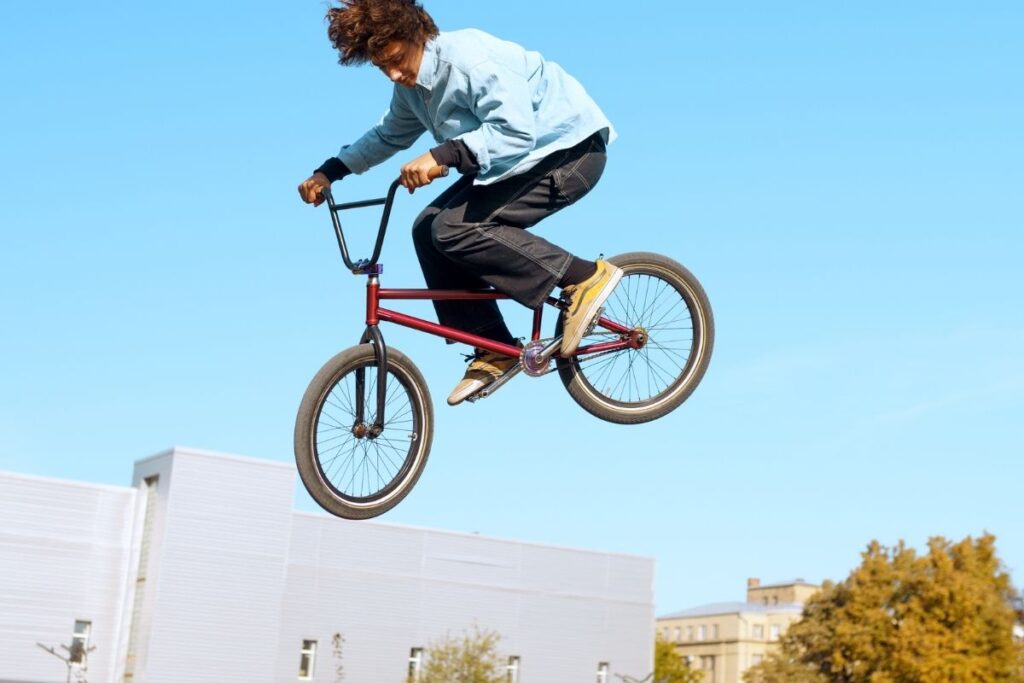
The Bunny Hop is like the “Hello World” of BMX tricks. So, what exactly is it?
Picture this: both wheels lifting off the ground simultaneously, like a rabbit hopping (hence the name). It’s the foundation of many advanced BMX tricks. Now, let’s break it down:
What it is and why it’s foundational:
Start with your feet flat on the pedals and your body centered. The Bunny Hop is all about using your body weight and momentum. Mastering this trick is essential because it teaches you how to control your bike in the air, a skill you’ll need for more advanced stunts.
Step-by-step guide to executing a bunny hop:
- Begin by crouching down slightly on the bike.
- Push the handlebars forward while pulling up with your feet.
- As the front wheel rises, use your toes to scoop the back wheel up.
- Level the bike in mid-air and then prepare for landing, bending your knees to absorb the impact.
Common mistakes and how to avoid them:
- Not using enough force: It’s all about commitment. Give it your all!
- Forgetting to level the bike in the air: This can lead to uneven landings. Practice makes perfect.
- Not bending the knees upon landing: Soften your landing by bending those knees. It’ll save both you and your bike from unnecessary stress.
2. Manual

The Manual is poetry in motion. It’s the art of balancing on the rear wheel while the front wheel stays airborne. Sounds simple, right? But it’s a test of balance, control, and patience. Let’s dive in:
The art of balancing on the rear wheel:
Unlike the Bunny Hop, where both wheels are off the ground, the Manual is all about keeping that front wheel up. It’s a delicate dance of weight distribution and control.
Techniques to maintain a steady manual:
- Start by pushing the handlebars forward and shifting your weight to the back of the bike.
- Use your hips and knees to adjust and maintain balance. Feel the bike, and let it become an extension of you.
- Keep your arms straight and look ahead, not down. Your body will follow where your eyes lead.
Progressing to longer distances:
Once you’ve got the hang of it, challenge yourself. How long can you hold the Manual? Set markers and try to surpass them each time.
Remember, it’s not a race. It’s about control and endurance. And hey, we’ve all had our share of wobbles and falls. It’s part of the journey. So, keep at it, and soon you’ll be Manual-ing like a pro!
3. Fakie (Rolling Backwards)

Rolling backwards on a BMX? Yep, that’s the Fakie for you. It’s not just about looking cool (though it does); it’s a pivotal trick that sets the stage for many advanced maneuvers. Let’s roll into it:
Importance in setting up for other tricks:
The Fakie is like the gateway trick. Once you’ve got this down, it opens up a world of possibilities. It teaches you how to handle your bike in reverse, which is crucial for tricks that require a change in direction or a quick reset.
Tips for maintaining control while rolling backward:
- Keep your weight centered. Leaning too far in any direction can throw you off balance.
- Use your pedals to control the speed. Resist the urge to pedal backward; instead, let the bike roll.
- Stay relaxed. Tensing up can make you wobbly. Breathe, and go with the flow.
Transitioning from fakie to other moves:
The beauty of the Fakie is its versatility. Once you’re rolling backward, you can transition into spins, hops, or even ride out into a Manual. The key? Practice. Get comfortable with the Fakie, and soon you’ll be linking it with other tricks seamlessly.
4. 180° Spin
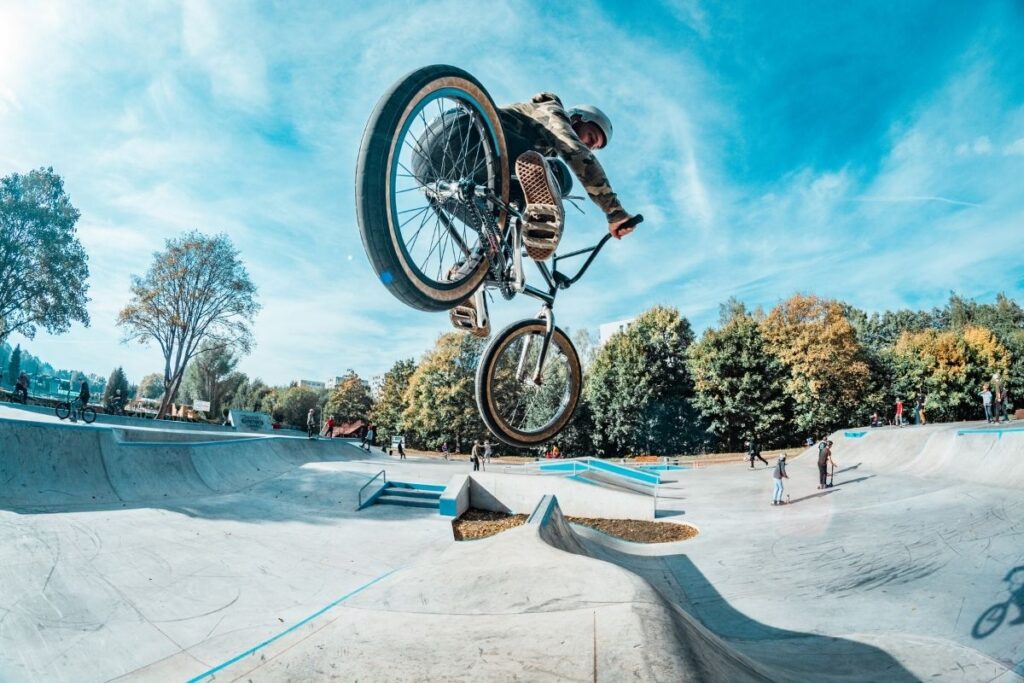
Twist, turn, and take off! The 180° Spin is all about rotation, and it’s a visual treat. Building on the Bunny Hop, this trick adds a spin to the mix, literally.
Building on the bunny hop foundation:
Remember the Bunny Hop? Now, imagine adding a half-turn to it. That’s your 180° Spin. It’s essential to have a solid Bunny Hop foundation because you’ll be using the same lift-off technique, but with a twist.
Techniques for a smooth spin and landing:
- Start by turning your head in the direction you want to spin. Your body will follow.
- As you lift off with a Bunny Hop, use your shoulders and hips to initiate the spin.
- Keep your eyes on your landing spot. This helps in orientation and ensures a smooth landing.
- Bend your knees as you touch down, absorbing the impact and maintaining balance.
Combining with other tricks for flair:
The 180° Spin is not just a standalone trick. Once you’ve mastered it, you can combine it with Manuals, Fakies, or even grind moves. The sky’s the limit! And remember, it’s not just about the spin; it’s about adding your own style and flair to it. So, go ahead, give it a whirl and make it your own!
5. J-Hop
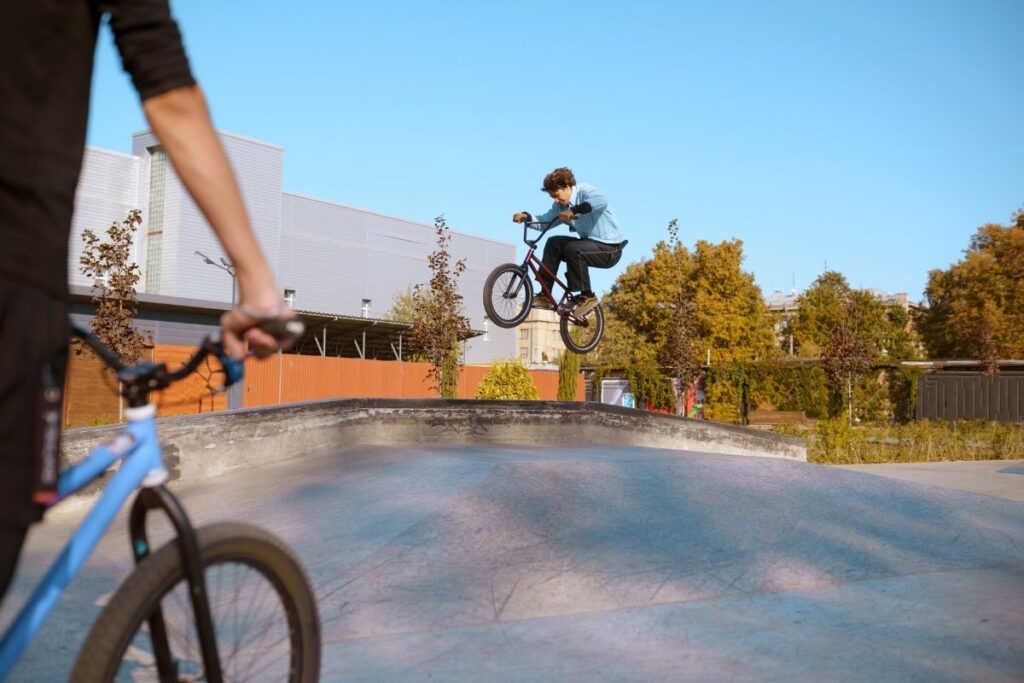
The J-Hop is like the elder sibling of the Bunny Hop, a bit more advanced, a tad more stylish. It’s about elevating that basic hop and adding some extra flair to it.
Elevating the bunny hop to the next level:
While the Bunny Hop is about getting both wheels off the ground, the J-Hop is about maximizing that lift. It’s about soaring higher and making those hops count.
Key differences between J-hop and bunny hop:
- Sequence: In a J-Hop, you lift the front wheel first, followed by the back wheel, giving it a distinct “J” motion.
- Height: Typically, you can achieve greater height with a J-Hop because of the added momentum from the initial front wheel lift.
- Technique: The J-Hop requires a bit more finesse, using a combination of weight shifting and pedal control.
Tips for achieving maximum height:
- Start with a strong crouch, building potential energy.
- As you begin the hop, lean back and pull the handlebars to your chest.
- Once the front wheel is at its peak, push the handlebars forward and use your feet to scoop the back wheel up.
- Practice, practice, practice. The more you do it, the higher you’ll fly.
Practice Plan for Beginners
| Week | Focus Trick | Drills (sets × reps) | Common Mistake → Fix | Goal Check |
|---|---|---|---|---|
| 1 | Bunny Hop | 4 × 10 curb hops | Pulling only with arms → Compress + Scoop | 5 clean hops |
| 2 | Manual | 6 × 20 m rolls | Looking down → Eyes up, hips back | Hold 3 seconds |
| 3 | Fakie | 6 × 5 roll-backs | Pedaling backward → Feather brake | Exit straight |
| 4 | 180 Spin | 5 × 8 reps | Not turning head → Look first | Land 5 clean |
| 5 | J-Hop | 5 × 6 height drills | Early rear lift → Delay scoop | Clear small cone |
Why this works: Short, focused practice with progressive variability improves muscle memory and coordination (Oppici et al., 2021).

Tips for Safe and Effective Practice

BMX trick riding is exhilarating, no doubt. But it’s also a discipline. And like any discipline, it requires patience, practice, and a sprinkle of perseverance.
- Importance of starting slow and mastering one trick at a time:
We’ve all been there, watching those pros and thinking, “I can do that!” But here’s the thing: every pro started as a beginner. Focus on one trick, nail it down, and then move on to the next. It’s not a race; it’s a journey. - The role of muscle memory in BMX trick riding:
Ever wondered how those pros make it look so effortless? Muscle memory. By repeating a trick over and over, your body learns the motions, making it second nature. So even on days when you feel like you’re not progressing, your muscles are taking notes. - Why consistency in practice is key:
BMX isn’t just a weekend hobby; it’s a commitment. The more consistent you are in your practice, the quicker you’ll see improvements. It’s like watering a plant; regular care yields the best results. - Finding local BMX communities and parks for support and guidance:
Remember, BMX is not just a sport; it’s a community. Connect with local riders, join BMX groups, and frequent parks. Not only will you learn from watching others, but you’ll also find encouragement and camaraderie. We’ve all had our share of falls and fails, but together, we pick each other up and ride on.
Overcoming Common Challenges and Fears
BMX trick riding is as much a mental game as it is a physical one. The thrill of nailing a new trick is often accompanied by the shadow of fear and doubt. But hey, every rider has been there, including me. Let’s tackle these challenges head-on.
Addressing the fear of falling and injury:
It’s natural. The thought of taking a tumble can be daunting. But here’s a little secret: every BMX rider, pro or beginner, has had their fair share of falls. It’s part of the learning curve.
The key is to wear the right protective gear, practice in safe environments, and most importantly, listen to your body. Know your limits and push them gradually.
Tips for building confidence on the bike:
- Start with basics: Before attempting complex tricks, ensure you’re comfortable with basic maneuvers.
- Visualize success: Before executing a trick, visualize yourself doing it perfectly. It sets a positive mindset.
- Practice regularly: The more time you spend on the bike, the more in tune you’ll be with it.
- Celebrate small victories: Nailed a Bunny Hop? Celebrate it! Every achievement, big or small, boosts confidence.
How to handle setbacks and frustrations:
Not every day on the bike will be a win, and that’s okay. When faced with setbacks:
- Take a break: Sometimes, stepping away for a bit provides clarity.
- Reflect: Understand what went wrong. Was it technique? Mindset? External factors?
- Seek feedback: Fellow riders can offer insights and tips that you might have overlooked.
- Stay patient: Progress isn’t always linear. Embrace the journey, bumps and all.
Learning from mistakes and turning them into growth opportunities:
Every fall, every failed attempt, is a lesson in disguise. Instead of seeing them as setbacks, view them as feedback. What can you do differently next time? How can you tweak your technique?
Taking Your Skills to the Next Level
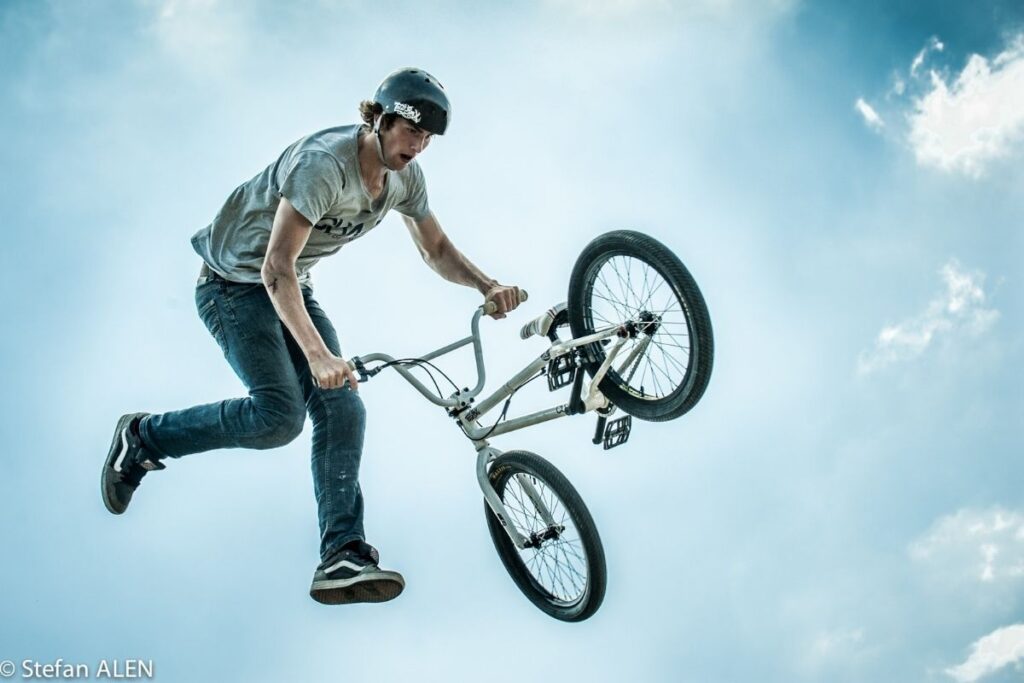
So, you’ve got the basics down, and you’re feeling pretty good about it. That’s awesome! But the world of BMX trick riding is vast, and there’s always room for growth.
How to know when you’re ready to progress:
- Consistency: If you’re nailing a trick almost every time, it might be time to challenge yourself further.
- Comfort: When a trick feels second nature, and you execute it without much thought, you’re likely ready for the next step.
- Craving: If you find yourself itching for a new challenge, listen to that inner voice.
Advanced tricks to aspire to after mastering the basics:
- Tailwhips: Spinning the bike frame around while in the air.
- Barspins: Rotating the handlebars 360° during a jump.
- Grinds: Sliding along surfaces like rails or ledges. Remember, these tricks require a solid foundation. So, ensure your basics are strong before diving in.
Joining BMX competitions and showcases:
Competing isn’t just about winning; it’s about growth, exposure, and community. Participating in events can:
- Provide feedback on your skills.
- Offer a platform to showcase your talent.
- Connect you with fellow enthusiasts and potential mentors.
Continuous learning: Workshops, online resources, and mentorship:
The learning never stops in BMX.
- Attend workshops: Many BMX pros and experts conduct workshops to share their knowledge.
- Explore online: Platforms like YouTube have countless tutorials and trick breakdowns.
- Seek mentorship: Connect with seasoned riders. Their insights and guidance can be invaluable.
Call your drop, yield to riders in motion, look both ways, and never “snake” someone’s line. Good etiquette keeps everyone safe and avoids collisions (Everett et al., 2002).
Conclusion on BMX Tricks for Beginners
BMX trick riding is more than just stunts on a bike; it’s a journey of passion, perseverance, and growth. We’ve explored the foundational tricks, their importance, and the path to mastery. From the humble Bunny Hop to the gravity-defying Tailwhip, each trick is a testament to skill and dedication.
But remember, it’s not just about the tricks; it’s about the journey. The falls, the successes, the hours of practice – they all shape you as a rider. So, keep pushing, keep learning, and most importantly, keep riding.
The world of BMX is vast and exciting, and you’re just getting started. Here’s to many more rides, tricks, and adventures. Ride on!
References
Everett, W. W., et al. (2002). Skatepark injuries and the influence of skatepark design. Annals of Emergency Medicine, 39(3), 308–311. https://pubmed.ncbi.nlm.nih.gov/12426018/
Høye, A. (2018). Bicycle helmets—To wear or not to wear? A meta-analysis of the effects of bicycle helmets on injuries. Accident Analysis & Prevention, 117, 85–97. https://pubmed.ncbi.nlm.nih.gov/29677686/
Olivier, J., & Creighton, P. (2017). Bicycle injuries and helmet use: A systematic review and meta-analysis. International Journal of Epidemiology, 46(1), 278–292. https://pubmed.ncbi.nlm.nih.gov/27450862/
Oppici, L., et al. (2021). Deliberate practice and motor learning principles to underpin skill acquisition. Sports, 9(12), 179. https://pmc.ncbi.nlm.nih.gov/articles/PMC8593185/
Rockliff, C., et al. (2024). Injuries, risk factors, and prevention strategies in bicycle motocross (BMX): A scoping review. Journal of Athletic Training. https://pubmed.ncbi.nlm.nih.gov/39460724/
Williams, A. M., & Ford, P. (2023). Effective practice and instruction: A skill acquisition perspective. Journal of Sports Sciences, 41(1), 1–12. https://pubmed.ncbi.nlm.nih.gov/37603709/