Key Takeaway: On flat terrain, expect 3–4 minutes per mile; beginners around 5–6 minutes; urban settings with stops can stretch to 8–9 minutes.
If you’ve ever wondered how long does it take to bike a mile, the average rider on flat ground clocks in at just 3–4 minutes—yet that time can stretch to 6–7 minutes for new cyclists or spike above 8 minutes in stop-and-go city traffic.
As a new cyclist, you might be wondering how long will a one-mile ride take. An average cyclist with a decent bike, riding on flat grounds at 17 to 18 mph may take just 3 to 4 minutes to cover a mile.
A professional cyclist can cover 1 mile twice as fast as a non-cyclist. Hence, riding a mile would depend on your skills in cycling, but that’s not the only factor that we have to consider.
Need a Few Practical Extras for Your Next Ride?
Browse cycling-related clothing and simple bike accessories that may help with comfort, visibility, storage, or everyday riding.
Paid links. As an Amazon Associate we earn from qualifying purchases.
In this article, we’re gonna talk about important concepts about cycling speed, bike designs, and cycling mileage to help you gradually increase your cycling mileage, and increase your riding speed!
Your First Mile
Getting through the first mile may be a challenging task. For first-time riders, a mile usually takes 5–6 minutes to ride at a 10 mph pace. If you bike in uphill terrain, your average travel time may rise to 6–7 minutes per mile.
If you’re slower than your peers, don’t get discouraged. You’ll be able to increase your speed by regular practice and a few bike adjustments.

Increasing Your Cycling Mileage
The ability to ride further is a common aim for most cyclists. To be able to increase your mileage, you should spend more time on your bike.
You can cover longer distances by gradually building up your ride length over weeks or months. This slow, consistent training will condition your body for more efficient riding.
When training your body for longer rides, make sure you get fuelled before, during, and after the ride. You can eat and drink sports-specific nutrition or homemade food like bananas.
Finally, when choosing to increase your cycling mileage, choose flatter terrain, because a flatter route means more kilometers!

Factors Affecting Cycling Speed
Fitness Level
Your fitness level is a primary factor that determines how fast and how long you can cycle.
A higher level of fitness allows for better cardiovascular endurance, stronger muscles, and better stamina, which in turn enables you to cycle faster and for longer distances. Regular aerobic and strength training can significantly boost your pace.
Bike Type and Condition
The type and condition of your bike play a crucial role in determining your cycling speed.
- Type: Road bikes are designed for speed with their lightweight frames and thin tires, allowing for faster speeds on paved roads. On the other hand, mountain bikes are built for rough terrains, and their heavier frames and wider tires can slow you down on paved roads. Hybrid bikes offer a balance between the two, providing a decent speed with the ability to handle a variety of terrains.
- Condition: A well-maintained bike can significantly enhance your cycling speed. Ensure that your bike is in good condition by regularly checking the brakes, tires, and gears. A clean and lubricated chain, properly inflated tires, and well-adjusted gears can make your ride smoother and faster.
Terrain
The terrain you are cycling on can significantly affect your speed.
- Flat Terrains: Flat terrains offer the least resistance, allowing for higher speeds.
- Uphill Terrains: Uphill terrains require more effort and strength, reducing your speed.
- Downhill Terrains: Downhill terrains can increase your speed, but require good control and braking ability.
- Rough or Uneven Terrains: Rough or uneven terrains can slow you down and require a bike designed to handle such conditions.
Weather Conditions
Weather conditions can also impact your cycling speed.
- Wind: Cycling against the wind can significantly slow you down, while having the wind at your back can boost your speed.
- Rain: Rain can make the roads slippery and reduce visibility, requiring you to slow down for safety.
- Temperature: Extreme temperatures can affect your endurance and the functioning of your bike.
Understanding and adapting to these factors can help you improve your cycling speed over time. Whether it’s improving your fitness level, maintaining your bike, choosing the right bike for the terrain, or being prepared for different weather conditions, each aspect plays a crucial role in your cycling speed.

Average Time to Bike a Mile: Research Findings
Research indicates that the time it takes to bike a mile varies by experience, terrain, and bike type:
Average Speed & Time: Adults average 16.8–17.4 km/h (10.4–10.8 mph), taking about 5.5–6 minutes per mile.
Skill Level Differences:
- Beginner: ~6 minutes/mile
- Intermediate: ~3 min, 45 sec/mile
- Advanced: ~3 minutes/mile
- Professional: as little as 2 min 30 sec/mile
Gender Differences: Men average 18.7 km/h (11.6 mph); women around 15.8 km/h (9.8 mph).
Terrain & Bike Type: Road bikes on flat ground: 3–4 minutes/mile; mountain/cruiser bikes on rough terrain: 5–6 minutes/mile.
Urban Cycling: Stops and traffic reduce average speed to 11.4 km/h (7.1 mph)—about 8.4 minutes per mile.
World-Class Pro Cyclist Benchmarks
Here’s how elite racers compare in real events:
- Grand Tour Overall Winners: Sustain 40–42 km/h (25–26 mph) over three weeks—e.g., Jonas Vingegaard averaged 42.102 km/h in the 2022 Tour de France.
- Flat-Terrain Peloton: Hold 40–45 km/h (25–28 mph) on long, level stages to control the race.
- Cobbled Classics: Average 35–38 km/h (22–24 mph) even on punishing cobblestone sectors.
- Individual Time Trials: Peak at 50–51 km/h (31–32 mph)—for instance, Remco Evenepoel hit 50.6 km/h in the 2025 Tour de Romandie ITT.

How Can I Make My Bike Go Faster?
Clean your Bike
A clean bike will not only feel more comfortable, but it will also go faster! The key to a fast bike is to clean your drivetrain.
Clean it with a good quality degreaser, and make sure it gets in between the plates of the chain. Wipe off grime after every ride to maintain peak performance.
Lubrication
Once your bike’s clean, you need to lubricate it before hitting the road. Lubricate the rollers of the chain, and then wipe off the excess. Aim for full coverage but avoid excess.
Remember not to over lubricate as overdoing it may increase friction.
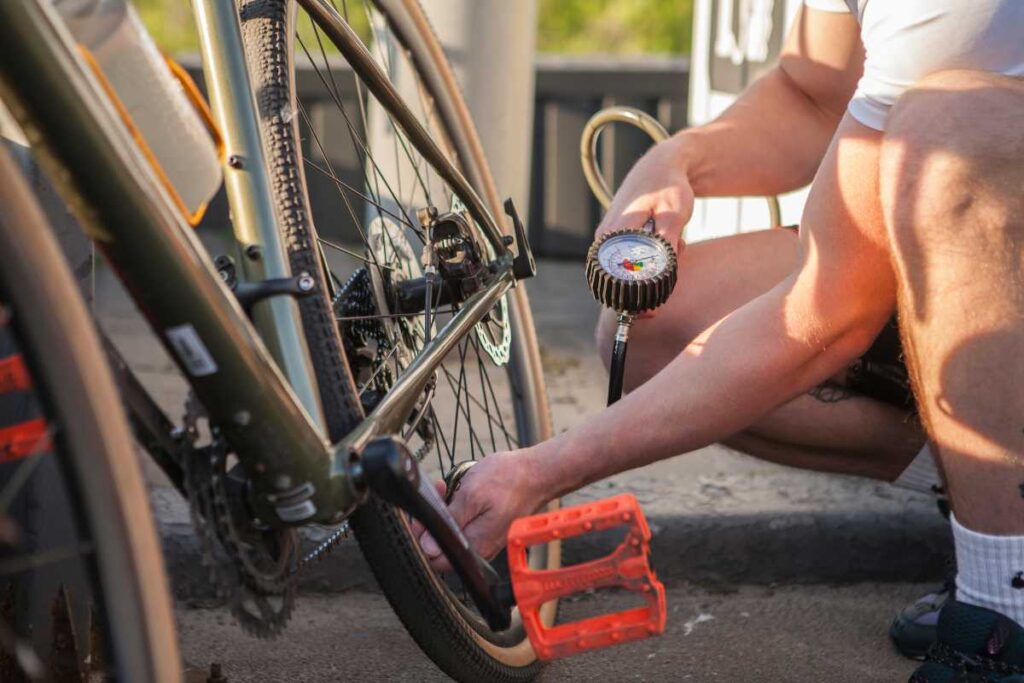
Tire Pressure
Inflating your tire to the correct pressure is one of the cheapest and easiest ways in improving your rolling resistance.
A tire that is too soft or too hard will result in an increased rolling resistance which will cause the tires to roll slower.
To achieve perfect tire inflation, Global Cycling Network recommended a tire pressure according to the rider’s weight, and the tire width.
- 23C tires: 95 psi front / 100 psi rear (70 kg rider)
- 25C tires: 80 psi front / 85 psi rear
- 28C tires: 60 psi front / 65 psi rear
Adjust ±3 psi per 10 kg of rider weight.

Types of Bikes to Consider

There are several bike types in the market you can choose from, and sometimes it can be overwhelming to understand their differences. Note that your speed may be determined by the type of bike you are riding, so it’s crucial to pick a bike that’s made for speed.
Road Bikes
Road bikes are engineered for speed and performance on paved roads. Here are some of their features:
- Lightweight Frames: Road bikes typically have lightweight frames made of materials like aluminum or carbon fiber which reduce the overall weight, allowing for faster speeds.
- Aerodynamic Design: The design of road bikes is aerodynamic to reduce air resistance. The handlebars are often lower and the rider’s position is more hunched to achieve a streamlined shape.
- Thin, High-Pressure Tires: The tires are thin and can be inflated to high pressures, reducing rolling resistance and enabling higher speeds.
- High Gear Ratios: Road bikes have high gear ratios that allow for fast pedaling at high speeds.
The design and features of road bikes are tailored for speed, making them the fastest type of bicycle on paved roads.
Mountain Bikes
Mountain bikes are designed for off-road cycling and can handle rough terrains. Here are some of their features:
- Sturdy Frames: Mountain bikes have sturdy frames that can withstand the stresses of off-road cycling.
- Wide, Knobby Tires: The tires are wide with deep treads to provide better grip and traction on rough and uneven terrains.
- Suspension Systems: Mountain bikes often have suspension systems to absorb shocks and bumps, providing a smoother ride on rough terrains.
- Lower Gear Ratios: They have lower gear ratios to allow for easier pedaling on steep and rough terrains.
While mountain bikes are not as fast as road bikes on paved roads, they are well-suited for rough terrains and provide stability and control.
Hybrid Bikes
Hybrid bikes combine features of both road bikes and mountain bikes to provide a balance between speed and comfort. Here are some of their features:
- Versatile Frames: Hybrid bikes have versatile frames that are lightweight yet sturdy enough for different terrains.
- Medium-Width Tires: The tires are wider than those of road bikes but thinner than those of mountain bikes, providing a good balance of speed and stability.
- Comfortable Seating Position: Hybrid bikes offer a more upright seating position compared to road bikes, providing comfort over longer distances.
- Various Gear Ratios: They come with a variety of gear ratios to handle a range of cycling conditions, from flat roads to hilly terrains.
Hybrid bikes are a great choice for riders who want a versatile bike that can handle a variety of cycling conditions while providing a comfortable ride.

How To Improve Your Average Speed

Improving average speed is a common obsession in the cycling world. With regular training, you’ll surely get better and faster, but the bad news is- it’s not an easy thing to do.
Overcome Plateau Progression
One of the possible reasons why your average speed is not progressing is that you lack some variations.
Doing the same route over and over again, and sticking to the same speed for weeks can result in a plateau in your progression.
The best way to overcome plateau progression is to mix up your cycling route, get into intervals, and set a new average speed!
Preparation
Making sure you’re well prepared will result in a more efficient ride. Take time to plan your route, route distance, what to eat during your ride, and where you’ll be riding.
Gear and Equipment Choice
The right equipment, gear, and clothing will help you greatly in your journey to achieving a higher average speed.
Fitness
Your fitness plays a vital role in deciding how fast you can ride a mile! If you haven’t been training for quite a while, then long rides will surely tire you easily.
It’s important to condition your body to endure long-distance bike rides at a steady and fast pace.
During off-break seasons, you should spend your mornings in the gym strengthening your legs and core.
Conclusion on How Long Does it Take to Bike a Mile
World-class pros consistently ride well above recreational paces, blending exceptional fitness, cutting-edge equipment, and tactical savvy to sustain 40+ km/h across races. Understanding these benchmarks helps set realistic goals: by targeting structured training, equipment optimizations, and smart pacing, dedicated cyclists can steadily close the gap toward these elite standards.