Key Takeaway
- Speed and agility training improves performance, reduces injury risk, and enhances everyday coordination and balance.
- The best results come from structured workouts that combine ladder drills, plyometrics, multidirectional sprints, and stabilizer muscle training.
- Beginners should start with simple, low-intensity exercises before progressing to advanced drills.
Speed and agility training is the foundation of athletic performance, helping you move faster, change direction efficiently, and reduce your risk of injury. Whether you’re a cyclist, runner, or fitness enthusiast, structured drills can boost your coordination, balance, and overall athletic ability.
Ever wondered what makes top athletes zip around like they’ve got rockets in their shoes? Or how your neighbor seems to dodge every puddle while cycling, even in a downpour? That’s speed and agility at work!
In this guide, you’ll learn not only the definitions of speed and agility, but also why they matter, which exercises to try, how to structure a program, and what mistakes to avoid—so you can train smarter and reach your goals faster.
Need a Few Practical Extras for Your Next Ride?
Browse cycling-related clothing and simple bike accessories that may help with comfort, visibility, storage, or everyday riding.
Paid links. As an Amazon Associate we earn from qualifying purchases.

What is Speed and Agility Training?
Definition of Speed
The Science Behind Speed
Speed is all about how fast you can move from Point A to Point B. Sounds simple, right? But there’s a whole lot of science involved. Your muscles, nerves, and even your brain play a part in how fast you can go.
Importance in Various Sports
In cycling, speed can make the difference between standing on the podium and watching from the crowd. But it’s not just cycling; think about soccer, basketball, or even swimming. Speed is the universal currency of sports.
Definition of Agility
The Science Behind Agility
Agility is your body’s ability to change direction quickly. Imagine you’re cycling and a car suddenly pulls out in front of you. Your ability to swerve safely and continue riding? That’s agility, and it’s all about quick reflexes and muscle coordination.
Importance in Various Sports
Agility is a big deal in almost every sport. In cycling, it helps you navigate through tight spaces and tricky terrains. In team sports like soccer or basketball, agility lets you dodge opponents like you’re dancing around cones.
Research shows that agility is multi-dimensional—it involves not just movement but also perception, reaction, and decision-making (Brughelli et al., 2008).

Why Speed and Agility Training is Crucial

Benefits for Athletes
Improved Performance
Let’s get real, who doesn’t want to be faster and more agile? For athletes, especially cyclists like us, these skills are the bread and butter of top-notch performance. You’ll not only beat your personal bests but also leave your competition in the dust.
Reduced Risk of Injury
Speed and agility training isn’t just about going fast; it’s also about staying safe. When your body is trained to move efficiently, you’re less likely to pull a muscle or take a nasty spill during a race.
Benefits for General Fitness
Enhanced Coordination
But hey, you don’t have to be an athlete to reap the rewards. Speed and agility training can make everyday activities feel like a breeze. Ever tried carrying groceries up a flight of stairs? With better coordination, you’ll do it without breaking a sweat.
Better Balance and Stability
And let’s not forget about balance. Whether you’re riding a bike or simply walking down the street, good balance keeps you upright and out of harm’s way. Agility training helps you develop that rock-solid stability.
Read also:
- How to Bike Faster: Your Complete Guide
- Mountain Bike Workout: Boost Your Strength and Endurance
- How to Improve Cycling Speed and Endurance for Beginners
- Mental Training for Mountain Biking: The Ultimate Guide
Speed vs Agility vs Quickness: What’s the Difference?
- Speed = moving fast in one direction.
- Agility = changing direction with control.
- Quickness = reacting instantly to stimuli.
| Attribute | Speed | Agility | Quickness |
|---|---|---|---|
| Definition | Max velocity | Direction change | Reaction time |
| Example | Sprinting | Cutting around cones | Dodging a ball |
| Importance | Endurance & sprinting | Maneuverability | Responsiveness |

Top Exercises for Speed and Agility Training

Side Shuffle (Inspired by Red Bull)
How to Perform
Ready to get moving? Let’s start with the Side Shuffle. Stand with your feet shoulder-width apart and knees slightly bent. Now, shuffle to your left for about 10 steps, then shuffle back to the right. Keep your back straight and eyes forward.
Benefits and Muscles Targeted
This isn’t just a dance move; it’s a full-body workout! The Side Shuffle targets your quads, hamstrings, and glutes. Plus, it’s excellent for boosting your lateral speed and agility, crucial for dodging obstacles while cycling.
Speed Ladder Drills (Inspired by Verywell Fit)
How to Perform
Got a speed ladder? Great! If not, you can use chalk to draw one on the ground. Start at one end and run through the ladder, placing one foot in each box. Focus on quick, light steps. Once you reach the end, turn around and go back.
Benefits and Muscles Targeted
Speed Ladder Drills are like magic for your lower body and core. They improve your footwork, speed, and coordination. Perfect for those moments when you need to accelerate quickly during a race.



Plyometric Hurdles (Inspired by Verywell Fit)
How to Perform
Set up some hurdles (or any object you can jump over) in a straight line. Stand at one end and jump over each hurdle, landing softly on the balls of your feet. Keep your jumps quick and your knees high.
Benefits and Muscles Targeted
Plyometric Hurdles are a powerhouse for building explosive strength. They work your calves, quads, and hamstrings while also improving your vertical jump. A must-have for any cyclist looking to conquer hilly terrains.
Multidirectional Acceleration (Inspired by Simplifaster)
How to Perform
For this one, you’ll sprint in multiple directions. Start by sprinting forward for 20 meters, then immediately change direction and sprint to your left. Repeat this pattern, adding backward and rightward sprints.
Benefits and Muscles Targeted
Multidirectional Acceleration is the king of agility drills. It works your entire lower body and teaches your muscles to switch directions on a dime. Ideal for those tight turns and sudden stops when cycling.

Creating Your Own Speed and Agility Program

Setting Goals
Short-term vs Long-term Goals
Before you dive into training, let’s talk goals. Short-term goals are your stepping stones; think “I want to shave 30 seconds off my mile time in a month.” Long-term goals are the big picture, like “I want to complete a century ride within a year.”
SMART Goals
Ever heard of SMART goals? They’re Specific, Measurable, Achievable, Relevant, and Time-bound. Instead of saying, “I want to get faster,” try “I want to increase my average cycling speed by 2 mph in the next 6 weeks.” See the difference?
Structuring Your Program
Frequency and Duration
How often should you train? A good rule of thumb is 2-3 times a week for about 30-45 minutes. This gives your body enough time to recover and adapt, making you faster and more agile over time.
Exercise Selection and Progression
Start with exercises that match your current fitness level. As you get stronger, you can mix in more complex drills. The key is to keep challenging yourself, but not to the point where you risk injury.

Tips for Effective Speed and Agility Training
Varying Speed and Body Position
Importance of Variation
Variety is the spice of life, and it’s also the secret sauce for effective training. Constantly doing the same drills at the same speed will lead to a plateau. Your body needs new challenges to keep improving.
Examples of How to Vary Speed and Position
Switch it up! If you’re used to cycling at a steady pace, try adding some sprints. For agility drills, change your body position. Instead of always shuffling sideways, try diagonal movements. Keep your body guessing, and you’ll keep making gains.
Stabilizer Muscles
What They Are
Stabilizer muscles are your unsung heroes. They’re the smaller muscles that support the big guys, like your quads and hamstrings. They help you maintain balance and make those quick, agile movements possible.
How to Train Them
To train these hidden gems, focus on exercises that challenge your balance and coordination. Think single-leg squats or balance board exercises. They might not feel as intense as a sprint, but they’re crucial for overall agility.

Common Mistakes to Avoid
Overtraining
More isn’t always better, folks. Overtraining can lead to fatigue, injuries, and even a drop in performance. Listen to your body; it knows when it’s time to take a break.
Ignoring Form and Technique
Speed and agility are cool, but not at the expense of good form. Sloppy technique can lead to injuries and hinder your progress. So keep that back straight and those knees aligned!
Lack of Rest and Recovery
Rest days aren’t for slackers; they’re a crucial part of any training program. Your muscles need time to repair and grow stronger. So kick back, relax, and maybe do some light stretching on your off days.
Conclusion on Speed and Agility Training
From the science behind speed and agility to the best exercises and common pitfalls, you’re now armed with all you need to up your game. Whether you’re a seasoned athlete or a fitness newbie, there’s always room for improvement.
So what are you waiting for? Your journey to becoming faster, more agile, and just plain awesome starts now.
Additional Resources
Recommended Book
- “Training for Speed, Agility, and Quickness” by Lee Brown and Vance Ferrigno
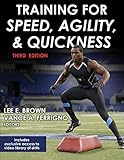
- Training for Speed, Agility, and Quickness is the workout guide you need in order to perform a step ahead of the competition
- What elevates this book to become the ultimate training resource is the exclusive access to the online video library of drills, ideal for both athletes and coaches
- Manufactured in United States
Other Resources
- Red Bull: “10 Agility Exercises to Speed Up Your Performance”
- Verywell Fit: “Best Agility Exercises for Athletes”
- Simplifaster: “A Coach’s Guide to Creating Your Own Speed and Agility Program”
- Fitplan Blog: “7 Best Exercises for Speed & Agility Training”
- Brughelli, M., Cronin, J., Levin, G., & Chaouachi, A. (2008). Understanding change of direction ability in sport. Sports Medicine, 38(12), 1045–1063. https://doi.org/10.2165/00007256-200838120-00007
- Miller, M. G., Herniman, J. J., Ricard, M. D., Cheatham, C. C., & Michael, T. J. (2006). The effects of a 6-week plyometric training program on agility. Journal of sports science & medicine, 5(3), 459–465. https://pmc.ncbi.nlm.nih.gov/articles/PMC3842147/