Key Takeaway
- Yes, you can sometimes attach a bike trailer without the original coupler, but only if your bike and trailer are actually compatible.
- The safest alternatives are usually axle-based solutions, such as a bolt-on adapter or the correct quick-release or thru-axle replacement part.
- A chain stay or seat post setup can work for some trailer systems, but they are not universal fixes.
- If you are towing a child or pet trailer, do not skip the back-up safety strap or security pin.
- If your bike has a thru-axle, disc brakes, rear suspension, or a hub motor, check fit carefully before riding.
How to attach bike trailer without coupler is a common question when your original coupler breaks, your used trailer did not include one, or you need a temporary backup before buying the right replacement. If you use your bike for commuting, errands, group rides, or weekend adventures, you do not want to guess here. You want a setup that feels secure, tracks straight, and does not fail when you corner or brake.
The good news is that there are workable alternatives. The more honest answer, though, is that not every workaround is safe for every bike. Your axle type, frame shape, brake setup, and trailer design all matter. In many cases, the best “without coupler” solution is not a random DIY fix. It is the correct adapter, hitch, or replacement part for your bike and trailer combination (Thule, n.d.-b).
Before you start, this is a smart internal-link spot: If you are unsure what rear axle your bike uses, read our guide to bike trailer hitch types and axle compatibility first.
Need a Few Practical Extras for Your Next Ride?
Browse cycling-related clothing and simple bike accessories that may help with comfort, visibility, storage, or everyday riding.
Paid links. As an Amazon Associate we earn from qualifying purchases.
Quick Compatibility Check: What Works on Your Bike?
| Bike setup | What to check first | What usually works best |
|---|---|---|
| Quick-release axle | Does your trailer brand support QR hitching? | A proper QR adapter or the brand’s hitch hardware |
| Bolt-on or nutted axle | Axle diameter and thread pitch | A bolt-on hitch or axle adapter matched to your axle |
| 12 mm thru-axle | Exact axle length and thread pitch | A dedicated thru-axle adapter, not a generic coupler |
| Disc brakes or rear suspension | Clearance around the dropout and hitch area | Brand-specific fit check before towing |
| Hub-motor e-bike | Nutted axle or thru-axle type, plus warranty concerns | A compatible adapter after checking the bike manual |
| Child or pet trailer | Back-up safety strap, pin, and secure locking | The manufacturer’s original hitch or a verified replacement |
This matters because many trailers do not simply fit “any bike.” Some hitch guide notes that some bikes need a QR adapter, a nutted-axle adapter, or a 12 mm thru-axle solution, and it advises riders to confirm axle details with the bike or hub manufacturer when needed. Thule’s manuals also require correct hitch installation, a security pin, and a back-up safety strap around the bike frame (Thule, n.d.-a, n.d.-b).
What Works / What Doesn’t When You Need a Bike Trailer Hitch Alternative
What usually works
- A proper axle-mounted replacement part for your exact bike setup
- A quick-release adapter if your bike uses a QR skewer and your trailer brand supports it
- A bolt-on axle hitch or axle adapter on compatible solid-axle bikes
- A dedicated thru-axle adapter on compatible thru-axle bikes
- A seat post hitch only when the trailer system was designed for that kind of mount
- A back-up safety strap and locking pin every single time
What usually does not work well
- Treating one “universal” coupler as if it fits every bike
- Skipping the safety strap because the hitch “feels tight enough”
- Guessing your axle size or thread pitch
- Clamping hardware onto carbon parts or lightweight tubing not designed for towing
- Improvised mounts on bikes with limited frame clearance, disc brake interference, or rear suspension
- Using a child or pet trailer with a workaround you have not tested carefully
Why this matters: Burley says the standard hitch system works for most bikes, but some bikes need an adapter or a thru-axle solution to hitch the trailer properly. Thule’s instructions also require a security pin and a back-up safety strap, and explicitly say not to use the trailer if that strap cannot be attached around the bicycle frame.

Can I Attach a Bike Trailer to Any Bicycle?
Sometimes, but not always. Many road bikes, mountain bikes, hybrids, and e-bikes can tow a trailer, but the correct attachment depends on your rear axle, frame design, and trailer brand. Some bikes need an adapter instead of a basic coupler, and some setups are poor matches for axle-mounted towing altogether.
However, while you can use many trailers with many bicycles, choose the right coupler or bike trailer adapter. This is a metal device that connects your trailer to your bike.
For example, some note that quick-release bikes usually need a QR adapter, while bolt-on and thru-axle bikes often need model-specific parts. It also warns that some axle-mounted trailer setups are not recommended on certain dropout designs.
Tip: If you’re into city commuting and casual rides, you may also want to check our recommendations for the best hybrid bikes under $500 or best hybrid bikes under $1000 that pair well with trailers.
What You Need To Attach a Bike Trailer
It’s fairly simple to attach a bike trailer to your bike, whether you use a coupler or another method. Typically, you’ll need:
- A coupler or alternative hitch system.
- Wrenches or Allen keys (depending on your bike).
- A safety strap to secure the trailer.
You may also need:
- A quick-release adapter, bolt-on axle adapter, or thru-axle adapter
- A security pin or locking clip
- A torque wrench if your manufacturer specifies tightening values
- Your trailer’s manual, especially if you are working around disc brakes, hub motors, or internal-gear hubs
Couplers generally cost $10–$15 and are designed for easy installation, but alternatives may require a bit more effort.
That price range is one reason many riders try to improvise. But if you are towing children, pets, or heavier cargo, a verified replacement part is usually the smarter choice. Thule’s instructions are very clear that the hitch arm, security pin, and back-up strap are all part of the safety system, not optional extras (Thule, n.d.-a, n.d.-b).
Missing but Important: What People Usually Forget To Check
Before you decide on any no-coupler setup, check these first:
- Your axle type
Quick release, bolt-on, and thru-axle bikes do not use the same solution. - Your trailer type
A cargo trailer gives you more flexibility than a child trailer. Child and pet trailers deserve a much higher safety bar. - Your frame clearance
Disc brakes, racks, fenders, and rear suspension can get in the way of some hitch designs. - Your back-up safety strap
Do not treat this as optional. Thule explicitly says not to use the trailer if you cannot attach the back-up strap around the bike frame (Thule, n.d.-a, n.d.-b). - Your real goal
If this is a long-term setup, skip the shortcut and buy the right replacement coupler or adapter.
Can I Attach a Bike Trailer Without a Coupler?
Hitch couplers serve as a safety mechanism to keep your bike trailer attached to your bike. It is not recommended that you attach a bike trailer without one.
The coupler lets you quickly and effortlessly attach and detach the bike trailer with a simple security pin. Some bikers choose to DIY their coupler after theirs broke or if their bike trailer had no coupler. However, you must get a quality replacement to ensure safety.
In practical terms, “without a coupler” often means “without the original coupler that came with the trailer.” In that case, the safer solution is often a replacement hitch, axle adapter, or brand-specific attachment part rather than a completely improvised connection (Thule, n.d.-b).
Why a Coupler is the Standard (and Safest) Option
Couplers are widely recommended because they:
- Act as a safety mechanism to keep your trailer firmly attached.
- Allow quick attaching/detaching with a simple pin.
- Are tested by manufacturers for strength and stability.
While it’s possible to ride without the original coupler, the safer route is still a tested hitch or adapter designed for your specific bike and trailer. Official guides from Thule focus on matching the correct hardware to the bike, not improvising a universal fix (Thule, n.d.-b).
That caution is not theoretical. The U.S. Consumer Product Safety Commission has documented recalls involving trailer hitch mechanisms that could crack, break, or require added safety-strap kits because separation from the bicycle created an injury risk (CPSC, 2012, 2016).
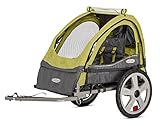

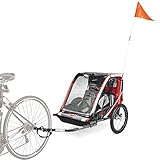

Quick note: These products are trailer examples, not coupler replacements. If your only problem is a missing hitch, check for the correct replacement coupler, hitch, or axle adapter before buying a whole new trailer. That is usually cheaper and safer.
Should You Buy a Replacement Coupler Instead?
In many cases, yes. This is often the best fix.
Choose a replacement coupler first if:
- You tow a child trailer
- You ride an e-bike
- You have a thru-axle
- You use the trailer often
- You want the most predictable handling
How to DIY a Bike Trailer Coupler
Couplers usually cost about $10-$15. But if you’re feeling tech-savvy, here’s how to build your own coupler.
First, know that you must be an experienced welder to craft a bike trailer coupler. You will need some metal pieces, such as steel rods and plates. Here’s a quick Youtube tutorial on how you can DIY a Bike Trailer Coupler.
That said, use extra caution here. A DIY coupler is not just a metal project. It becomes a safety-critical connection point. If your welds, pin placement, articulation angle, or strap backup are weak, the trailer can detach or track badly. For most riders, especially anyone towing kids or pets, buying the right replacement part is the better move.
Compatibility and Safety Warnings Before You Try Any Workaround
Read this before you install anything:
- If your bike has a thru-axle, do not assume a generic coupler will work. Many thru-axle bikes need a dedicated adapter matched to axle length and thread pitch.
- If your bike has a hub motor, rear suspension, or unusual dropout design, check compatibility before towing. E-bike towing changes handling, braking distance, and trailer behavior, especially under load.
- If you are towing a child trailer, the safety bar is higher. The American Academy of Pediatrics says young passengers should be handled with extra caution and preferably ride in a bicycle-towed child trailer on quiet routes, not busy roads.
- If you cannot attach the back-up safety strap around the bike frame, stop. Thule’s manuals say not to use the bicycle trailer in that case.
- If your axle nut does not fully engage, the hitch sits crooked, the trailer binds in turns, or the tow bar does not lock with a real pin, do not ride. Those are warning signs of a poor or unsafe setup.
Do not use a no-coupler workaround if…
- you are guessing the axle type
- you are missing the safety strap
- the trailer will carry a baby or very young child
- your bike manual warns against towing
- the mount rubs the frame, brake, or wheel
- you have not test-ridden it in a safe area first
How to Attach Bike Trailer Without Coupler?
Here are simple tips to consider when attaching your bike trailer without a coupler:
Bolt-on Hub Method
You will need a steel-made bolt-on hub to attach the trailer to your bike. Here’s a step-by-step guide on how you can do this.
- First, unscrew the axle nut and its accompanying wheel washer from the bike’s left side.
- Affix the hitch onto the axle, making sure to change the washer as you do so. The steel hitch grants you adequate traction to ensure that the axle nut remains secure. Adjust your steel hitch installation’s alignment and grip by swapping out the replacement component.
- Next, carefully align the tow bar and insert its pin from the bottom before securely locking it. Make sure that the hitch is in the correct alignment with the pin. This facilitates tightening your rear axle nut while securing the hitch in the right position.
- The last steps include connecting your trailer to your bike and fastening the safety strap. To secure it, attach the strap to the tow bar before continuing to secure it.
Why this method is often the most practical: Axle-based attachment is the standard design on many trailers. If your bike has a bolt-on axle, this is usually the first place to look for a safe workaround. Thule’s instructions for solid axles say to verify compatibility, install on the left side of the axle, and tighten the nut to the bike manufacturer’s recommended torque. They also require the security pin and back-up safety strap (Thule, n.d.-b).
Extra caution: Make sure the axle nut still engages fully after adding the hitch hardware. Thule warns that the rear axle nut must be tightened by at least five full turns on compatible solid-axle setups, and that torque support washers may need to remain in place depending on the hub design (Thule, n.d.-b).
Pros: Strong connection, reliable for cargo trailers.
Best for: bikes with compatible bolt-on axles, especially cargo-focused setups.
Cons: Requires tools and may be tricky for beginners.
Not ideal when: your axle is too short, the hardware interferes with the frame, or you are guessing at the thread pitch.
Chain Stay Mount Frame Method
A chain stay mount frame method requires a chain stay bracket and some tools. Here’s how you can attach your bike trailer without a coupler using this method:
- Secure the hitch’s “V” shaped portion onto the bike frame’s chain stay.
- Tighten the large knob located on the hitch by turning it clockwise.
- Attached to the trailer kit is a two-hole tube. Insert one end of the bike trailer into these openings and affix the clip from above.
- Clip and fasten the safety strap to the frame.
Important: Use this only if your trailer system was designed for chain stay or frame mounting. It is not a universal substitute for every missing coupler. On some bikes, frame-mounted alternatives are used when the usual axle area is blocked or incompatible, but they can introduce fit and twisting issues if the mount is not designed for your frame.
Pros: Easier installation, no axle work.
Can be useful when: the axle area is crowded by specific bike hardware or the trailer system supports this mount by design.
Cons: May stress the bike frame if overloaded.
Use extra caution on lightweight frames, carbon parts, or bikes with unusual rear triangle shapes.
Seat Post Mount Method
Seat post mount hitches are another great alternative for attaching a bike trailer without couplers. Some of the top choices for seat post mounts are:
- Travoy Quick Hitch
- WeeRide Co-Pilot Spare Hitch
- Ventura Zinc Coated Bicycle Trailer Hitch
Steps:
- Secure the safety strap around the post or frame.
- Tighten the hitch clamp to your bike’s seat post.
- Slide in the trailer’s tow bar and lock with a pin.
This method is best treated as a trailer-specific solution, not a universal one. Some cargo-style systems are intentionally built around a seat post-mounted hitch.
Pros: Quick setup, widely available.
Good for: lighter cargo-oriented systems that are designed around a seat post hitch.
Cons: Not ideal for very heavy loads.
Also not my first choice for most child trailers unless the manufacturer specifically supports that setup.
These are simple text diagrams you can place under the methods section. They are not technical blueprints. They are visual explainers to make the article easier to scan.
Diagram 1: Axle-mounted setup
[Trailer Tow Bar] ---- [Hitch Plate]
                           |
                           |  mounted at rear axle
                           V
                    [Left Rear Dropout]
                          [Axle]
                           |
                    [Axle Nut / QR]

Back-up safety strap:
[Trailer] ------------------> loops around bike frame
Diagram 2: Chain stay / frame-mounted setup
        Bike frame side view       [Seat Tube]
            |
            |
     -------|---------
    /       |        \
   /   [Chain Stay]   \____ rear wheel
  /
 [Frame-mounted bracket]
           |
           |
   [Trailer Tow Bar]
           |
        [Trailer]Back-up safety strap:
wrap around a strong frame section, not a moving part
Diagram 3: Seat post-mounted setup
          [Saddle]
             |
         [Seat Post]
             |
      [Seat Post Hitch Clamp]
             |
             |
      [Trailer Tow Bar] -------- [Trailer]Back-up safety strap:
secure around approved frame/post area if the system requires it
These diagrams show the general attachment idea only. Always follow the instructions for your trailer brand, hitch type, and axle style before riding.
What if Your Bike Has a Thru-Axle, E-Bike Motor, or Disc Brakes?
This is one of the biggest missing subtopics in most articles on how to attach bike trailer without coupler.
- Thru-axle bikes usually need a dedicated thru-axle solution, not a generic coupler. Riders should check the exact thread pitch and hub length before buying a thru-axle adapter.
- Hub-motor e-bikes often have nutted axles, and they may require an adapter for secure attachment.
- Disc brakes, rear suspension, and unusual dropout shapes can interfere with a standard hitch.
- If your e-bike manual warns against towing or sets weight limits, follow that first.
Simple rule: If your bike is not a standard quick-release or plain bolt-on setup, stop and verify fit before you ride.
When Not To Use a No-Coupler Workaround
Do not use a workaround if:
- You cannot attach the back-up safety strap
- Your axle nut does not thread on securely
- The hitch sits crooked or rubs the frame
- The tow bar does not lock with a real security pin
- The trailer leans, binds, or shifts when you turn
- You are towing children and have any doubt about the setup
Thule’s manuals explicitly say not to use the trailer if you cannot attach the back-up strap around the bicycle frame (Thule, n.d.-a, n.d.-b). That is one of the clearest safety lines on this topic.
How To Test the Setup Before a Real Ride
Before you ride in traffic, do this quick test:
- Shake the tow bar side to side and up and down. It should feel secure, not loose.
- Pull the trailer forward and backward by hand to make sure the hitch stays locked.
- Do a slow test ride in an empty parking lot.
- Brake gently, then more firmly, and check whether the trailer tracks straight.
- Turn both directions at low speed and listen for rubbing or clicking.
- Recheck the axle nut, pin, and safety strap after the first few minutes.
This kind of test matters because real-world hitch problems often show up during turning, braking, or repeated vibration, which is exactly why hitch failures and misassembly have appeared in past recall notices (CPSC, 2012, 2016).

Safety Tips Before Riding With a Trailer Without Coupler
- Double-check all fastenings before every ride.
- Test the trailer in a safe area before heading into traffic.
- Use a safety strap no matter which method you choose.
- Keep loads balanced to avoid frame strain.
If you are carrying a child, be even more conservative. The American Academy of Pediatrics recommends extra caution when biking with a young passenger and prefers quiet routes over busy roads. It also notes that young children should be properly supported and helmeted when age-appropriate (American Academy of Pediatrics, 2022).
Urban riders should also prepare with the urban biking essential list to make sure their rides are safer and smoother.
Important Warning for Babies and Young Children
If this trailer will carry a baby or very young child, be more conservative than you would be with groceries or camping gear. The American Academy of Pediatrics advises extra caution with young passengers and prefers child trailers over bike-mounted seats in many cases, but that does not mean every workaround is acceptable. For babies and very young children, use only a setup that is clearly compatible, correctly installed, and properly secured with the trailer’s locking pin and safety strap.
REI’s child-cycling guidance, based on AAP advice, notes that children who can sit well unsupported and whose necks are strong enough to support a lightweight helmet are the usual starting point for trailer riding, often around 12 months and older, but families should still check local laws and ask a pediatrician when unsure.

FAQs: Bike Trailers Without Couplers
Can I attach a bike trailer without coupler?
Yes, sometimes, but only if you replace the missing connection with compatible hardware and keep the safety strap in place.
Is it safe to DIY a bike trailer coupler?
If you’re an experienced welder, it’s possible, but most riders are safer buying a $10–$15 replacement.
That is especially true for child trailers, pet trailers, and heavier cargo loads.Which method is best for kids or pets?
The safest answer is usually the original manufacturer hitch or a verified replacement part. If you are towing kids or pets, do not assume a seat post or generic frame mount is safer just because it looks simple. Use the setup your trailer was designed to use whenever possible (Thule, n.d.-a; Thule, n.d.-b).
Do manufacturers allow alternatives?
Most recommend couplers, but alternatives are acceptable for short rides or emergencies.
Manufacturers generally focus on compatibility, original hitch hardware, and the correct adapter for the bike. That is different from giving blanket approval to improvised alternatives (Thule, n.d.-b).Can I attach a bike trailer to a thru-axle bike without the original coupler?
Sometimes, yes, but many thru-axle bikes need a dedicated thru-axle adapter instead of a generic hitch part.
Can I tow a child trailer with an e-bike?
Often yes, but you should confirm axle compatibility, weight limits, and any warranty concerns in your e-bike manual first.
What matters more: the coupler or the safety strap?
Both matter. The hitch hardware provides the main connection, and the back-up strap is the fail-safe. Thule says the trailer should not be used if the back-up strap cannot be attached correctly (Thule, n.d.-a, n.d.-b).
Final Thoughts – How to Attach Bike Trailer Without Coupler Safely
Attaching a bike trailer without coupler is possible through methods like bolt-on hubs, chain stay mounts, or seat post hitches. While these solutions work, they require careful installation and frequent checks. For peace of mind, a proper coupler remains the safest and most reliable option.
The smartest version of this advice is simple: if you need to know how to attach bike trailer without coupler, start by identifying your axle type and trailer type before you touch any tools. In many cases, the best answer is not a hack. It is the correct replacement hitch, adapter, or coupler for your exact setup. That gives you better safety, better handling, and fewer surprises on the road.
If you ride in the city, our urban biking essentials list can help you build a safer towing setup.
If you are comparing bikes for trailer use, see our best hybrid bikes under $500 and best hybrid bikes under $1000 guides.
References:
American Academy of Pediatrics. (2022, August 3). How to protect child passengers on adult bikes. HealthyChildren.org.
Bike League. (2023). Safe trailer attachment practices for cyclists. League of American Bicyclists. Retrieved from https://bikeleague.org/
Thule. (n.d.-a). Thule Chinook bicycle trailer kit instructions [PDF].
Thule. (n.d.-b). Thule Coaster XT manual [PDF].
U.S. Consumer Product Safety Commission. (2012, January 11). Chariot Carriers recalls child bicycle trailers and conversion kits due to injury hazard.
U.S. Consumer Product Safety Commission. (2016, October 28). Burley Design recalls child bicycle trailers due to injury risk.