Key Takeaway: Choosing the right bike pedal types boosts power output, efficiency, and comfort across all riding styles.
Choosing the right bike pedal types can feel overwhelming with so many options. With so many different types available on the market, it can be hard to know which ones are right for you.
This blog post will discuss the different types of bike pedals available and how to choose the right ones for your needs. So, whether you’re a casual cyclist or a serious racer, keep reading to learn more about bike pedals!

Common Pedal Types: Flat Vs. Clipless Vs. Clip
Flat pedals, also called platform pedals, are the simplest type of pedal, and beginner cyclists often use them. They provide good grip and stability, but they can be difficult to keep your feet on during longer rides.
Need a Few Practical Extras for Your Next Ride?
Browse cycling-related clothing and simple bike accessories that may help with comfort, visibility, storage, or everyday riding.
Paid links. As an Amazon Associate we earn from qualifying purchases.
Clipless pedals are more advanced, and they allow you to “clip in” to the pedal with a special shoe. This provides better pedaling efficiency and power transfer, but it can take some time to get used to.
Clip pedals are a combination of flat and clipless pedals. They have a flat surface like a flat pedal, but they also have a toe clip or cage that you can “clip in” to. This provides some of the pedaling efficiency of a clipless pedal, but it is easier to get used to than a full clipless pedal.
So, which type of bike pedal is right for you? It depends on your riding style and goals. If you’re just starting, flat pedals may be the best option. If you’re looking to improve your pedaling efficiency, clipless or clip pedals may be better.
Why choose a clipless pedal?

Clipless pedals offer many advantages over flat pedals. First, they allow you to “clip in” to the pedal with a special shoe. This provides better pedaling efficiency and power transfer, allowing you to ride faster and longer.
Second, clipless pedals provide greater stability and control. This is especially important when riding on rough terrain or in wet conditions.
Finally, clipless pedals can help prevent foot pain and injuries. Because your feet are clipped in, they can’t slip off the pedals and become injured.
So, if you’re looking for the best performance and safety, clipless pedals are the way to go.
Why choose a flat pedal?

Flat pedals are the simplest type of pedal, and beginner cyclists often use them. They provide good grip and stability, but they can be difficult to keep your feet on during longer rides.
However, flat pedals have some advantages over clipless pedals. First, they are easier to get in and out of. This can be helpful if you’re new to cycling or stopped at a traffic light.
Second, flat pedals don’t require special shoes. This means you can wear any type of shoe, which can be helpful in a pinch.
Finally, flat pedals are often less expensive than clipless pedals. Downhill, BMX, or bike park riders often prefer flat pedals because they’re easier to bail out on if you need to.
Why choose a clip pedal?
Clip pedals have a toe clip or cage to which you can “clip in”. You don’t need a cycling-specific shoe, but you’ll get some of the pedaling efficiency of a clipless pedal.
Clip pedals are often used by bike commuters or even triathletes who need the pedaling efficiency of a clipless pedal but don’t want to deal with the learning curve.

Pedal Types According to Ride Type

Road Clipless Pedals
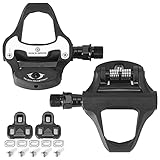
Road clipless pedals remain the go-to for riders chasing speed and efficiency on pavement. These pedals lock your foot in with a 3-bolt cleat, ensuring a broad contact area for power transfer and even pressure distribution—ideal for long efforts and high cadences.
Look for models offering 6–10° of float to ease knee stress during sustained rides.
- Cleat System: 3-bolt (e.g., Shimano SPD-SL, Look Keo)
- Platform Area: ~500–550 mm² for stability
- Float: 0–15° adjustable
- Weight Range: 240–350 g per pair
- Best For: Road racing, group rides, triathlon


Mountain Bike Clipless Pedals
Built to withstand mud, rocks, and roots, MTB clipless pedals use a 2-bolt system (e.g., Shimano SPD, Crankbrothers) for easy mud-shedding and quick engagement/disengagement. Many models feature a concave platform around the cleat area, increasing lateral stability when you’re clipping in on uneven ground. Riders tackling technical terrain often prefer recessed cleat designs to allow confident walking off the bike.
- Best For: Trail riding, enduro, all-mountain
- Cleat System: 2-bolt (SPD, Crankbrothers)
- Platform Style: Open design for self-clearing
- Float: Typically 6° fixed or adjustable
- Weight Range: 300–450 g per pair

Mountain Bike Flat Pedals
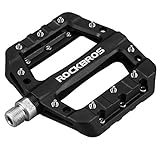
Flat pedals for mountain biking feature a wide, grippy platform studded with replaceable pins. They allow quick bail-outs in steep or technical sections, which many downhill and park riders appreciate.
Pair with vulcanized-rubber shoes featuring stiff midsoles for optimal power transfer and pedal feel.
- Best For: Downhill, freeride, bike park
- Platform Size: 100×95 mm to 110×100 mm
- Pin Count: 8–14 per side, adjustable depth
- Material Options: Aluminum, magnesium, composite
- Weight Range: 350–600 g per pair



BMX Pedals
Designed for abuse, BMX pedals prioritize durability and control for tricks and jumps. Many feature sealed bearings and steel bodies, resisting impacts and axle flex.
Look for double-sealed bearing systems if you ride in wet or gritty conditions to extend service intervals.
- Best For: Street, park, dirt jumping
- Body Material: Steel or chromoly for toughness
- Platform Style: Small-to-medium surface, aggressive pins
- Weight Range: 400–700 g per pair

Bike Commuter & Hybrid Pedals
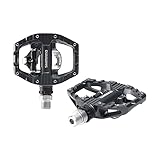
Commute pedals strike a balance between flat and clipless designs. Common “two-in-one” models have a flat side and an SPD-click side, letting you switch between sneakers and cleated shoes midweek.
Opt for platforms with reflectors or built-in lights to boost urban visibility during dawn/dusk rides.
- Dual-Sided: Flat + 2-bolt clipless
- Platform Grip: Moderate pin or textured surface
- Reflectors: Often integrated for safety
- Weight Range: 380–500 g per pair
- Best For: Daily commuting, casual fitness rides


Pedal Features
Pedal float: Pedal float is the degree to which your foot can move before it disengages from the pedal. This is important because it allows your foot to move slightly during pedaling, which can help prevent knee pain and injuries.
Multi-release cleats: Multi-release cleats are designed to release from the pedal in multiple directions. This can be helpful if you’re new to clipless pedals, as it allows you to release from the pedal in a variety of ways.

Performance Research on Bike Pedal Types
Recent studies highlight how pedal design impacts power and physiology:
- A 2004 master’s thesis tested eight competitive cyclists (ages 20–55) in 30-second all-out sprints using clipless, toe-strap, and flat pedals. Results showed significantly higher power output with clipless pedals compared to both flat and toe-strap pedals—but no significant difference between toe-strap and flat pedals. This suggests clipless systems let riders push and pull effectively, boosting power transfer.
- A 2021 investigation on a 20-minute FTP test found clipless pedals increased average power by ~5.3% (226 ± 46.1 W vs. 215 ± 41.8 W) and lowered heart rate by 2.4%, compared to flat pedals—with similar cadence. Researchers concluded clipless pedals deliver measurable efficiency gains.
Additional Pedal Categories & Sizing
Bike pedals also include:
- Power meter pedals: Built-in sensors track your watts in real time.
- SPD and other clipless variants: Favored in MTB and commuting for easy walkability.
Standard pedal threads are 9/16 inch on modern bikes and 1/2 inch on older or children’s models. Axle length can vary by –3 mm (short) or +4 mm (extended) to suit rider biomechanics.
Pedal Materials: Aluminum vs. Steel vs. Carbon
Aluminum pedals are the most common type, and they offer a good balance of weight and durability.
Steel pedals are heavier but more durable, while carbon fiber pedals are lighter but can break more easily.

Quiz: Which Bike Pedal Type Is Right for You?
Instructions: For each question, pick the letter (A, B, C, or D) that best describes you. At the end, see which letter you chose most often.
Your typical ride is…
A. Short city commute, lots of stops
B. Long road rides or fast group rides
C. Trail adventures with technical sections
D. A mix—sometimes road, sometimes casual
Your priority is…
A. Quick foot release when you need it
B. Maximum power transfer and efficiency
C. Foot security and control over rough terrain
D. Flexibility without special shoes
Shoe preference:
A. Regular sneakers or casual shoes
B. Dedicated cycling shoes with cleats
C. Grippy trail shoes or flat-soled cycling shoes
D. I don’t mind either, but comfort matters
How do you feel about “clipping in”?
A. Too much hassle—prefer quick on/off
B. Love it! Feels locked in and efficient
C. Only if it’s easy and forgiving on release
D. Fine occasionally, but not full-on clipless
Budget considerations:
A. Lowest cost, minimal gear needed
B. Will invest for performance gains
C. Mid-range—durability over weight
D. Moderate—balance price and features
Terrain you ride most often:
A. Urban streets with traffic lights
B. Smooth pavement and bike paths
C. Rocky, rooty singletrack or bike parks
D. Mixed surfaces—pavement and easy trails
Tally Your Answers
- Mostly A’s → Flat Pedals
Simple platform pedals give you instant foot freedom, no special shoes needed, and low cost—perfect for urban stops and casual riders. - Mostly B’s → Clipless Pedals
You want every watt of power and don’t mind specialized shoes. Clipless systems (SPD-SL, Shimano road, etc.) lock you in for maximum efficiency. - Mostly C’s → Flat Pedals with Pins or Hybrid Clipless
You ride rough terrain and need solid traction. Choose grippy flat platforms or two-sided SPDs for stability and control. - Mostly D’s → Clip-Pedals (Toe-clip/Strap) or Commuter Hybrid
You value versatility—some retention without a full lock-in. Toe-clips or commuter hybrids give you a balance of security and ease.
Quick Recap
- Flat Pedals if you ride city, value ease, and wear any shoe.
- Clipless Pedals if you chase speed, group rides, and efficiency.
- Flat/Hybrid Pedals if you tackle trails and need grip.
- Clip-Pedals if you want a middle ground for mixed riding.
Conclusion on Bike Pedal Types
Choosing the best bike pedal types depends on your goals: clipless for performance, flat for simplicity and safety, and clip for a middle ground. Match pedal features—power transfer, release mechanism, platform size—to your ride style for maximum comfort and efficiency.
Read also: How to Change Bike Pedals