Best Bike Brake Pads in 2026
Best Brake Pads for Alloy Rims
- Best Overall: Swisstop Flashpro Brake Pads
- Best Alternative: TRP Alloy Rim Compound Pad
- Best Value for Money: Shimano Brake Pads
- Best Trendy Pads: Pioneeryao Brake Pads
Best Brake Pads for Carbon Rims
- Best Overall: Swisstop Flashpro Brake Pads
- Best Alternative: Zipp Tangente Platinum Pro Evo Brake Pads
- Best Value for Money: Shimano R55C4 Brake Pads
- Best XC Brake Pads: SRAM Force/Rival Brake Pad
- Best All-Weather: Kool Stop Dura
- Best Lightweight: Campagnolo Brake Pad
Best Brake Pads for Disc Brakes
- Best Overall: AGPTEK Bike Brake Pads
- Best for Quiet Comfort: Tektro E10.11 Organic Compound Disc Brake Pads
- Best for Versatile Material Options: Corki “4 Pairs” Disc Brake Pads
- Best for High-Power Road & Gravel Riding: Top Brake Disc Bike Brake Pads
- Best OEM-Grade: BOSCH BC905 QuietCast Premium Ceramic Disc Brake Pad Set
If you’re searching for the best bike brake pads to keep your ride safe and smooth—whether you commute through city streets or tackle rugged trails—you’ve landed in the right place.
Brake pads come less expensive, yet they perform a crucial part in giving you smooth and safe braking, especially on wet or harsh trails.
Since they wear over time, regular replacement or upgrade is part of your routine.
Now, if you’re in a search for your bike brake pads replacement, whether for alloy or carbon rims, your hunt is over because we already reviewed the best bike brake pads for you.
Need a Few Practical Extras for Your Next Ride?
Browse cycling-related clothing and simple bike accessories that may help with comfort, visibility, storage, or everyday riding.
Paid links. As an Amazon Associate we earn from qualifying purchases.
You can also check on the points you need to ponder to select the perfect one for your bike.

32,953
Customer Reviews

19
Testing Hours

15
Tested Products

13
Sources Researched
- Best Bike Brake Pads in 2026
- Best Bike Brake Pads for Alloy Rims
- Best Brake Pads for Carbon Rim Brakes
- Best Brake Pads for Disc Brakes
- What to Look for When Buying Brake Pads
- Brake System Type
- Compound & Performance
- Weather & Riding Conditions
- Fit & Compatibility
- Ease of Installation & Maintenance
- Personal Preference & Budget
- Brake Pad Life & Replacement Indicators
- Environmental & Recycling Considerations
- Certifications & Testing Standards
- Noise Mitigation Strategies
- Price vs. Performance Balance
- How to Replace Bike Rim Brake Pads
- How to Replace Disc Brake Pads
- Statistics & Research
- Frequently Asked Questions
- Conclusion on the Best Bike Brake Pads
Best Bike Brake Pads for Alloy Rims
Swisstop Flashpro Brake Pads
Best Overall: Excellent modulation

- Compatible with SRAM, Shimano calipers
- Bolt-on attachment
- Greater linear braking performance
- Perfect for beginners
If you have just started with cycling and are into less aggressive riding, Swisstop Flashpro is a great way to start. It offers an excellent modulation on the brake. Thus, you can easily control it without putting on much pressure. It is also designed with asymmetrical grooves for a better grip on sudden downpours.
Flashpro is made of Black Compound. It is resistant to wear and tear yet gentle on alloys, aluminum, or even magnesium rims. You also get a ride that doesn’t get much attention because of its silent braking mechanism.
TRP Alloy Rim Compound Pad
Best Alternative: High-performance braking

- Compatible with TRP cartridges and Shimano road cartridges
- 2 pairs of pads
If you want to venture on a different pad for your aluminum rims, TRP is a great choice. It offers high-performance braking and can last in wet weather. It comes with 2 pairs of pads for complete front and rear rims.
Note also that TRP is a fit for Shimano cartridges, so you might as well get this as an alternative.
Shimano Brake Pads
Best Value for Money: Excellent choice for long-distance rides
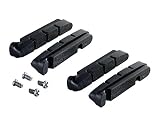
- Compatible with Dura-Ace, Ultegra, 105
- Includes 2 pairs of pads and 4 bolts
- Heavy-duty and long-lasting
Shimano brake pads are an excellent choice for your braking system if you are into road racing or long-distance rides. They matched the rigidity of the Shimano cartridge to give you a powerful and steady bike brake control in both wet and dry.
Plus, you also get noise-free braking with Shinamo brake pads.
Pioneeryao Brake Pads
Best Trendy Pads: Comes in a wide range of colors

- 2 pairs of pads with screw
- 55 mm length; 37 g/pair
- Available in six different colors
If you own a trendy road bike and you love colors, Pioneeryao is the perfect brake pad for you. As we know, brake pads rarely come in a wide range of colors, so this is your chance to get the color you like.
Its built-in grooves ensure water is quickly dispersed, so you still get excellent bike brake control even in wet trails. Installing it will be easy and secured because of the head screws. It is also compatible with most rim brakes so that you can buy and worry not about the fitting.
Best Brake Pads for Carbon Rim Brakes
Swisstop Flashpro Brake Pads
Best Overall: Smooth bike brake control
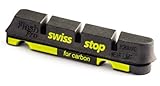
- Compatible with SRAM, Shimano
- Bolt-on attachment
- Smooth and noiseless rides
Swisstop Flashpro pads feature deeper asymmetrical groves and a more distinct edge profile. This results in an easy mopping of water and gives you a better bike brake modulation. A glimpse of downhill rides will not be a problem as it is easier to apply lower braking force. Hence, you will have fine control over the brake.
Besides, you will not be bothered with squeaking sounds because Flashpro gives a smooth and quiet ride.
They are also compatible with SRAM and Shimano cartridges, and they are easily fixed with bolts.
Zipp Tangente Platinum Pro Evo Brake Pads
Best Alternative: Plain and smooth braking

- Compatible with Shimano/SRAM and Campagnolo brakes
- Smooth speed control
- Greater surface area for the best braking power
Who doesn’t want a plain and smooth braking? Well, Tangente Platinum got it for you. It features a 1 mm reduction in its width. There is also an increase in the radial height to give a larger surface area for a more incredible grip on the rims. This design allows the spread of heat for better braking effectiveness and makes the pad lasts longer.
Its groove design essentially sweeps off the water while channeling the air to give you a dry and cooler braking system. Plus, it doesn’t damage your rims, and there is no discoloration as well.
Shimano R55C4 Brake Pads
Best Value for Money: Excellent brake control
- Compatible with Dura-Ace, Ultegra, 105
- 2 pairs of pads with 4 screws
Shimano R55C4 brake pads can fit a wide range of rims. This includes current Dura-Ace, Ultegra to 105, cantilever brakes, and group-less road bikes. It offers high-end braking consistency on both dry and wet roads.
These Shimano brake pads also work well and give you excellent bike brake control on asphalt and on mud. At the same time, it protects the rim as well as possible.
SRAM Force/Rival Brake Pad
Best XC Bike Brake Pads: Reliable stopping power even in wet conditions

- Compatible with SRAM Red, Force, and Rival calipers
- Great for cyclocross or road rides
- 99 grams a pair
SRAM brakes pads are made switchable with the Shimano Dura-Ace and is a perfect match for Red, Rival, and Force or Apex holders. No need to worry about its fitting because they are easy to fit on standard cartridge pads.
With the compounds suitable for carbon rims, SRAM provides an excellent stopping power you can rely on. This is important in poor weather conditions. Hence it is a perfect choice for road or even cyclocross riders.
Kool Stop Dura
Best All-Weather: Excellent stopping power

- Compatible with SRAM and Shimano brake systems
- Semi-metallic or ceramic compounds
- 7.37 mm; a perfect fit for narrower rims
Kool Stop Dura features a dual compound of a salmon compound and a standard black all-weather compound. This gives you excellent stopping power, whether in dry or wet.
Dura also comes with a threaded stem so you can quickly adjust them to fit into your rims. Plus, Dura is thick, so you don’t need to change them often. The pads also have a couple of grooves to help remove water from the rims.
Campagnolo Brake Pad
Best Lightweight: Ultra lightweight
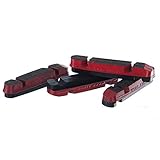
Campagnolo pads come in four pads, so you need to buy one set to fit your bike’s front and rear caliper. It is a perfect match if you are using the Record or Chorus calipers.
Plus, it comes in different colors to match your style.
Best Brake Pads for Disc Brakes
AGPTEK Bike Brake Pads
Best Overall: Reliable All-Condition Stopping Power

- Semi-metallic & resin compound
- Stainless steel springs and pins
- Pure brass fiber + resin
- High-temperature resistance for wet or dry rides
- Compatible with TRP, Tektro, Shimano Deore BR series
You’ll notice strong modulation the moment you squeeze the lever—AGPTEK Bike Brake Pads deliver consistent bite without grabbing too abruptly. The brass-fiber blend sheds heat quickly, so you can ride long descents without fade.
Whether you commute through morning traffic or tackle steep singletrack, the dual-compound construction keeps wear low and noise to a minimum.
Tektro E10.11 Organic Compound Disc Brake Pads
Best for Quiet Comfort

- Organic compound
- Precision-cut backing plate for easy installation
- 2-pack ensures front and rear coverage
- Naturally softer material reduces rotor wear
- Designed specifically for MD-M500 and similar calipers
You might appreciate how gently these Tektro E10.11 Organic Compound Disc Brake Pads bite, letting you feather the brakes in tight corners or crowded city streets. The softer organic material minimizes rotor wear and virtually eliminates squeal.
If noise reduction and smooth modulation top your priority list, the E10.11 pads deliver a reassuring, whisper-quiet stop every time.
Corki Disc Brake Pads
Best for Versatile Material Options

- Available in resin, semi-metallic, multi-metallic, sintered, and copper blends
- Responsive initial bite for trail and road use
- Compatible with TRP, Tektro, Shimano Deore series
- Includes spring and pin for proper pad spacing
You’ll benefit from Corki Disc Brake Pads‘ range of material choices: pick resin for casual rides, semi-metallic for daily commuters, or sintered for aggressive downhill.
Each compound offers a distinct feel—soft and quiet or powerful and long-lasting—so you can match pad performance to your riding style. Installation is straightforward, and the included hardware ensures proper alignment from the start.
Top Brake Disc Bike Brake Pads
Best for High-Power Road & Gravel Riding
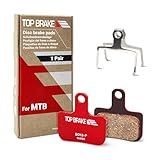
- Ceramic-based compound for consistent stopping power
- Compatible with SRAM Level, Force eTap AXS, Red eTap AXS (Gen.2)
- Low noise with steel backplate and molded shims
- Ideal for MTB, gravel, and cross-country applications
You’ll enjoy firm, predictable braking whether you’re descending rocky gravel tracks or sprinting on pavement. The Top Brake Disc Bike Brake Pads ceramic compound balances power and quiet operation, so you won’t startle fellow riders with squeals.
Plus, the fast bed-in means you can trust pad performance right out of the box—perfect when your next adventure is just around the corner.
BOSCH BC905 QuietCast Premium Ceramic Disc Brake Pad Set
Best OEM-Grade Quiet & Durable Performance
No products found.
You’ll notice factory-level smoothness from your very first stop—these BOSCH BC905 QuietCast Premium Ceramic Disc Brake Pad Set bring OE-grade quality to your ride. The ceramic compound grips steadily without grabbing too hard, so you can modulate speed with confidence.
Molded Shim Technology cuts noise to a whisper, even when you brake hard on winding roads. Plus, the powder-coated backing plate keeps corrosion at bay, extending pad life and saving you hassle.
Just confirm compatibility with your Infiniti or Nissan model, and you’re set for reliable, quiet performance mile after mile.

What to Look for When Buying Brake Pads
Brake System Type
Compatibility: Match pad shape and spring style to your caliper brand (Shimano, SRAM, Tektro, etc.).
Rim Brake Pads
- Cartridge vs. Block: Cartridge pads have a replaceable rubber insert held by a metal shoe. They sit more firmly and bite harder. Block pads screw directly into the caliper. They cost less but wear faster.
- Mounting Style: Check if your caliper needs a bolt-on pad or a threaded post.
Disc Brake Pads
- Resin (Organic): Quiet and gentle on rotors. Ideal for casual riders and city commutes.
- Semi-Metallic/Sintered: Blend of metal and resin. Good heat management. Best for heavier loads and aggressive trails.
- Ceramic: Clean, low dust, and stable performance across temperatures. Great for road and gravel setups.
Compound & Performance
- Heat Dissipation: Semi-metallic and sintered pads shed heat fastest. That helps prevent brake fade on long descents.
- Noise Level: Resin and ceramic pads run quieter. Look for pads with shims or dampening layers to cut vibration.
- Wear Rate: Harder compounds last longer but can wear your rims or rotors faster. Softer compounds bite quickly but need more frequent changes.
Weather & Riding Conditions
- Wet Conditions: Semi-metallic and sintered pads grip better in rain and mud. They resist glazing from moisture.
- Dry Conditions: Organic or ceramic pads offer smooth modulation and minimal dust on dry roads.
- Mixed Use: If you ride both pavement and dirt, choose multi-compound pads designed for all-weather performance.
Fit & Compatibility
- Rim Diameter & Width: Ensure rim pads cover the braking surface fully without rubbing the tire or frame.
- Rotor Size & Caliper Model: For disc brakes, verify that pad thickness and backing plate match caliper specs and rotor clearance.
Ease of Installation & Maintenance
- Hardware Included: Look for pads that come with springs, pins, and shims. That saves a trip to the shop.
- Bed-In Requirements: Some pads need a break-in process. Check manufacturer instructions to avoid glazing or uneven wear.
- Cleaning Tips: Use isopropyl alcohol to wipe your pads and braking surfaces every few rides. A clean pad stops faster and lasts longer.
Personal Preference & Budget
- Feel & Modulation: If you prefer a “grabby” bite, lean toward sintered or semi-metallic pads. For smooth lever pull, choose organic or ceramic.
- Cost Consideration: Resin pads often cost less upfront. Semi-metallic and ceramic can be pricier but deliver longer life or better all-weather performance.
Brake Pad Life & Replacement Indicators
Every pad has a service life measured in miles or millimeters of pad material. Look for built-in wear indicators—small grooves or tabs that disappear when it’s time to swap pads.
For rim brakes, inspect the pad’s groove depth after every 200 miles; once the grooves are nearly gone, plan a replacement.
For disc pads, monitor the pad thickness (typically <1 mm remaining warrants a change). Staying ahead of wear prevents sudden loss of stopping power.
Environmental & Recycling Considerations
Brake pads shed material as they wear, and some compounds contain metals or resins that merit proper disposal. Check manufacturer recycling programs or local hazardous-waste guidelines to keep metal shavings and resin dust out of landfills.
Some brands now offer eco-friendly formulations with less toxic binders—an option for the sustainably minded rider.
Certifications & Testing Standards
Reputable pads often carry ISO or ASTM certifications for friction performance and fade resistance. Seek pads tested under EN 14766 (mountain bike standard) or equivalent road-bike protocols. Pads that meet these standards guarantee consistent performance under high heat and repeated braking cycles.
Noise Mitigation Strategies
Even the quietest compounds can squeal if rotors or pads get glazed. Break in new pads by performing a series of moderate stops—this “bedding-in” transfers a thin layer of pad material onto the rotor, ensuring quiet, vibration-free braking.
Additionally, anti-squeal shims or special friction-reducing grease on pad backs can further dampen noise.
Price vs. Performance Balance
While premium pads (ceramic or sintered) can cost two to three times more than basic resin pads, consider total cost of ownership: higher-end pads often outlast cheaper options by 30–50%.
Calculate your annual mileage and riding conditions to decide if the upfront cost yields long-term savings.

How to Replace Bike Rim Brake Pads
Fortunately, replacing road bike brake pads is a relatively easy task that can be done at home with just a few tools.
Tools needed:
- New bicycle brake pads
- Allen wrench or Phillips screwdriver (depending on your brakes)
- Pliers
- Rag or cloth
Step 1: Remove the old brake pads
- Loosen the bike brake pad retention screw using an Allen wrench or Phillips screwdriver.
- Pull the brake pad out of the brake caliper arm.
- If your bike brake pads have a cartridge system, remove the cartridge by pulling it out of the brake caliper arm.
Step 2: Install the new brake pads
- Slide the new brake pad or cartridge into the brake caliper arm.
- Adjust the position of the brake pad so it makes contact with the rim at the correct angle.
- Tighten the brake pad retention screw using an Allen wrench or Phillips screwdriver.
Step 3: Align the brake pads with the rim
- Squeeze the brake lever to bring the bike brake pads into contact with the rim.
- While holding the brake lever, adjust the position of the brake pads until they are aligned with the rim.
- Release the brake lever and check the clearance between the rim and the brake pads. Make sure the bike brake pads do not rub against the tire.
Step 4: Test the brakes
- Before riding your bike, test the brakes by squeezing the brake lever to make sure the bike brake pads make firm contact with the rim.
- Adjust the brake pads if necessary.
Step 5: Clean up
- Use a rag or cloth to wipe away any debris or residue left from the old brake pads.
- Dispose of the old bike brake pads properly.
How to Replace Disc Brake Pads
Tools You’ll Need
- New disc brake pads (compatible with your caliper)
- Allen wrench or Torx key (per caliper bolts)
- Flat-head screwdriver or piston spreader tool
- Clean rag and isopropyl alcohol
- Needle-nose pliers (optional)
Step 1: Prepare Your Bike
- Put your bike on a stable stand or flip it upside down.
- Remove the wheel with the worn pads.
Step 2: Retract the Pistons
- Locate the two pistons inside the caliper.
- Use a flat-head screwdriver or piston spreader to push both pistons back evenly.
- Press until the pistons sit flush or slightly recessed.
Step 3: Remove the Old Pads
- Find the retaining pin or bolt that holds the pad spring and pads in place.
- Use an Allen wrench or pliers to remove the pin or bolt.
- Slide out the spring clip and old pads together.
Step 4: Clean the Caliper
- Wipe the inside of the caliper with a rag soaked in isopropyl alcohol.
- Remove any dust or debris so new pads seat properly.
Step 5: Install the New Pads
- Place the new spring clip into the caliper first.
- Slide each new pad against the pistons, backing plate toward the caliper.
- Ensure friction surfaces face the rotor.
Step 6: Secure the Pads
- Reinsert the retaining pin or bolt through the pads and spring.
- Tighten to the torque spec in your brake manual (usually finger-tight plus a quarter turn).
Step 7: Reinstall the Wheel & Align
- Slide the wheel back into the dropouts.
- Spin the rotor to check for rubbing.
- If the rotor rubs, loosen the caliper bolts, squeeze the brake lever firmly, then retighten bolts.
Step 8: Bed-In Your New Pads
- Ride at low speed and apply the brakes lightly 10–15 times.
- Gradually increase braking force to transfer pad material onto the rotor.
- Avoid hard stops on the first few rides.

Statistics & Research
Material Types and Performance
Research shows the global two-wheeler brake pads market offers four main pad materials, each with trade-offs:
- Organic (non-metallic/NAO): Quiet, low dust, gentle on rims—ideal for urban commuters and light bikes .
- Semi-metallic: Blends organic with metal for better heat dissipation and durability—favored for heavier or aggressive riding.
- Ceramic: Exceptional heat resistance, minimal noise, and low dust; performs consistently across conditions.
- Carbon: Maximizes power and heat management but can be noisier and hotter—preferred on race or track bikes.
Rim Brake Pad Design & Effectiveness
A topology study found that increasing pad contact length (within practical limits) boosts friction by up to 64%, while fewer grooves concentrate braking force and improve stopping power by 3%.
Disc Brake Pad Innovations
Independent tests highlight:
- Swissstop Disc RS: Quiet, powerful modulation, extended life.
- BBB DiscStop HP Organic: Strong initial bite, minimal break-in needed.
- SRAM Heavy Duty Sintered: Excellent wet-weather power but requires careful heat management.

Frequently Asked Questions
Which brake pads last longer, ceramic or metallic?
Ceramic brake pads usually last longer than metallic brake pads. They are also quieter. Note, however, that they cost more than the metallic counterpart.
Performance-wise, metallic brake pads offer better braking in a broad range of conditions and temperatures.
Do bike brake pads matter?
Though you find brake pads cheap, they play an essential role in making sure you have a safe and swift stop. Without these brake pads, your brakes will not work correctly. And since they are at a low cost, you can change them regularly for an assured and safe break.
Conclusion on the Best Bike Brake Pads
Safety and great control are what we want as we enjoy our rides, whether in dry or wet conditions. And brake pads perform significantly in making this possible.
If you’re still thinking about which pads to pick, we recommend you try Swisstop Flashpro Brake Pads for aluminum rims if you have alloy rims. It offers excellent brake modulation, so you need not apply great pressure.
If you have carbon rims instead, we recommend Swisstop Flashpro Brake Pads for carbon rims. Noise will not bother you when you brake, plus the asymmetrical grooves mop water, so you still have excellent brakes in any condition.
Have a fun ride!