Key Takeaway: Gravel bikes deliver stability, comfort, and versatility off-road, while road bikes offer unmatched speed and efficiency on paved surfaces.
Gravel bike vs road bike is a common dilemma for cyclists seeking the ideal match between adventure and speed.
Whether you’re an urban commuter dodging potholes or an off-road explorer craving stability, understanding these two bike styles helps you balance performance with comfort.
Are you thinking of getting a new bike? If so, you may be wondering if a gravel bike or road bike is the right choice for you. While they share some similarities, there are some key differences between these two types of bikes that you should know about before making your decision.
Need a Few Practical Extras for Your Next Ride?
Browse cycling-related clothing and simple bike accessories that may help with comfort, visibility, storage, or everyday riding.
Paid links. As an Amazon Associate we earn from qualifying purchases.
In this post, we’ll take a closer look at what sets gravel bikes and road bikes apart, and help you decide which one is right for you. Stay tuned!

What is a gravel bike?
A gravel bike is a bicycle that is designed for riding on unpaved roads. These bikes usually have wider tires than road bikes, and they are often equipped with features that make them more comfortable and easier to ride on rough terrain.

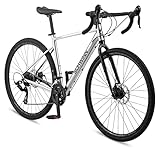

Benefits of using a gravel bike instead of a road bike
Some of the benefits of using a gravel bike include:
- Better stability and control on uneven surfaces
- More comfort thanks to wider tires and suspension
- Greater ability to tackle hill climbs
- More versatility in terms of the types of terrain you can ride on
Read also:
- 5 Best Gravel Bikes Under $1000 (Reviews with Complete Buying Guide)
- The Ultimate Road Cycling Setup: Gear, Fit, and Care Guide
- Bike Essentials (Must-Have Gears and Accessories)

Gravel Bike Vs Road Bike: Differences in Features and Design
| Features | Gravel Bike | Road Bike |
| Wheels and tires | 36-45 mm (1.4-1.8 inches) | 21-38 mm (0.8-1.5 inches) |
| Gears | Similar to road bike gears; Cassette: 10-42t to 10-52t Chainring: 40-46t, single | Cassette: 10-42t to 10-52t Chainring: 40-46t, single/double |
| Brakes | Rim/disc brakes | Rim/disc brakes |
| Suspension | None (30-40mm suspension fork in some cases) | None |
| Frame Geometry | Longer | Shorter |
| Weight | 18-30 lbs | 18 lbs |
| Handlebars | Drop bars | Drop bars |
| Max tire clearance | 33mm | 33-35mm |
Tire Width and Performance
Gravel tires span 40–50 mm, boosting grip and shock absorption on mixed surfaces. Road tires (23–32 mm) minimize rolling resistance for higher speeds. Wider gravel tires smooth out bumps, while narrower road tires optimize efficiency.
Suspension
Some gravel bikes are equipped with suspension forks or rear shocks. This helps to absorb bumps and vibrations, making for a more comfortable ride.
Geometry and Handling
Gravel bikes feature a longer, more relaxed geometry—taller head tubes and sloping top tubes—for an upright, stable position on rough terrain. Road bikes use shorter wheelbases and steep angles for sharp, agile handling on pavement.
For instance, the Canyon Grizl’s 1037 mm wheelbase enhances off-road stability vs. 990 mm on the Endurace road model.
Gearing
Gravel bikes often have a wider range of gears than road bikes. This is because they are designed for riding on a variety of terrain, including hills.
You’ll find 1x and 2x drivetrains on both road and gravel bikes. However, gravel bikes tend to favor 1x drivetrains, while road bikes are more likely to be equipped with 2x drivetrains. You’ll also find two small chainrings on some road bikes (compared to one on gravel bikes). This helps to provide a wider range of gears for speedier riding on flat terrain.
Brakes and Cockpit
Disc brakes are standard on gravel frames for consistent stopping power in mud and steep descents. Road bikes may use rim or disc brakes, prioritizing lightweight calipers. Gravel bars often flare outward for control; road cockpits focus on aerodynamics and minimal weight.
Weight and Durability
Road bikes are typically lighter for quick acceleration and nimble handling, whereas gravel bikes add robustness—reinforced frames and wider tires—to endure rough conditions and carry gear for bikepacking.

What terrain type is best suited for a gravel bike or road bike?
Gravel bike: Gravel bikes are designed for riding on unpaved roads. This includes dirt roads, forest trails, and even some singletrack trails. Since they share similarities with road bikes, you can also use them for riding on the pavement. However, speed and efficiency on pavement may suffer due to the wider tires and less aerodynamic frame geometry.
Road bike: Road bikes are designed for riding on paved roads. This includes city streets, country roads, and even some light off-road trails. However, they are not as well suited for riding on rougher terrain like dirt roads and singletrack trails.
So, which bike is right for you?
If you plan on doing most of your riding on unpaved roads, then a gravel bike is the way to go. However, if you’re mostly going to be riding on pavement, then a road bike will be more suited to your needs.

Frequently Asked Questions
What are the downsides to using a gravel bike instead of a road bike?
Some of the downsides to using a gravel bike include a heavier bike, less speed efficiency, and not enough high gears. They are also less comfortable for long rides on pavement.
How much should you expect to pay for a good quality gravel bike?
You can expect to pay anywhere from $2,000 to $3,000 for a good quality gravel bike.
How much slower is a gravel bike than a road bike?
For city riding, a gravel bike will not be as fast as a road bike. You can expect a speed of 16mph – 22mph on paved roads. In contrast, you can go as high as 28mph on a road bike.
Conclusion on Gravel Bike vs Road Bike
Gravel bikes and road bikes are both designed for riding on different surfaces. Gravel bikes are best suited for riding on unpaved roads, while road bikes are better for riding on pavement. However, both bike types can be used for city riding.
If you’re mostly going to be riding on pavement, then a road bike is the way to go. However, if you plan on doing most of your riding on unpaved roads, then a gravel bike is the better choice.
References
- Canyon. (2025, March 19). Gravel bikes vs road bikes: Where they shine and where they differ. Canyon. https://www.canyon.com/en-ph/blog-content/gravel-bike-news/gravel-vs-road-bikes.html
- Edinburgh Bicycle Cooperative. (2025, June 12). Gravel vs road bikes. Edinburgh Bicycle Cooperative. https://www.edinburghbicycle.com/blog/gravel-vs-road-bikes
- Ridley Bikes. (2023, May 6). The endless dilemma: road bike or gravel bike? Ridley Bikes. https://www.ridley-bikes.com/en_US/news/article/49176