Best Full-Suspension Mountain Bikes Under $1000
- Best Overall: Schwinn Traxion Mountain Bike Full Suspension
- Best Alternative: Mongoose Impasse Full Suspension Mountain Bike
- Best Value for Money: Mongoose Status 2.2 Full Suspension Mountain Bike
- Best Entry Level: Gravity 2021 FSX 1.0 Mountain Bike
- Best Performance: Schwinn S29 Mountain Bike for Men
Getting the best full suspension mountain bike under $1000 can seem hard.
There are many brands and styles. I know it can feel a bit like a puzzle.
Not only that, but getting the right one can cost a lot of money. Some of these bikes go over $1000!
But we’ve done all the work for you by scouring hundreds of bikes and narrowing down our selection to just five great ones under $1000. These are some of the best mountain bikes available today, with excellent reviews from thousands of happy customers. I also looked at what riders in this range usually care about most: comfort, control, value, easy handling, and whether the bike fits light trail use instead of just sounding good on paper.
Need a Few Practical Extras for Your Next Ride?
Browse cycling-related clothing and simple bike accessories that may help with comfort, visibility, storage, or everyday riding.
Paid links. As an Amazon Associate we earn from qualifying purchases.
This guide is here to help you see what might work best for your ride.
If you want to spend less than $500 for a full-suspension mountain bike, you can check out our review on the best budget full-suspension mountain bike today.
With the bikes available in the market, it is now easier to become a mountain biker and go on a heart-exhilarating riding adventure.
So read on and find out our top picks.
At-a-Glance: Best Full Suspension Mountain Bikes Under $1000
| Bike | Best for | What stands out | Main trade-off |
|---|---|---|---|
| Schwinn Traxion Mountain Bike Full Suspension | Riders who want a balanced pick for mixed paths and light trail use | 29-inch wheels, mechanical disc brakes, familiar budget-friendly setup | Heavy for long climbs or more technical riding |
| Mongoose Impasse Full Suspension Mountain Bike | Casual riders who want comfort on parks, gravel, and light off-road routes | Dual suspension feel and approachable ride character | May vary a lot by current version and seller specs |
| Mongoose Status 2.2 Full Suspension Mountain Bike | Budget buyers who want comfort for easy recreational use | Usually one of the cheaper full-suspension options | V-brakes and lower trail ceiling |
| Gravity 2021 FSX 1.0 Mountain Bike | Beginners who want a lighter-feeling value bike | Good frame value, lighter feel, solid entry point | Still a budget bike, so expect compromises in parts and setup |
| Schwinn S29 Mountain Bike for Men | Riders who want 29er rollover and smooth handling on easier trails | 29-inch wheels and approachable trail feel | Not built for aggressive downhill use |
Quick buying note: If you see a used hardtail or used full-suspension bike from a stronger mountain-bike brand in good condition, it may give you better parts for the money than a brand-new budget full-suspension bike. Just inspect the frame, fork, shock, pivots, drivetrain, and brakes carefully before you pay.

10,549
Customer Reviews
29
Testing Hours
5
Tested Products

10
Sources Researched
- Best Full-Suspension Mountain Bikes Under $1000
- At-a-Glance: Best Full Suspension Mountain Bikes Under $1000
- 5 of the Best Full Suspension Mountain Bikes under $1000
- Hardtail Vs Full Suspension MTB
- Things to Consider When Buying Full Suspension Bikes
- Full Suspension Mountain Bike Types
- Most Commonly Asked Questions
- Are full-suspension mountain bikes worth it?
- Is full suspension bike good for long ride?
- How much should I spend on a full-suspension mountain bike?
- Is hardtail MTB better than full-suspension?
- Is full suspension safer than hardtail?
- Should I buy new or used mountain bike?
- What should I check first on a budget full-suspension bike?
- Conclusion on the Best Full Suspension Bike Under $1000
5 of the Best Full Suspension Mountain Bikes under $1000
Best Overall: Schwinn Traxion Full Suspension Mountain Bike
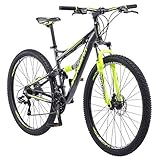
- 18-inch aluminum frame
- 27.5/29 by 2.25-inch wheels
- 24-speed Shimano EZ fire trigger shifters
- Shimano derailleurs
- Schwinn suspension fork and alloy crankset
- Mechanical disc brakes
- 49 lbs

The Traxion glides effortlessly through even the most difficult paths with its superior suspension. Whether you’re tackling uneven dirt roads or rocky mountain trails, this vehicle promises a smooth and comfortable ride every time!
It features an aluminum frame and a dual suspension system that provides plenty of cushioning while providing excellent power transfer. It also comes with an array of accessories, such as adjustable handlebars, a quick-release seat post and a kickstand. It’s an excellent choice for those who want an affordable dual-suspension MTB capable of handling any terrain.
The 29-inch wheels help you roll over rocks and other obstacles with ease. It shifts very quickly up and down. Plus, the disc brakes provide reliable stopping power. The overall design of the Traxion is designed for efficiency so that you can fully use every pedal stroke.
Add to these its sleek look, and you’ll have a mountain bike that you’ll love for years to come. And like all Schwinn bikes, you get a limited lifetime warranty for the Traxion as long as you own it.
This bike may be a strong match for mixed paths, gravel, neighborhood cut-throughs, and light trail riding, but I would not frame it as a bike for hard, aggressive trail use. The big appeal here is not that it beats higher-end trail bikes. It is that it gives many new riders a simple way to try a full-suspension feel without pushing past this budget. If you want a more forgiving ride than a hardtail and can live with extra weight, this is the easiest place to start in this list.
What works: good rollover feel from the bigger wheels, familiar parts, and disc brakes.
Watch-outs: heavy build, modest trail ceiling, and likely setup compromises at this price. Schwinn’s current Traxion page also positions it as a rugged, budget-friendly full-suspension bike with 24 speeds and mechanical disc brakes.
Best for: beginners, casual trail riders, and riders who want a steady ride on mixed paths
Less ideal for: bigger jumps, repeated rock gardens, or riders who want a lighter bike for long climbs
Best Alternative: Mongoose Impasse Full Suspension Mountain Bike

- 18-inch aluminum frame
- 27.5/29 by 2.25-inch wheels
- 24-speed Shimano EZ fire trigger shifters
- Shimano derailleurs
- Schwinn suspension fork and alloy crankset
- Mechanical disc brakes
- 49 lbs
We found the Impasse perfect for city parks, gravel roads, and mountain trails with some downhills and small drop-offs. This is thanks to its wide array of gears that will let you adapt to your choice of terrain with use. Also, the twist shifters allow changing gear easily with a flick of the thumb.
You can count on its dual suspension to offer extra impact absorption for a comfortable ride. The Mongoose also features an obstinate aluminum frame and is strong enough to keep up with your riding adventures.
Plus, the disc brakes will ensure that you come to an immediate stop when needed. They are reliable and work without losing any stopping power.
In a nutshell, the Mongoose Impasse is an impressive light to medium-duty full-suspension XC 29er that will let you fall in love with mountain biking all the more. This bike could be a good choice if you enjoy both calm rides and small drops.
I would keep this bike in the “light to medium-duty fun” lane. It makes the most sense for riders who want comfort and confidence more than speed. That matters if your usual ride is park loops, gravel connectors, mellow dirt, or easy weekend trails.
I also want to flag one practical point: current Impasse versions can vary by wheel size and drivetrain depending on the seller, so always read the live product page instead of assuming every listing has the same setup. Mongoose currently shows Impasse models with different wheel sizes and different drivetrain details depending on version.
What works: comfortable ride feel, approachable handling, mechanical disc brakes on current versions, and decent use for casual off-road riding
Watch-outs: specs may vary, and this is still not the bike I would choose for aggressive trail progression
Best for: park paths, gravel roads, light trail loops, and riders who want an easygoing full-suspension option
Less ideal for: riders who want a future-proof upgrade platform
Best Value for Money: Mongoose Status 2.2 Full Suspension Mountain Bike

- Aluminum frame
- 26 by 2.125-inch knobby tires with alloy rims
- 21-speed SRAM trigger shifters
- Shimano rear derailleur
- V brakes
- 44.3 lbs
Here is one of the cheapest full-suspension MTBs you can find on the market today. There is also an option for women at a slightly lower price.
At first glance, the mountain bike has a solid feel with a clean look. In terms of performance, Status 2.2 does not disappoint. Gliding along effortlessly, this ride is a breeze to navigate. The brakes work well despite being V brakes. This makes this mountain bike cheaper than the Mongoose Impasse, installed with disc brakes.
The gear shifting is neat and reliable. The suspension fork and rear shock consistently absorb and smooth out bumps. Most components are made of alloy, but they remain relatively lightweight.
The tires tend to be a bit on the slippery side, so you may want to consider investing in better ones. Still, this makes the bike perfect for recreational trails.
So if you plan to use your mountain bike for recreational trails and cross-country rides, you’ll save a lot getting this bike. Status 2.2 is perfect for teens and beginners who want additional riding comfort. I recommend it for those who enjoy gentle trails and need a bike that does its job without fuss.
This is the pick I would treat as the “keep it simple and keep your expectations in check” option. The main reason to buy it is value, not trail aggression. If your rides are easy recreational trails, smoother dirt, and casual weekend loops, it may do the job without draining your budget. But the V-brakes and lower-spec setup are also your reminder that this is a comfort-first budget bike, not a serious technical trail tool. If you ride in wet weather often, or if better braking is high on your list, you may want one of the disc-brake options above or a hardtail in the same budget.
What works: lower price, simple use case, approachable for teens and beginners
Watch-outs: V-brakes, lower grip tires, and limited headroom for rougher riding
Best for: easy recreational trails, lighter riders, and budget-first buyers
Less ideal for: steep, wet, or more demanding trail conditions
Best Entry Level Bike: Gravity 2021 FSX 1.0 Mountain Bike
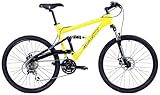
- 6061 aluminum frame, front triangle, hydroformed tubes
- 26 by 2.1-inch wheels
- 24-speed Shimano ST-EF51 EZ fire trigger
- Shimano FD-M190 front derailleur and Acera rear derailleur
- Suntour adjustable travel suspension fork
- 35 lbs
The Gravity 2021 FSX 1.0 is the best mountain bike for beginners in its price range. It is the lightest full-suspension MTB that we have reviewed at only 35 lbs. We tested it on smooth-to-cobblestone-ish bumpy paths for a hardtail bike of any quality, and FSX 1.0 gives a very comfortable ride. It does everything that you ask for it to do and more.
With its suspension fork, disc brakes, and aluminum frame, the bike gives you a great sense of control on any terrain. The Shimano drivetrain and shifters are smooth, precise, and responsive. It’s also great value for around $1000 since you get a good quality full-suspension mountain bike at an affordable price.
The shifters and derailleurs were smooth and worked great off-road. The bike also has a good amount of traction, allowing you to tackle more difficult terrain confidently. This bike might be just the start you need for a fun ride.
The brakes provide good stopping power, and the suspension fork smooths out bumps. The bike feels sturdy and robust and of high quality. Changing the tires into better mountain tires also upped its game.
If you’re looking for a fine, strong, and comfortable bike for starters, FSX 1.0 gets you covered.
This is one of the more interesting bikes in this list because it gives you a more “real MTB starter” feel than some department-store style options. The frame value looks good for the money, and BikesDirect’s current FSX pages still highlight adjustable suspension pieces, aluminum construction, and a lighter claimed weight than some competing budget options.
I still would not oversell it. It is an entry-level full-suspension bike, not a shortcut to advanced trail riding. But if you want a beginner-friendly bike with decent comfort, a lighter feel than some rivals, and room for small upgrades like better tires or pedals, this one makes sense. That upgrade path matters because budget MTBs often ride better after a few smart changes, especially tires, contact points, and setup.
What works: lighter feel, solid beginner value, decent starting platform
Watch-outs: assembly and setup matter a lot, and you may still want better tires or a few small upgrades
Best for: new riders, budget-conscious adults, and beginners who want a strong first taste of trail riding
Less ideal for: riders who want a polished, high-end trail bike right out of the box
Best Performance: Schwinn S29 Mountain Bike
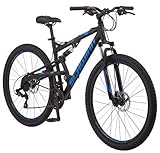
- Aluminum 18-inch frame
- 29 by 2.1-inch tires
- Colors: matte black/blue
- Schwinn front suspension fork and rear shock absorber
- 21-speed SRAM trigger shifters
- Shimano front and rear derailleurs
- SR Suntour alloy triple crankset
- Mechanical disc brakes
- 40 lbs
When it comes to efficiency, the S29 delivers outstanding results. It features an aluminum dual suspension frame that provides a smooth and comfortable ride. The S29 is one of the most popular full-suspension mountain bikes.
It is a bike ready to go over bumps and can roll easily over any kind of terrain. This is because of its knobby tires coupled with 29-inch wheel size. You can expect to have agile and smooth handling on the trails.
Furthermore, it has better control, traction, and comfort, and is more lightweight than the Traxion. It shifts effortlessly, and its low-maintenance mechanical disc brakes are exceptional for all-weather stopping.
This bike is suitable for railroad trail tracking and light mountain trails. The S29 is a perfect beginner bike to conquer mountain trails. Its components can surely withstand long and rough rides on mountain trails. And when you buy this bike, you also get a lifetime warranty from Schwinn.
This bike might be great for those who want to try new trails with ease.
I would position the S29 as a practical “bigger-wheel comfort” option. The 29-inch wheels are a real part of its appeal because they can help the bike feel calmer over small trail chatter, roots, and rougher paths. That can be helpful for newer riders who want a smoother, more confidence-friendly ride feel. Still, I would keep this recommendation focused on light mountain trails, rail trails, dirt connectors, and beginner-friendly off-road riding rather than rough technical riding. Think comfort and easy rollover, not aggressive trail smashing.
What works: 29er feel, approachable handling, beginner-friendly comfort, mechanical disc brakes
Watch-outs: still heavy compared with stronger hardtails, and not built for serious downhill use
Best for: riders who want easy rollover and smoother handling on mild trails
Less ideal for: tight budgets that would be better spent on a better hardtail
Hardtail Vs Full Suspension MTB

When it comes to mountain biking, the most important decision you’ll make is deciding between a hardtail or full suspension mountain bike (MTB).
A hardtail MTB has only a front suspension, while a full suspension MTB (also called dual suspension MTB) has both front and rear suspension. A suspension system helps to absorb bumps, rocks, and other obstacles on the trail for a smoother ride.
I have seen that full suspension bikes might help reduce bumps and keep you safe on rocky trails. However, they are a bit heavier, which can slow you on climbs. Choose the one that fits your ride style and path.
Under $1000, this choice gets even more important. In this budget, a full-suspension bike gives you more comfort and more forgiveness over rough patches, but it often comes with extra weight, simpler suspension parts, and more maintenance needs. A hardtail in the same price range often gives you a better fork, a lighter bike, and fewer moving parts to worry about. REI’s suspension guide makes the same basic point: full-suspension bikes usually cost more and need more maintenance, while hardtails are lighter and cheaper.
Main Difference Between a Hardtail and a Full Suspension Bike
Hardtail mountain bikes are lighter and more efficient when pedaling up hills, making them great for cross-country riders who will be doing a lot of climbing on their rides. They also tend to cost less than dual suspension models, so they are great for budget-conscious riders.
On the other hand, they can be less comfortable and lack traction on technical downhill sections as they don’t absorb impacts as well as full suspension MTBs.
Full suspension MTBs are heavier than hardtails but offer increased comfort and control when descending. The rear suspension will absorb impacts from the terrain, making it easier to stay in control and maintain speed on technical trails. However, the added weight and complexity of the suspension system can make them less efficient when pedaling up hills.
Most full suspension MTBs have a lock-out mode which allows you to stiffen the suspension for better efficiency. This is great for riders who need to climb up a lot of hills on their rides. For downhill riding, many full-suspension MTBs have adjustable suspension settings to tailor the ride to the terrain.
Simple rule:
- Choose a budget full-suspension bike if you care most about comfort, confidence, and smoother riding on rougher ground.
- Choose a hardtail if you care most about lower weight, easier upkeep, better climbing, and better parts for the money.
- Choose a used bike if you are comfortable inspecting condition and want the best value per dollar.
Which one is for you?
Ultimately, deciding between a hardtail or full suspension mountain bike depends on your riding style and budget. If you’re looking for an all-around off-road experience that is comfortable on descents and efficient on climbs, a full suspension MTB might be the best choice for you.
With impressive impact absorption capability, you don’t lose speed as you complete your route compared to hardtail mountain bikes. Rear wheels are also more connected consistently for better climbing traction and speeding around corners.
If you’re looking for something that is more budget-friendly and better suited to climbing, a hardtail might be the right option.
If you are coming from our beginner MTB content, this is the decision point I would not skip. A lot of first-time buyers assume full suspension is always the better bike. In real life, the better bike is the one that fits your trails, your budget, and your willingness to maintain it.
Things to Consider When Buying Full Suspension Bikes
When the terrain becomes rough with big drops and rocks all around, you may need a bike with full (or dual) suspension.
Here are several things to consider when shopping for a full-suspension bike.
Budget
When making your purchase, it is important to consider the price range of a full-suspension bike. Dual-suspension bikes typically cost more than hardtails, but you can find mid-range options that fit within many budgets.
High-quality full-suspension bikes are more expensive, but they can be worth the extra money if you plan to use them for advanced terrain. They can go as high as thousands of dollars, so make sure to research your options before committing.
I would add one more budget question: are you open to used? If yes, you may be able to get a better frame, better fork, and better drivetrain for the same money. If no, then focus on realistic needs and avoid paying for the idea of “full suspension” if a better hardtail would serve you better.
Suspension System
Look for a suspension system that is adjustable and easy to repair. Many are designed with adjustable rebound settings, allowing you to customize the feel of your ride.
At this budget, do not expect premium suspension performance. What you want is a setup that feels predictable, works for your weight, and does not add too much fuss. Simple and dependable is often better than flashy and vague.
Wheels and Tires
Select a bike with strong and light wheels, such as those made from carbon fiber or aluminum alloy. Look for tires that are designed for off-road conditions, as they provide more grip on slick surfaces.
Most full-suspension MTBs have a wheel size of either 27.5” or 29”, so check which one your bike has before making a purchase. 27.5ers are great for nimble handling and better acceleration, while 29ers offer increased stability and a smoother ride.
For many riders, tires are one of the first smart upgrades. A budget bike with better tires can feel more secure and more trail-ready than a slightly fancier bike with weak stock rubber.
Components
You should also consider the components used on the frame, such as suspension forks, drivetrain (gears), brakes, and wheels. A dropper post is great for tackling steep, technical descents. Look for components that have been designed to withstand a lot of abuse and will last. Quality components will improve performance and make for a smoother, more reliable ride.
Buying an MTB can be an exciting experience, but it’s important to take the time to research and consider all of your options before committing to the purchase. This way, you can get the right bike for your needs and budget that will offer years of off-road adventure.
At this price, I would rank priorities like this:
- Fit and frame size
- Brakes that feel safe for your riding
- Tires with enough grip
- A drivetrain that shifts cleanly
- Suspension that feels controlled, even if basic
A badly fitting bike with fancy words is still a bad buy.
Suspension Travel
Suspension travel refers to the amount of vertical wheel movement your bike can handle. A longer travel suspension will absorb more impacts and provide a smoother ride, while a shorter travel suspension will be less forgiving and require more effort from the rider. Consider how much travel you need based on the type of terrain you’ll be riding.
The following outlines a bike’s general use with the corresponding amount of suspension travel before it is completely compressed:
- Cross country (XC bikes) – up to 100mm travel: Short travel and quick moves. Good for racing and long rides on smooth trails.
- Trail – 100 to 130mm travel: Fits many trails. It handles both climbs and small drops well.
- Enduro – 160mm+ travel: Good for steep climbs and fast drops. It is built for both up and down trails.
- Downhill/Gravity – 180mm+ travel: Made for steep, fast rides. It soaks up lots of bumps but can be heavy.
Note, however, that most XC bikes are hardtail bikes.
For riders shopping under $1000, this is also where expectations matter. Most bikes in this range are better treated as light trail, casual off-road, and beginner comfort bikes, not true enduro or downhill machines.
Weight and Frame Materials
When it comes to MTBs, generally, a lightweight bike is better. Lesser weight means fewer pounds to carry up the next hill.
Steel frames are the heaviest and least costly. Carbon fiber frames are the lightest and most expensive. Between the two is the aluminum frame. Each has its advantages and disadvantages depending on your budget, terrain type, and intended use.
As a trend, MTBs have been getting heavier. Disc brakes and suspension system add weight. The shock weighs 1 to 2 lbs. Increasing wheel size also adds weight.
The average aluminum full suspension trail bike weighs around 30-33 lbs. While the average carbon full suspension trail bike weighs around 28-30 lbs. A lightweight XC bike can weigh as little as 21 lbs.
For a mountain bike under 1000, you get an aluminum frame but in the heavier range. They are excellent for cross-country rides and are not made to handle big drop-offs and jumps.
Weight matters more than many beginners expect. A heavier bike can still be fun, but it may feel slower on climbs, harder to lift, and less lively on longer rides. That is one big reason a good hardtail keeps showing up in this budget conversation.
Used Market: When It May Be Smarter Than Buying New
If you are comfortable checking condition, the used market can be one of the best ways to stretch this budget. A well-kept used mountain bike may give you stronger brakes, a better fork, and a more trail-ready frame than a new full-suspension bike under $1000.
But this only works if you inspect carefully. Look for frame damage, worn pivots, play in bearings, brake issues, leaking suspension, and neglected drivetrains. If you cannot inspect those things, buying new may still be the safer call.
Assembly, Safety, and First-Ride Setup
This part gets skipped too often. Many budget bikes need careful setup after delivery. That may include checking bolt tightness, brake alignment, tire pressure, shifting, and suspension sag.
If you are not comfortable doing that, factor in the cost of a bike shop tune-up. A cheaper bike that is set up well is safer and often feels much better than a more expensive bike that is badly assembled. Brand manuals also emphasize reading owner information and safety setup before the first ride.
Full Suspension Mountain Bike Types

Cross-country
These are short-travel bikes with a rear suspension of 90-120mm of travel, head-tube angles near 70 degrees, and 29 inch wheels. Made for racing on XC and marathon courses, its rider needs sharp handling and efficient suspension.
Trail
You have here the most popular dual-suspension MTBs for good reasons. First, they are designed to handle almost everything – from XC trails to rocky downhills. In terms of head angles, expect to see 65-68 degrees and slightly longer wheelbases. Suspension travel is around 100-130mm.
Enduro
These are semi-downhill models which are also good at climbing. They are excellent when it comes to steep descents and anytime you’re speeding up. The wheelbase is longer than those of trail bikes. Expect head angles between 62 to 66 degrees. With longer reaches, the rider’s weight is farther behind the front wheel.
Downhill
Best for downhill and bike parks. These bikes have ultra-long wheelbases and lots of suspension travel from 180mm+. Downhill bikes have dual-crown forks that slow down handling but help the bike go downhill in a straight line and perform massive jumps better than anything else.
Most riders should stay focused on the first two types in a practical sense: light XC-style use and easier trail riding. If your dream rides look more like bike parks, big jumps, or steep technical downhill, this budget is usually the wrong place to force a full-suspension decision.
Most Commonly Asked Questions
Are full-suspension mountain bikes worth it?
Yes, they can make your ride smooth and less tiring by soaking up bumps.
By soaking up most of the bumps and jolts that would otherwise be felt by the rider, a full-suspension MTB helps reduce fatigue. This allows for a faster and longer ride with greater comfort.
They can be worth it if your rides are rough enough to use that extra comfort and grip. If your rides are smoother, a hardtail may give you better value.Is full suspension bike good for long ride?
It can be. If you ride on steep, rough trails, it might help a lot. On flat trails, you may not feel the extra cushion.
A full suspension bike can be great for long rides, depending on what type of terrain you’ll be riding. If you plan to ride on mostly flat trails, it may not be worth investing in the extra weight of a full suspension bike, as you won’t get much benefit from the added cushion.
However, if you plan to ride on steep, technical trails with lots of rocks and roots, a full suspension bike can provide added protection from the rough terrain, absorbing impacts and providing a smoother ride. Meanwhile, if you plan to do some downhill racing or dirt jumping, a full suspension bike with ample travel will be essential.How much should I spend on a full-suspension mountain bike?
$1,500. Full-suspension bikes under $1000 are for starters. If you ride hard trails, you might need to spend a bit more—around $1500 or more.
That is a fair reality check. Under $1000, think “starter full suspension” or “comfort-focused budget trail bike,” not “serious aggressive trail bike.”Is hardtail MTB better than full-suspension?
Hardtails are lighter and cost less. They work best on smooth trails. Full-suspension bikes give more control on rough terrain.
Is full suspension safer than hardtail?
On rough trails, full suspension bikes can help you ride safely. They soak up bumps and reduce shock. You might feel a little extra resistance when you pedal, but that is normal.
Should I buy new or used mountain bike?
If you know how to inspect a bike or have a trusted shop or rider to help you, used can be a very smart option. If you want simpler buying, warranty support, and less risk, new may be better.
What should I check first on a budget full-suspension bike?
Fit, brakes, tire grip, wheel size, and whether the bike matches your real trails. Those matter more than flashy words in a product title.
Conclusion on the Best Full Suspension Bike Under $1000
Due to the pandemic, the prices of bikes have increased. Bikes less than $500 before the pandemic are priced between $500-$1000. Nonetheless, there is no guarantee that prices will be going down soon as bikes’ demand continues to rise. The number of mountain bikers continues to increase.
Today, I would frame the decision like this: if you want a new full-suspension bike under $1000, buy for fit, comfort, and realistic trail use, not for bragging rights.
For many riders, a hardtail or a carefully checked used bike may still be the better deal. But if you know you want the added comfort of rear suspension and you want to stay in this budget, the Schwinn Traxion still looks like the most balanced place to start from this list. It is not perfect, and it is not a high-end trail bike. But it may be the most rounded choice here for riders who want a simple, approachable full-suspension option.
Have a fun ride!