Key Takeaway:
- Men can comfortably ride women’s bikes when properly fitted, since frame geometry and component dimensions—rather than gender labels—determine comfort and performance.
Can a man ride a women’s bike? If you’ve ever wondered whether a men’s-specific frame is your only option, you’re not alone.
It’s a question that has been debated for years – can a man ride a women’s bike? Some say yes, while others insist that it’s just not possible. Well, we’re here to set the record straight once and for all.
In this blog post, we’ll take a look at the pros and cons of men riding women’s bikes and some tips on how to make the switch if you’re thinking about giving it a try. So read on to find out everything you need to know!
Need a Few Practical Extras for Your Next Ride?
Browse cycling-related clothing and simple bike accessories that may help with comfort, visibility, storage, or everyday riding.
Paid links. As an Amazon Associate we earn from qualifying purchases.

Difference Between Men’s Bike and Women’s Bike
There are a few key differences between men’s and women’s bikes, which can make a big difference in comfort and performance. Let’s take a look at some of the most important ones:
Geometry
Women’s bikes tend to have a shorter top tube and a lower stand-over height, making them more comfortable and easier to ride for smaller riders.
Additionally, women’s bikes often have a shorter stem, which gives the rider better control.
Size
Women’s bikes also come in smaller sizes than men’s bikes, which is important for riders who are on the shorter side. If you can’t find a men’s bike that fits you properly, then a women’s bike may be the way to go.
Handlebars
The handlebars on women’s bikes are often narrower than those on men’s bikes, providing a more comfortable grip for smaller hands. Additionally, the position of the handlebars is often closer to the saddle, which helps reduce back and neck pain.
Saddle
The saddles on women’s bikes are usually designed to better accommodate a woman’s anatomy, providing more comfort and support while riding. They are wider at the back and narrower at the front, and they often have a cut-out center to relieve pressure on the soft tissue.


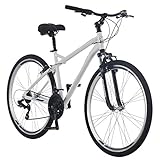
| Feature | Men’s Bike | Women’s Bike |
|---|---|---|
| Geometry | Longer top tube, higher stand-over height | Shorter top tube, lower stand-over height for easier straddling |
| Size Range | Generally larger frame sizes | Available in smaller sizes to suit shorter riders |
| Handlebars | Wider bars positioned slightly farther reach | Narrower bars, closer to saddle for reduced reach and strain |
| Stem Length | Standard (often longer) | Shorter stem for better cockpit control |
| Crank Length | Longer cranks to match taller riders | Shorter cranks suited for shorter leg extension |
| Saddle Shape | Narrower, performance-oriented | Wider at rear, cut-out designs for pressure relief |

Tips for Men Riding Women’s Bikes
If you’re a man who is interested in riding a women’s bike, there are a few things you should keep in mind. First and foremost, you’ll need to ensure that the bike is the right size for you.
As we mentioned before, women’s bikes come in smaller sizes than men’s bikes, so it’s important to choose one appropriate for your height.
Additionally, you’ll need to pay attention to the bike’s geometry. Women’s bikes often have a shorter top tube and a lower stand-over height, making them more comfortable to ride.
Also, keep in mind that the handlebars on women’s bikes are often narrower than those on men’s bikes. This can provide a more comfortable grip for smaller hands.
Read also:
- How to Start Cycling: Bike Basics and Tips for Beginners
- Urban Biking 101: Tips, Tricks, and Gear for Commuting and Exploring the City
- Buying Your First Bike: The Ultimate Guide
- Bike Essentials (Must-Have Gears and Accessories)
Fit & Adjustment Guide
Getting the right fit is the cornerstone of comfort and performance—especially when you’re adapting a women’s frame to your build. Follow these three steps to dial in your ride:
1. Measure & Compare
- Inseam & Stand-Over Height: Stand over the bike with feet flat; aim for 1–2 inches (2.5–5 cm) of clearance.
- Reach & Saddle Position: Sit on the saddle, place heels on pedals. At the bottom of the stroke, your leg should lock out with a slight bend when you shift to the proper ball-of-foot position.
2. Adjust Key Components
| Component | What to Change | How It Helps |
|---|---|---|
| Saddle Height | Raise or lower by 5–10 mm | Optimizes leg extension and power |
| Saddle Fore/Aft | Slide forward/backward 5 mm | Balances knee-over-pedal alignment |
| Stem Length | Swap to a longer/shorter stem | Fine-tunes handlebar reach |
| Handlebar Width | Increase/decrease by 2–4 cm | Matches shoulder width for control |
3. Test & Tweak
- Short Test Ride: Ride for 5–10 minutes on flat terrain. Note any hotspots in neck, back, or knees.
- Fine-Tune One at a Time: Change only one component per ride to isolate its effect.
- Record Your Settings: Keep a simple log (e.g., stem +10 mm, saddle +15 mm) so you can reproduce your ideal setup if you swap bikes.
Component Upgrade Recommendations
Want to bridge the gap between a women’s frame and your unique needs? Upgrading a few strategic parts can make all the difference:
- Adjustable Stem
- Swap your fixed-angle stem for one with ±10° tilt. This flexibility lets you tweak reach and handlebar height without a bike-shop visit.
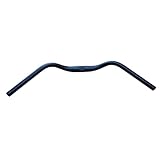
- Interchangeable Handlebars
- Consider a flare or compact drop bar that offers multiple grip positions. A wider flare (5–10 cm beyond shoulder width) enhances stability on rough roads.
- Crank Arm Variants
- Shorter cranks (165–170 mm) reduce knee strain if your leg extension feels over-reached. Taller riders can experiment with standard 172.5 mm or longer.
- Grips & Bar Tape
- Add thicker, ergonomic bar tape (3–4 mm) or gel grips to absorb vibration and prevent hand fatigue.
Saddle Swap Recommendations
| Upgrade Option | Key Benefit | Ideal For |
|---|---|---|
| Pressure-Relief Cutout | Reduces soft-tissue discomfort | Riders with sensitive anatomy |
| Narrow Performance Saddle | Improves pedaling efficiency | Cyclists seeking a race-style fit |
| Memory-Foam Touring Saddle | Enhances long-ride comfort | Multi-day and mixed-use adventurers |



Research & Expert Insights
Recent studies and expert commentary confirm that men can indeed ride women’s bikes comfortably—once the fit is dialed in rather than focusing on the bike’s gendered label. According to Škoda We Love Cycling, “a bike is a bike,” and average design differences (shorter stems, narrower bars, shorter cranks) simply reflect typical anatomical variations, not rigid rules.
Beyond fit, research exposes a global gender gap in cycling participation. In Kisumu, Kenya, men account for 96% of cyclists, leaving women at just 1% of trips. Comparable disparities appear in Rio de Janeiro and Delhi, where safety and infrastructure deter female riders. Studies by the Institute for Transportation and Development Policy show that women overwhelmingly favor protected bike lanes and separated paths, which correlate with higher ridership, while men more readily ride in mixed traffic and prioritize direct routes.
Here are the 7 surprising facts distilled from the article:
- Men Can Ride Women’s Bikes Just as Well: Once properly fitted, a women’s‐designated frame poses no barrier—“a bike is a bike,” regardless of its label.
- Fit Trumps Gender Label: Comfort and performance depend on matching frame geometry and component dimensions (reach, crank length, saddle height) to your body, not on whether the bike is marketed to men or women.
- Women’s Bikes Feature Shorter Stems & Narrower Handlebars: These design choices accommodate average anatomical differences—yet many men actually prefer these dimensions for better control and reduced strain.
- Crank Arm Length Varies by Gender Design—but You Can Swap Them: Women’s bikes often come with shorter cranks; swapping in a different crank length can optimize power delivery for any rider.
- Some Men Fit Women’s Frames Better: Individual torso and limb proportions sometimes align more naturally with women’s geometry—so you may find improved comfort on a “women’s” model.
- Global Cycling Is Heavily Male-Dominated: In cities like Kisumu, Kenya (96% male riders), Rio de Janeiro, and Delhi, safety concerns and lack of protected lanes keep women off bikes far more than physical ability.
- Protected Infrastructure Boosts Female Ridership: Women strongly prefer separated bike paths, which correlates with higher participation—while men are likelier to ride in mixed traffic despite elevated crash rates.

Frequently Asked Questions
Can Men Ride Women’s Bikes?
The short answer is yes; men can ride women’s bikes. Women’s bikes can be ridden by both men and women, although this is dependent on one’s body type. Many riders find that a women’s bike is more comfortable and easier to ride than a men’s bike.
Can Women Ride Men’s Bikes?
Yes. Some women prefer women’s-specific bikes while others have no trouble riding a male bike. If you are a woman thinking about riding a male bike, keep in mind that the geometry and handlebar width may not be ideal for your body type. But as long as you are comfortable on the bike, there is no reason why you can’t give it a try!
Conclusion: Can a Man Ride a Women’s Bike?
So there you have it – everything you need to know about men riding women’s bikes. We hope this blog post has cleared up any confusion and that you now feel confident in your decision to give it a try. Good luck!