Key Takeaways: What is Travel on a Mountain Bike?
- Mountain bike travel refers to the movement range of a bike’s suspension system, measured in millimeters (mm).
- More travel = better shock absorption, making it ideal for rough terrains, but it also adds weight.
- Different MTB types require different travel ranges—XC bikes have less travel (80-120mm), while downhill bikes have the most (170-200mm).
- Dropper posts also have travel, allowing seat height adjustments for better control on technical trails.
If you’re new to mountain biking, you may have heard the term “travel” thrown around when discussing bike suspension.
But what does it actually mean? Travel on a mountain bike refers to the distance that a suspension fork or rear shock compresses to absorb bumps and impacts on the trail.
Too little travel can make rocky trails feel harsh, while too much can make pedaling less efficient.
Need a Few Practical Extras for Your Next Ride?
Browse cycling-related clothing and simple bike accessories that may help with comfort, visibility, storage, or everyday riding.
Paid links. As an Amazon Associate we earn from qualifying purchases.
In this guide, we’ll break down how travel affects your ride, what the right amount is for your style, and how suspension plays a role in control, comfort, and performance.

Why Many People Enjoy Mountain Biking
Mountain biking is also a great way to escape your busy and stressful everyday life. It’s an enjoyable form of exercise that can help you clear your head, refocus, and gain some perspective. Plus, it’s a great way to spend quality time with friends and family.
It’s important to note that mountain biking isn’t just about the destination but also the journey. You can take your time and enjoy nature at its finest, or challenge yourself and see how far you can go in a given amount of time. Either way, it’s an incredibly rewarding experience.
Beyond just the thrill, the right suspension setup makes a huge difference in how much fun you have on the trail. Whether you’re hitting jumps or cruising scenic trails, having the right travel keeps your ride smooth and controlled.

What Is Travel On A Mountain Bike?
Mountain biking travel is a term that indicates the distance of movement for any moving parts. Before, travel only referred to mountain bike suspension, but now it also incorporates dropper seat posts.
The travel distance is typically measured in millimeters (mm) and can range from 80mm on cross-country bikes to 200mm or more on downhill bikes.
Think of travel like the “shock absorbers” of your bike—it cushions the ride over obstacles like rocks, roots, and jumps. But more travel isn’t always better. While extra suspension helps on downhill and technical terrain, it can slow you down on smooth trails.
With dropper post travel, the seat shifts from the typical riding position for pedaling to a lower level, enabling you to navigate technical descents more easily.

Differences Between Mountain Bike Travel Suspensions
There are three fundamental suspension systems that any mountain bike could have. Generally, a bike will feature either the classic “Hardtail” or modernized “Full Suspension” setup.
A hardtail mountain bike has a single suspension fork that is generally situated at the front wheel. It only has a “hard” rear frame, hence the name ‘hardtail.’
The suspension is usually limited in range, but it does offer impact absorption and increased stability for the rider.
On the other hand, a modernized “full suspension” bike has a suspension fork at the front and a rear suspension shock. With this setup, there is more travel for both the front and back of the bike. It offers improved impact absorption, increased control, and stability for the rider.
Here are the differences between hardtail and full suspension bikes:

Comfort
When it comes to comfort, a full-suspension mountain bike is the superior choice. Not only will you be more comfortable while riding, but these bikes are designed for higher drops too! However, this can come at the expense of diminished power output on the path.
Weight
A hardtail mountain bike weighs less than a full suspension bike, making it the lighter option. This is because the frame of a full-suspension bike must be made stronger to carry the additional weight of the rear suspension.
Price
Full suspension bikes cost more than hardtails due to their increased complexity and higher-quality components.
Maintenance
Maintaining a full suspension is more complicated than a hardtail, as the rear shock needs to be serviced or replaced at least once a year, depending on your riding conditions.
The choice between hardtail and full suspension depends on your riding style:
✅ Hardtail bikes are lighter and more efficient for climbing and smooth trails.
✅ Full suspension bikes provide better comfort and control on rough terrain but come with added weight and cost.
Front Suspension: The Forks

Each mountain bike fork comprises several components: a steerer tube that runs through the center of the crown and then branches off into two stanchions that fit inside their respective brace and slider. Lastly, these lead to two dropouts attached to the wheel for stability.
The conventional approach to upgrading front suspension is to up the travel of their stanchions. To put it plainly, this method amplifies the tightening of the front suspension. A shorter journey will be more reactive, allowing you to inject additional energy into your path. A longer suspension is an ideal choice for challenging paths and high lifts.
The best front suspension for you depends on how aggressive your rides are. If you do a mix of trails, a 130mm-140mm fork balances efficiency and comfort.
Read also: Best Budget Bike Forks under $500 (Buying Guide & Reviews)


Common Travel Distances on the Front Suspension
| Type of Mountain Bike | Front Suspension Travel | Best Use Case |
|---|---|---|
| Cross Country “XC” MTB | 80mm-120mm | Smooth trails, endurance rides |
| Trail MTB | 120mm-140mm | Mixed terrains, technical climbs |
| All Mountain MTB | 140mm-170mm | Steep, rocky trails |
| Downhill MTB | 170mm-200mm | High-speed descents, jumps |
If you’re riding mostly paved or light dirt trails, a shorter travel bike will be more efficient. But if you’re tackling rough terrain, extra travel will save your arms and legs from fatigue.
Common Stanchion Tube Diameters
| Type of Mountain Bike | Stanchion Tube Diameter |
|---|---|
| Cross Country “XC” MTB | 30mm |
| Trail MTB & All Mountain | 32mm-36mm |
| Downhill MTB | 38mm-40mm |
Rear Suspension: The Rear Shocks

Unlike the front suspension of a mountain bike powered by two compression chambers, its rear shock operates with only one. The shock is installed horizontally on the ground, with a slight diagonal slant, in contrast to the front suspension, which is set upright. Connecting to the bike’s frame through two eyelets makes your rear shock accurately sized and ready for use.
Rear suspension isn’t just about comfort—it also affects how your bike handles bumps and drops. A poorly balanced setup can make your ride feel unstable.
Rear Suspension Designs
If you’re a mountain bike enthusiast, you should be familiar with the five main rear suspension designs manufacturers use to make your rides even more enjoyable. These are the following:
1. Single Pivot
This is the most basic structure of all rear suspension designs and is generally cheaper to produce. The rear shock suspension is attached to the main frame simultaneously. The compression remains stable throughout the shock’s travel which amplifies stiffness when compressing to avoid bottoming out.
2. Linkage-Driven Single Pivot
With this design, a swingarm is still connected to one pivotal point. Despite this, the manufacturers have found a way to adjust the fixed compression curve as one move across their system.
3. Twin-Link / Virtual Pivot Point
This revolutionary design introduces a triangular structure connected to the mainframe by two swiveling connections. This design functions similarly to the Horst-Link but can frequently be produced at a lower cost due to its lack of patent protection.
4. Horst-Link / Four Bar
This design for a mountain bike features an axle that does not directly attach to the mainframe. By utilizing this system, you can eliminate the oscillation caused by regular pedaling. This also enables the manufacturer to adjust the compression arc, which is how much force needs to be applied throughout shock travel.
5. High Pivot
This is identical to the classic single pivot structure, except that the center of rotation is placed significantly higher on the frame for extra stability. Boasting an idler pulley that guides the chain path above its pivot point, this design significantly diminishes pedal bob for a more efficient cycling experience.

How To Find The Correct Eye-to-Eye Distance
The eye-to-eye distance measures the length of your shock, including any travel.
You’ll need to measure the distance between both of your shock’s eyelets to get a correct reading. Incorrect eye-to-eye lengths while using shocks can cause suspension inefficiency and adversely affect its function.
Balancing Suspension
To fully utilize a full-suspension mountain bike, it is important to understand its features and capabilities. Uneven compression rates between components can greatly affect ride comfort and suspension system performance.
The front and rear suspensions don’t have to have equal travel, but having them be similar makes it easier to balance them. To balance them, you need to adjust the pressure inside the chambers. This will ensure that each shock bottoms out at the same time, regardless of the travel. If you pair a longer shock with a shorter one, the longer one will require less pressure, and the shorter one will need more pressure.
Dropper Post: A Key Component In Mountain Bike Travel
What is a Dropper Post?
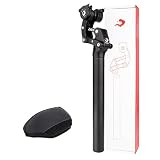
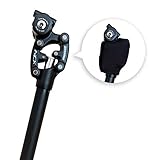
A dropper post, also known as an adjustable seat post, is a revolutionary piece of mountain bike equipment that allows riders to quickly and easily adjust the height of their saddle without needing to stop or dismount. This is done via a lever located on the handlebars, which controls a hydraulic or mechanical system within the post.
The primary advantage of a dropper post is that it provides the rider with the ability to adapt to varying terrain conditions on the fly. For instance, during steep descents, a lower saddle height can offer better control and stability. Conversely, on flat terrains or uphill climbs, a higher saddle position can facilitate more efficient pedaling.
Read also: 9 Best Budget Dropper Posts (Reviews & Buying Guide)

The Connection Between Dropper Posts and Travel
So, how does a dropper post relate to travel on a mountain bike? Essentially, the dropper post adds an extra dimension to the bike’s adaptability, complementing the function of the suspension system.
Just as the suspension travel allows the bike to adapt to the terrain’s vertical undulations, the dropper post enables the rider to adjust their center of gravity in response to the trail’s demands. This combination enhances the bike’s overall performance and the rider’s control and comfort, making the journey more enjoyable and safe.
With a dropper post, you can keep your saddle high for efficient pedaling on flat sections and drop it low for extra control when descending steep trails. This flexibility makes a huge difference in handling.
Main Types of Suspension
There are two main kinds of suspension. One relies on compressed air, while the other one relies on springs.
Suspensions using air shock are lightweight, easy to adjust, and stiffer as they approach the bottoming-out point. However, these options need more upkeep and are less reactive.
Coil springs, on the other hand, are more responsive, durable, and require less maintenance. The downside of using a coil spring is that they’re heavier than air shocks and are difficult to adjust.
No matter what type of suspension you use, make sure it fits your riding style and terrain. Properly set up suspension should help you tackle any trail confidently and safely.
Some bikes don’t have a suspension, and they’re called rigid bikes. They offer a direct connection between the wheel and the frame, which can be beneficial in certain situations. Fat tire bikes are a great example of rigid suspension bikes.
Conclusion on What is Travel on a Mountain Bike
Overall, your suspension has the potential to make or break your mountain biking experience. It’s important to consider your terrain, riding style, and budget when selecting a suspension setup for your bike. Properly setting and tuning your suspension will help you to get the most out of every ride.
Remember, more travel doesn’t always mean better. The key is to find the right balance for your needs. Test different bikes and setups to see what works best for your trails and riding style.