Key Takeaways:
- Cruiser vs mountain bike defines whether you prioritize laid-back comfort or rugged off-road performance.
- Cruisers excel on flat, paved paths with their relaxed geometry and wide balloon tires.
- Mountain bikes shine on trails with suspension, knobby tires, and aggressive frame angles.
- Your ideal choice depends on terrain, riding style, fitness goals, and maintenance tolerance.
When you compare a cruiser vs mountain bike, you’re choosing between laid-back comfort for easy cruising and rugged capability for off-road trails—two very different riding experiences that cater to specific needs.
Both have their pros and cons, but which one is the best for you? Here’s a breakdown of the differences between cruiser and mountain bikes to figure out which one is right for you.

What is a Cruiser Bike?

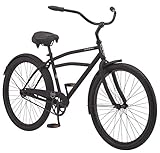
A cruiser bike is a type of bicycle designed for comfort and easy riding. Cruiser bikes usually have wide, comfortable seats, upright handlebars, and low gears, ideal for leisurely and casual rides around town or on flat terrain. They’re not built for speed, but they can get you where you need to go without breaking a sweat.
Need a Few Practical Extras for Your Next Ride?
Browse cycling-related clothing and simple bike accessories that may help with comfort, visibility, storage, or everyday riding.
Paid links. As an Amazon Associate we earn from qualifying purchases.
Types of a Cruiser Bike
- Classic Cruiser – most common type of cruiser bike for cycling, featuring a comfortable, upright riding position and wide handlebars. They are designed for casual riding and can handle flat terrain easily.
- Hybrid Cruiser – combination of a cruiser and a road bike. It features a more aerodynamic frame and narrower tires for increased speed and efficiency.
- Comfort Cruiser – more cushioned saddle and wider tires for a smoother ride. They are ideal for riders who want a more comfortable cycling experience.
- Beach Cruiser Bike – designed for riding on sand and flat surfaces. Beach cruiser bikes often have wider tires and a more laid-back design.
- Electric Cruiser – have a motor and battery to provide assistance when pedaling. They are perfect for riders who want to travel longer distances with less effort.
- Fat Tire Cruiser – have extra-wide tires for increased stability and traction on rough or uneven terrain. They are ideal for riders who want to explore off-road trails or paths.



What is a Mountain Bike?

A mountain bike is a type of bicycle designed for off-road riding. Mountain bikes have features like wider tires, powerful brakes, and suspension systems that make them perfect for tackling tough terrain. They’re not as comfortable as cruiser bicycles , but they can take you places that a cruiser bike can’t.
Types of Mountain Bike
- Cross-Country (XC) – designed for speed and efficiency on smooth to moderately rough terrain. They typically have a lightweight frame, narrow tires, and suspension with shorter travel.
- Trail – versatile and can handle a wide range of terrain. They have a balance of speed and stability, with suspension that provides more travel than XC bikes. They are ideal for mountain bikers who want to tackle challenging trails.
- Enduro – designed for racing downhill with challenging terrain, including steep drops and jumps. They have long-travel suspension, wider tires, and a sturdy bike frame to handle rough terrain at high speeds.
- Downhill – designed for fast descents and jumps on steep and rocky terrain. They have full suspension with long travel, strong brakes, and wide tires with aggressive treads.
- Fat Tire – have extra-wide tires for increased stability and traction on snow, sand, and other soft surfaces. They are ideal for off-road adventures in unpredictable terrain.
- Electric – have a motor and battery to assist when pedaling. They are ideal for riders tackling longer distances or challenging terrain with less effort.
Related articles:
- Best Hardtail Mountain Bikes Under $1500
- Best Mountain Bikes for Women under $500
- Best Budget Full-Suspension Bikes

Key Differences Between a Cruiser Bike and a Mountain Bike
The most obvious difference between cruiser and mountain bikes is their design. Cruisers are made for comfort and leisure, while mtbs are made for tackling rough terrain. But there are some other key differences between these two types of bikes that you should know about before deciding.
Materials
Cruisers are typically made with steel or aluminum frames affecting the weight, durability, and overall feel of the bike. Steel frames are heavier but offer greater durability and a smoother ride. The aluminum frame is lighter, more responsive, and tend to be less expensive than steel frame. Components such as handlebars, seat posts, and rims are usually made of aluminum or steel, depending on the desired weight, strength, and cost.
Mountain bikes, on the other hand, generally use more advanced materials for their frames, such as carbon fiber, aluminum, or titanium. Carbon fiber frames are lightweight and offer excellent stiffness, which provides better power transfer and control. Aluminum frames are more common and offer a balance between weight, strength, and cost. Titanium frames are lightweight, strong, and offer a comfortable ride, but are more expensive than aluminum or carbon fiber.
When it comes to components, both cruiser and mountain bikes use a variety of materials depending on the specific needs of the rider. For example, the handlebars and stem of a mountain bike may be made of aluminum or carbon fiber to reduce weight, while the brakes and cranks may be made of steel for increased durability. Similarly, a cruiser may have a steel handlebar and stem for durability, but use aluminum rims to reduce weight.
Frame Geometry
A cruiser typically has a larger, more relaxed frame than a mountain bike generally. The frame geometry of a cruiser bike is designed for comfort and stability – low center of gravity, upright riding position, and longer wheelbase. The relaxed frame geometry of a cruiser makes it comfortable to ride, and the wide handlebars provide a comfortable grip for the rider. The long wheelbase also contributes to the bike’s stability, making it easier to balance and navigate. Also, most cruisers have steel frames.
While mtbs have a more aggressive frame geometry designed for maneuverability and control. The mountain bike’s frame is typically shorter and more compact – steeper head tube angle, shorter wheelbase, and lower center of gravity. This design allows for better handling on technical terrain, with more precise control and quicker acceleration. Mountain bike frames are also made with durable materials to withstand the tough terrain and impact of jumps and drops.
Riding Position
The riding position on a cruiser bike is much more upright than on a mountain bike. This makes a cruiser more comfortable to ride, but it also means that you won’t be able to go as fast.
Brakes
Cruiser-style bikes often come equipped with coaster brakes, which are activated by pedaling backward. This simple braking mechanism is easy to use and low-maintenance, making it a popular choice for casual riders. However, coaster brakes can be less effective in wet conditions and are not ideal for steep hills or sudden stops.
Mountain bikes typically use more advanced braking systems, such as rim brakes or disc brakes. Rim brakes, also known as V-brakes, use pads to clamp down on the rim of the wheel, slowing it down. While disc brakes use a rotor and caliper to squeeze a brake pad against the rotor, which provides more stopping power and is more consistent in wet conditions. Disc brakes are more common on higher-end mountain bikes and provide better stopping power and more precise control.

Gearing
Cruiser bicycles have lower gears than mountain bikes generally, making them better suited for flat terrain or short rides. Mountain bikes have higher gears, making them ideal for long rides or steep hills.
Suspension
Most cruiser bikes have no suspension, while most mountain bikes have some form of suspension. Hardtail mountain bikes have a front suspension, while full suspension mountain bikes have both front and rear. This makes cruiser bicyles better for smooth surfaces, but it also means they’re not as good at absorbing bumps.
Wheels and Tires
Cruisers generally have wider tires, heavier wheels with fewer spokes and a larger volume, which adds to the bike’s stability and comfort but sacrifices some speed and agility. These tires are usually made of a softer rubber compound, which improves traction and helps absorb shocks and vibrations.
In contrast, mtb has a skinnier and lighter tire with more spokes and a lower volume, designed for better traction on rough terrain, improved handling on tight corners, and faster acceleration. These tires often have a harder rubber compound for increased durability, and a knobby tread pattern for better grip on loose surfaces.
In terms of material, tires for both cruiser and mtbs are usually made of rubber, but the thickness and tread pattern varies depending on the intended use.
If comfort and stability are a priority, wider tires and heavier wheels may be more suitable, as seen on cruisers. If performance and maneuverability are more important, narrower tires and lighter wheels may be a better fit, as seen on mountain bike wheels.
Summary: Differences Between a Cruiser Bike and a Mountain Bike
| Feature | Cruiser Bike | Mountain Bike |
|---|---|---|
| Frame Geometry | Relaxed, upright seating; longer wheelbase for stability | Aggressive, compact frame; steeper angles and shorter wheelbase for maneuverability |
| Frame Material | Typically steel or aluminum—heavier but stable | Titanium, aluminum alloy, carbon fiber, or steel—lightweight yet durable |
| Tires | Wide balloon tires, low pressure for cushioning on smooth surfaces | Knobby, wider tires with soft rubber compounds for traction on dirt, mud, and rocks |
| Suspension | None | Front suspension (hardtail) or front + rear suspension (full suspension) to absorb bumps |
| Brakes | Often coaster brakes or simple rim brakes | V-brakes or hydraulic/mechanical disc brakes for stronger, more consistent stopping power, especially in wet or steep conditions |
| Gearing | Lower gear range—ideal for flat terrain and leisurely rides | Wider gear range—suited for steep climbs, varied terrain, and long rides |
| Riding Position | Very upright, relaxed posture for comfort | Forward-leaning, aggressive stance for control and power transfer |
| Riding Purpose | Casual cruising on flat roads, boardwalks, and city streets | Off-road trails, technical terrain, and steep descents |
| Fitness Impact | Moderate, steady calorie burn at an easy pace | Intense workout engaging more muscle groups due to varied terrain and suspension demands |
| Maintenance | Low-maintenance components; simpler drivetrain and braking | Higher maintenance—suspension servicing, frequent brake and drivetrain adjustments |

Research-Backed Insights: Cruiser vs Mountain Bike
Based on recent expert data and statistical comparisons, here’s what industry sources report:
| Feature | Cruiser Bike | Mountain Bike |
|---|---|---|
| Frame Design & Purpose | Relaxed frame geometry with curved top tube, prioritizing comfort and fun; often steel for stability or aluminum for lighter weight and affordability | Shorter wheelbase, built for rough terrain; frames use titanium, aluminum alloy, carbon fiber, or steel with front/full suspension to absorb shocks |
| Tires & Terrain | Wide balloon tires at low pressure cushion bumps and grip smooth paths, reducing punctures on flat roads or boardwalks | Knobby tires with soft rubber compounds deliver traction on dirt, mud, and rocks; designed for off-road durability |
| Riding Experience & Fitness | Laid-back ride with wide seats and swept-back handlebars; ideal for steady calorie burn at any fitness level during casual commutes | Intense workout navigating trails and climbs; electric MTBs engage more muscles and increase calorie burn on varied terrain |
Choosing Between a Cruiser and Mountain Bike
The type of bike you choose should be based on the kind of riding you want. If you’re looking for a leisurely ride around town and some light off-road adventure, a cruiser is a good choice.
If you’re planning on tackling some rugged terrain, a mountain bike is the better option. No matter what kind of bike you choose, make sure you’re getting one that’s comfortable and fits your riding style.
Advantages and Disadvantages: Cruiser Vs Mountain Bike
Advantages of a Cruiser Bike:
- Comfortable and easy to ride with an upright position and wide handlebars
- Stylish and classic design, perfect for casual riding or leisurely cruising
- Generally affordable and low-maintenance
- Suitable for flat or paved terrain
Disadvantages of a Cruiser Bike:
- Heavy and not ideal for uphill or long-distance riding
- Limited gear options, which can make it challenging to ride on hilly or uneven terrain
- Not suitable for off-road or mountainous terrain
Best Suited for:
- Casual riders who want a comfortable and stylish bike for leisurely rides
- Commuters who ride on flat or paved terrain
- People who live in beach communities or boardwalk areas where flat terrain is prevalent

Advantages of a Mountain Bike:
- Designed for off-road and mountainous terrain with features such as suspension, knobby tires, and a variety of gears
- Versatile and can be used for a variety of riding styles, including trail riding, mountain biking, and commuting
- Built for durability and ruggedness, able to handle tough terrain
- Suitable for hilly or uneven terrain
Disadvantages of a Mountain Bike:
- Heavier and less efficient on flat or paved terrain
- Generally more expensive and require more maintenance
- Not as comfortable for casual riding due to a more aggressive riding position and narrow mountain bike handlebars
Best Suited for:
- Adventure seekers who enjoy off-road and mountainous terrain
- Athletes and experienced riders who want to challenge themselves with technical terrain and obstacles
- Commuters who want a versatile bike that can handle a variety of terrain and weather conditions

Frequently Asked Questions
Can cruiser bikes go uphill?
Yes, cruiser bikes can go uphill, but they’re not designed for it. They have lower gears, making them better suited for flat terrain or short rides.
Is a cruiser bike good for daily use?
Yes, a cruiser bike is used for often commutes, leisurely rides, and short errands. They are comfortable for long rides and have a laid-back style.
What is better, a cruiser or mountain bike?
It depends on what you’re looking for. If you want a bike for commute and leisure, then a cruiser bike is the way to go. But if you’re looking for a bike for aggressive off-road rides, a mountain bike is the better option.
Conclusion: Cruiser Vs Mountain Bike
In the cruiser vs mountain bike debate, your best fit hinges on where you ride and how you like to ride.
Cruiser and mountain bikes are great choices for different kinds of riding. Cruiser bikes are more comfortable and easy to ride, while mountain bikes are better for off-road riding. No matter what kind of bike you choose, make sure it’s comfortable and fits your riding style.
References
- Hycline Bike. (2024, July 18). Exploring the differences between beach cruisers and mountain bikes. https://hyclinebike.com/blogs/topics/exploring-the-differences-between-beach-cruisers-and-mountain-bikes
- Leoguar Ebikes. (2025, May 23). Cruiser electric bike vs mountain e-bike buying tips. https://leoguarbikes.com/blogs/news/cruiser-electric-bike-vs-mountain-e-bike