Best Tubular Tires in 2025
- Best Overall: Continental Sprinter Tubular Tire
- Best Alternative: Vittoria Corsa G2.0 Tubular Road Tire
- Best Value for Money: Schwalbe One HT Black Tubular Tire
- Best in Durability: Continental Sprinter Gatorskin Road Bike Tubular
- Best Tubular-Clincher Tire: Tufo Pro Tubular-Clincher Tire
- Best for Racing: Continental Giro Tubular Tire
- Best for Training: Vittoria Juniores Tubular Tire
- Best for All-Day Rides: Challenge Elite Tire: Tubular
- Best for Recreational Rides: Tufo Elite S3 <225 Tubular Tire
- Best for Speed: Continental Competition Tubular Tire
If you’re searching for the best tubular tires for speed, comfort, and reliability, this guide could help you choose with confidence.
Comfortability, efficiency, and security — these are the things we want to feel during our bike ride, and getting the right tire is the solution.
Tubular tires excel in one or more features like weight, rolling resistance, durability, and puncture protection—but no single model is perfect for every rider.
However, the best tubular tire manages to excel in one or more features.
After several research and observations, here are the best tubular tires as of 2025.
We aim to give you an in-depth understanding of why these tires are the best.
Read also: Bike tire types and how to choose the right one
🛠 Quick Check: Not sure if your new tubular tires will fit your bike perfectly? Use our Bike Tire Size Calculator for Perfect Fit to confirm sizing and avoid costly mistakes before buying.

26,483
Customer Reviews

22
Testing Hours

11
Tested Products

17
Sources Researched
- Best Tubular Tires in 2025
- 10 of the Best Tubular Tires
- Continental Sprinter Road Bike Tubular Tire
- Vittoria Corsa G2.0 Tubular Road Bike Tire
- Schwalbe One HT Black Road Bike Tubular Tire
- Continental Sprinter Gatorskin Road Bike Tubular
- Tufo Pro Road Bike Tubular-Clincher Tire
- Continental Giro Road Bike Tubular Tire
- Vittoria Juniores Triathlon Tubular Tire
- Challenge Elite Road Bike Tire Tubular
- Tufo Elite S3
- Continental Competition Road Bike Tubular Tire
- What is a Tubular Tire?
- Statistics and Facts About the Best Tubular Tires
- What to Look for When Buying Tubular Tires
- Most Commonly Asked Questions
- Conclusion on the Best Tubular Tires
- References
10 of the Best Tubular Tires
Continental Sprinter Road Bike Tubular Tire
Best Overall: Excellent innovative construct – for casual rides and racing

- 28-inch x 2.5mm
- Material: rubber
- Tread type: directional
- Tough nylon with Kevlar insulation
- Duraskin side wall protection
- Four-layer exclusive rubber polyamide casing
Who This Tire Is For: Riders seeking a fast yet reliable tire for both group rides and occasional crit races.
Riders love the Continental Sprinter. It prevents them from getting into trouble. The tire is made of black chili compound – a rubber filler material tread reduces the tire’s rolling resistance by 26%. Thus, Continental Competition is one of the fastest tubular tires.
There are instances when the tires provide a type of hindrance to the wheel’s motion triggering to lower its speed. Luckily, the Continental Sprinter got rid of those complaints.
This Continental Sprinter variant is the best tubular tire with its innovative construct. Wait, is it only for casual cruising around the neighborhood?
You bet not; you can even use it for racing! That’s how exceptional this tubular tire is.
Vittoria Corsa G2.0 Tubular Road Bike Tire
Best Alternative: Sets new standards in rolling resistance, comfort, wear resistance, and grip
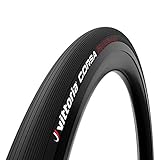
- 27.6 x 1.2 inches (700 x 30mm)
- Material: rubber
- Tread type: split
- Graphene 2.0 (G2.0) rubber compound and 3C compound for better performance
- Durable cotton casing
- 225g
Who This Tire Is For: Cyclists who value hex-level grip and versatile performance in variable conditions.
Vittoria Corsa G2.0 is a restructured standard Rubino platform. It uses the same 3C compound structure, but the highlight of this tubular tire is its Graphene 2.0 rubber compound. Although the first generation of graphene compounds has raised the bar, the G2.0 pin-points each performance metrics.
Using this, Vittoria Corsa can achieve a notable performance boost in speed, grip, puncture resistance, and durability.
The combination of these two compounds sets new standards in rolling resistance, comfort, wear resistance, and grip.
Vittoria Corsa has been a favorite for cyclists to use in their training and racing. In addition, it has become more versatile than the first generation.
Schwalbe One HT Black Road Bike Tubular Tire
Best Value for Money: Exceptional Grip – perfect for unpredictable weather

- 700mm x 22mm (also available in 24mm and 26mm)
- Material: compound
- Tread type: directional
- Highly adaptable in any weather condition
- RaceGuard puncture-resistant component
- 260g
Who This Tire Is For: Riders who need reliable grip and flat protection in unpredictable weather.
Several best possibilities lie within the use of Schwalbe One HT Black Tubular Tire. Some cyclists use the tire for their races. The tubular tire can achieve high speeds for races and uses only minimal moving resistance.
What makes cyclists consider this tubular tire for professional racing is its fine diamond tread pattern, OneStar Triple compound feature, and RaceGuard component.
The fine diamond tread pattern provides an exceptional grip. It is pretty helpful for cyclists who live in unpredictable weather or constant change in the road surface. Its excellent grip helps prevent slippery accidents on the road. Another factor is its OneStar Triple compound, and it offers flat protection and low-rolling resistance.
Lastly, the RaceGuard incorporates a belt that’s specifically developed for expert races. It is made from several layers of nylon fabric and rubber, adding puncture protection.
The clever trade-off between its excellent grip control, rolling resistance, and durability make it one of the best tubular tires in 2025.
Continental Sprinter Gatorskin Road Bike Tubular
Best in Durability: Strongest tubular tire

- 28-inch x 22mm
- Material: Kevlar, nylon
- Tread type: directional
- Thicker rubber polyamide coating
- Gator skin casing
- Three layers of casing construction
- 280g
Who This Tire Is For: Riders logging high-mileage training who need rock-solid puncture resistance.
Continental is known for producing the best bike components, including tires, and their Sprinter Gatorskin tubular tire is one of their leading products. The Gatorskin technology is a carbon black step mixture that offers strength and durability.
Aside from it being one of the most robust tubular tires on the list, it is also incredibly reliable for a quick race. Given its name, Sprinter, it is exceptionally appropriate for speed, making it the best choice for weekly criterium or circuit races.
The design and technology used in Continental Sprinter ensure that it is the best choice for professional use.
Go for a tire that lasts for a more extended period without harboring any problems during training and racing.
Tufo Pro Road Bike Tubular-Clincher Tire
Best Tubular-Clincher Tire: Sturdy yet lightweight
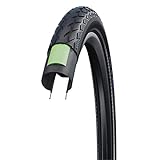
- 700mm x 24mm
- Material: nylon, cotton
- Tread type: fine
- TPI construction
- Ranging tire pressure: 115 psi to 175 psi
- 310 grams
Who This Tire Is For: Budget-minded riders seeking a sturdy training tubular with easy mounting.
This tubular-clincher tire line is an excellent contender for being a sturdy yet lightweight tire, making it the best option for training. Aside from its general-purpose, it is an affordable training tubular clincher tire.
Lastly, you can mount this Tufo 700×21 C S33 Pro on a 28-inch clincher rim without having any difficulties. It has a clincher line feature that integrates the tubular with a hooked strip on the casing.
Continental Giro Road Bike Tubular Tire
Best for Racing: Outstanding handling and rolling resistance capabilities

- 28-inch x 22mm
- Material: rubber
- Tread type: rugged
- 270g

Who This Tire Is For: Riders seeking a consistent, pro-level feel for both training and race day.
Continental is a pretty famous brand among professional cyclists because of its durable handmade tires. While some want a wholly revamped bike for their race, using the Continental Giro tubular tire will give you a familiar consistency.
These tires range from regular training to high-end models. Thus, it is the perfect tubular tire for those who want to have the same experience with their tires through their training and race day. You would be surprised if the list does not include Continental products.
It is the quickest on our recommended list. They offer outstanding handling and rolling resistance capabilities. Moreover, it has exceptional emergency operating features. You can still ride your bike while deflated. Thus, proving its secure grip and responsive handling.
Vittoria Juniores Triathlon Tubular Tire
Best for Training: Built for speed and precise handling

- Sizes: 20 x 2-inch, 24 x 1-inch, 650 x 21mm
- Valve type: Presta
- Material: rubber
- Tough casing helps to run at low pressures
- Weighs 294 grams
Who This Tire Is For: Training-focused riders who want a race-derived touch at an accessible price.
Vittoria Juniores is branded as the best tubular tire choice for training because it comes at a very affordable price. You can train on without worrying about having the tear wearing out. Thus, the Vittoria Juniores is the perfect training tire for those racers looking to hit some dirt after a set of intervals on the road. More so, if you are riding under weather conditions, a dry and sloppy road is not a problem with this tubular tire.
The Vittoria brand is synonymous with professional racing tires. All their products are built specifically for speed and handling. It is closely associated with durability and high price. Thus, it is a catch to have the Vittoria Juniores tubular tire at a friendly price.
Challenge Elite Road Bike Tire Tubular
Best for All-Day Rides: Excellent for daily training

- 700 x 25mm
- Material: polyester
- Tread type: directional
- Ranging tire pressure: 145 psi
- Puncture Protection System (PPS)
- 295g
Who This Tire Is For: Cyclists tackling mixed surfaces who need a durable, all-day performer.
From daily training and preparation for racing, the Challenge Elite Tire is the most preferred. It has a relatively aggressive tread pattern to help riders enjoy the ride even on wet and slippery roads.
The quality of this tire is evident; it is proven and tested that the cobbles of Paris-Roubaix are also the most reliable tire. A solid tubular tire at a reasonable price to start a professional biking career. Looking at the weight and overall quality it produces, it is incomparable to other types of tubular tires.
Tufo Elite S3 <225 Road Bike Tubular Tire
Best for Recreational Rides: Exceptional grip and quick run

- 700mm x 23mm
- Material: rubber
- Tread type: symmetrical
- 210/375 Thread per Inch (TPI)
- Vectran Puncture Protection
- Ranging tire pressure: 115 psi to 220 psi
- 225g
Who This Tire Is For: Recreational riders seeking lightweight acceleration and puncture protection.
This model is the best choice for recreational cyclists who want an exceptional tubular tire set to use for their weekly training.
Its high-inflation pressure tire makes the Tufo 700 x 23 Elite S3 one of the best tubular tires for training and recreational racing. Moreover, its TPI contributes toward its robustness which makes it better than the traditional tires.
The same with the other tubular tires we have reviewed, Tufo Elite S3 has a fine tread pattern that ensures an exceptional grip and quick run with low rolling resistance.
Continental Competition Road Bike Tubular Tire
Best for Speed: Popular choice among professional teams

- 700b x 22mm (Compatible with 28-inch rims)
- Material: steel, nylon (black chili compound)
- Tread type: slick
- Vectran Puncture Protection
- 3/180 Thread per Inch (TPI)
Who This Tire Is For: Racers chasing marginal gains through ultra-low rolling resistance.
From daily training, high-end models, and racing, the Continental Competition is the most sought. It is mainly developed for stamina and heavy use. You can use it on rough roads or courses with sharp rocks without worrying if the tire gets punctured because it is built tough.
When it comes to bike tires, even an amateur cyclist knows the Continental. That’s why it is referred to as the popular choice. Try checking other recommendation lists. It will be no surprise if the Continental Competition is included.
Continental Competition Tubular Tire is a durable handmade tire, offering excellent handling and rolling resistance. The quality of the Continental is evident.
On a lighter note— joke aside, the Continental Competition is one of the most lightweight tubular tires. It only weighs a total of 215 grams only.

What is a Tubular Tire?
The tubular tire is one of the common types of bike tires. Non-cyclists may think all tires are the same because they look similar. However, if you look closely at their construction, they have distinct features, and these features affect their performance. Moreover, if you are observant enough, tubular tires are only often seen on pro-cyclists bikes.
Tubular tires are stitched around its inner tube, and it has specially designed double-sided tape to prevent the tire from moving around.
How is this feature important? Above anything else, safety is the most concern for riders. This tubular tire feature keeps you safe even with a punctured wheel. If you run with a regular tire at high speed and suddenly a flat occurs, accidents most likely happen.
Aside from the durability and strength of tubular tires, their lightweight construction gives a low rolling resistance. It makes riding on tubular tires smoother and faster.
But, like anything else, a tubular tire has its downside. It is less safe for long descents or fast descents. The heat generated in continuous braking can cause the tire to explode.
Well, there isn’t a perfect tire, but you can choose the best one in the market. Know what things to consider to pick the best tubular tire of your preference.

Statistics and Facts About the Best Tubular Tires
Construction & Usage
Tubular tires, also known as “sew-ups,” are constructed by sewing the inner tube inside the tire casing, which is then glued to a tubular-specific rim. This design is favored in high-level road racing, time trials, and cyclocross due to its performance benefits.
The best tubular tires are typically made with cotton casings, allowing optimal deformation, increased grip, and better rolling effectiveness compared to synthetic alternatives.
Performance Advantages
- Rolling Resistance: Tubular tires generally offer lower rolling resistance compared to clinchers, thanks to higher safe inflation pressures and lighter beadless construction—often saving over 200 g per wheelset.
- Ride Quality: Sew-up design gives a smooth ride, superior cornering stability, and responsive handling at speed.
- Puncture Safety: Glued-on fit means tires are less likely to blow off the rim if punctured, allowing controlled slowdowns on descents.
- Weight Savings: Tubular rims plus tires are usually lighter than clincher systems by at least 100 g per rim.
- Pinch Flat Resistance: Since there’s no bead to pinch against the rim, tubulars resist “snakebite” flats more effectively.
Pressure & Performance Data
Research shows that cranking pressures above ~100 psi on tubulars yields diminishing returns and can worsen vibration losses. In tests, raising pressure from 85 to 105 psi produced only marginal speed gains—and sometimes slower times due to harsh ride feedback.
Drawbacks & Limitations
- Complex Installation: Mounting requires glueing and a 24–48 hour cure time.
- Repair Difficulty: Field repairs often mean replacing the entire tire rather than swapping a tube.
- Limited Compatibility: Only fits tubular-specific rims.
- Higher Cost & Maintenance: Premium pricing and periodic re-gluing add time and budget.
Professional & Historical Context
Tubulars have long been the pro peloton’s choice for top-tier races due to their ride quality and safety at speed, even as tubeless tech has advanced. Many pros still trust sew-ups in classics and time trials for these reasons.

What to Look for When Buying Tubular Tires
Deciding which tubular tire to use on your bike should not be a rash decision. The pair of tires on your bike will make or break your riding experience. Take a good look at the tubular tires you find in the market and make a wise purchase decision.
Tire Tread and Pattern
The tire tread is the rubber that meets the road, and its pattern affects the speed and grip of the bike. There are different types of tread patterns, and each pattern is compatible with a particular terrain type.
Some tread patterns are suitable for wet and muddy tracks but uncomfortable on dry paved roads. Thus, when choosing a tubular tire, ensure that the tread pattern matches the riding terrain.
The tightly spaced tread offers a better grip, while a broader tread pattern withstands mud.
Rolling Resistance
Rolling resistance, also known as the coefficient of rolling resistance (CRR), is the energy lost once the tubular tire rolls across a surface. Performance-oriented cyclists give more concern to the rolling resistance of their tubular tires. That’s because the rolling resistance holds 20% of the aerodynamic mechanism.
The faster you go, the aerodynamic drag grows exponentially. If your speed goes up to 30 mph, the energy loss is higher. Thus, to compete, you only have to lose less energy and move at the same speed as the other riders.
A decent tubular tire has a rolling resistance of 12.5 mph and results in 30 watts of energy. If you can reduce the rolling resistance in your tire by 10%, you have saved 3 watts of energy, decreasing the required rolling effort.
Puncture Resistance
You should not overlook the durability of a tubular tire. Do not hesitate to spend a few more bucks on puncture-resistant tires.
Most tubular tires have an anti-puncture belt under the tread, reducing the chance of flats. The high puncture resistance of tubular tires makes the ride easier. Some cyclists prefer tubular tires because they can ride further on a deflating tire.
Weight
Tire weight is not a serious consideration for casual riders. However, it is crucial to shed off a few grams for professional cyclists. So, if you are into a serious form of riding, it is best to have lighter tubular tires. A light tubular tire weighs around 220 grams to 260 grams.
Keep these things in mind and make them influence your buying decision. Considering these factors will give you no room for error. Moreover, having a good set of tires makes the difference between an awful race and a memorable one.
Summary: Buying Guide for the Best Tubular Tires
- Tire Tread & Pattern: Match spacing to terrain (fine for pavement, broad for mud).
- Rolling Resistance: Lower is better for speed—look for <12 W loss at 12.5 mph.
- Puncture Resistance: Anti-puncture belts add safety—vital for commuting and gran fondos.
- Weight: Aim for 220–260 g per tire for race-oriented performance.
Read also: How long do bike tire last?

Most Commonly Asked Questions
Conclusion on the Best Tubular Tires
As you go further with your interest in cycling, there are several things you have to know and consider. Upgrading and choosing the best tubular tire for your bike is quite overwhelming as several tires are available in the market. Thus, we looked at some of the best tubular tires in 2025.
We have summarized the individual properties, advantages, and possible drawbacks of each tubular tire. For the best overall tubular tires on our list, consider Continental Sprinter Tubular Tire for its excellent construct that makes it great for racing as well as for casual rides.
Have a fun ride!
References
- Jones, C. C., & Howat, C. S. (2001). Tubular tires: Adhesives and practice. Barnett Bicycle Institute & University of Kansas. Retrieved from https://cnl.salk.edu/~jorge/xfer/TubularTiresAdhesivesandPracticePart1-4.pdf
- Rene Herse Cycles. (2015, February 17). Tire pressure: Data and details. Retrieved from https://www.renehersecycles.com/tire-pressure-data-and-details/