Key Takeaway: Regularly inspect and maintain your tires to maximize their lifespan—most bike tires last between 1,000 and 4,000 miles, but proper storage and care can extend rubber integrity for years.
How long do bike tires last?
The lifespan of your bike tires is one of the most crucial factors affecting both safety and performance, whether you’re commuting through city streets or hitting rugged trails.
Bike Tire’s Average Lifespan
The average lifespan of your tires will depend on many factors like, the softness of the rubber of your tires, how much rubber you have on your tire’s sidewall, the brand, and others.
Need a Few Practical Extras for Your Next Ride?
Browse cycling-related clothing and simple bike accessories that may help with comfort, visibility, storage, or everyday riding.
Paid links. As an Amazon Associate we earn from qualifying purchases.
- Generally, tires can wear out anywhere between 1000 miles and 3000 miles.
- Puncture-resistant tires made from premium materials can last up to 5,000 miles, while lightweight racing tires may need replacement after 800–1,000 miles.
- Commuter and touring tires often fall between these ranges, with touring-specific models exceeding 4,000 miles of dependable use.
How long your commuter road bike tires last may depend on many factors like the rider’s weight, terrain, and riding style.
Just like any other personal belongings, the durability of your tires will depend on you and how good you maintain them.

Statistics and Facts on Bike Tire Lifespan
- Most bike tires last between 1,000 and 4,000 miles, varying by tire type, riding style, terrain, and upkeep—including road tires (2,000–4,000 mi) and mountain tires (1,000–3,000 mi).
- Racing tires often require replacement after just 800–1,000 mi, whereas touring tires can exceed 4,000 mi.
- Unused tires degrade over time due to rubber breakdown—dry rot commonly appears after 5–7 years in storage if exposed to sunlight or temperature swings.
- When stored properly (cool, dry, dark), unused tires can last up to ten years, though optimal performance is within the first three years.
- Environmental factors—heat, UV, ozone, moisture—accelerate aging; interestingly, wet riding conditions reduce wear compared to dry surfaces.

Factors That Affect Tire Life Span
You may have heard mixed opinions about how long your bike tires should last, so let’s break down what is fact and fiction.
Your Tire Types
The type of tire you are using will determine how long it lasts.
- A mountain bike tire has a thicker tread than a road bike tire and is better suited for off-road riding. Mountain bike tires typically last 1,000-2,000 miles before needing a replacement.
- Road bike tires usually last between 500-1,000 miles. It is because they are designed more for speed and less for durability.
Tire Quality
- High-quality tires have durable components that can withstand more wear and tear over time.
- Budget tires may require more frequent swaps due to softer construction.
Your Riding Habits
The way you ride can also affect the life span of your tires.
- If you ride along rough terrain with many obstacles, your tire will likely wear out faster than riding on a smoother surface.
- Dry conditions typically wear rubber faster than wet conditions, where water provides slight lubrication.
Riding Speed
The faster you go, the more friction between the tire and the ground. If you’re a fast rider, you’ll likely need to replace your tires more often than if you were riding slower.
Overall Maintenance
- Proper pressure and regular tune-ups add miles to your rubber: under-inflation causes sidewall cracks, over-inflation speeds tread wear.
- Storing tires indoors, away from heat and sunlight, preserves rubber integrity.
Getting your tire pressure right can make a huge difference in speed, grip, and comfort—our tire pressure calculator gives you a personalized PSI range in seconds.

Detecting Wear on Your Bike
We all don’t want our rides to be ruined by worn out tires. So, detecting wear on your bike early is gonna save you a lot of trouble and ensure a smooth ride.
If you’re losing your grip on the trails, it might be time to replace your tires. Here are a few tell-tale signs you need to look out for:
Cracks

A crack on the bike’s sidewall can tell you a lot about the bike. Cracks may be caused by riding too low pressure for a long time.
When you ride your tires not fully inflated, your rim can potentially be damaged on the surface. Riding in a very low pressure can also lead to frequent punctures.
Bike tires that are stored for a long time can result in hardening or cracking due to humidity and temperature changes. This usually happens in hot places like Florida, Louisiana and Texas where loads of light and heat can damage your tires.
If your tires have distributed cracks around the sidewalls, it’s less serious.
That actually means, your tires are well-maintained and still have a few miles left in them. But if you’re planning to ride on steep terrain replace the tires for your own safety.
Repeated Punctures
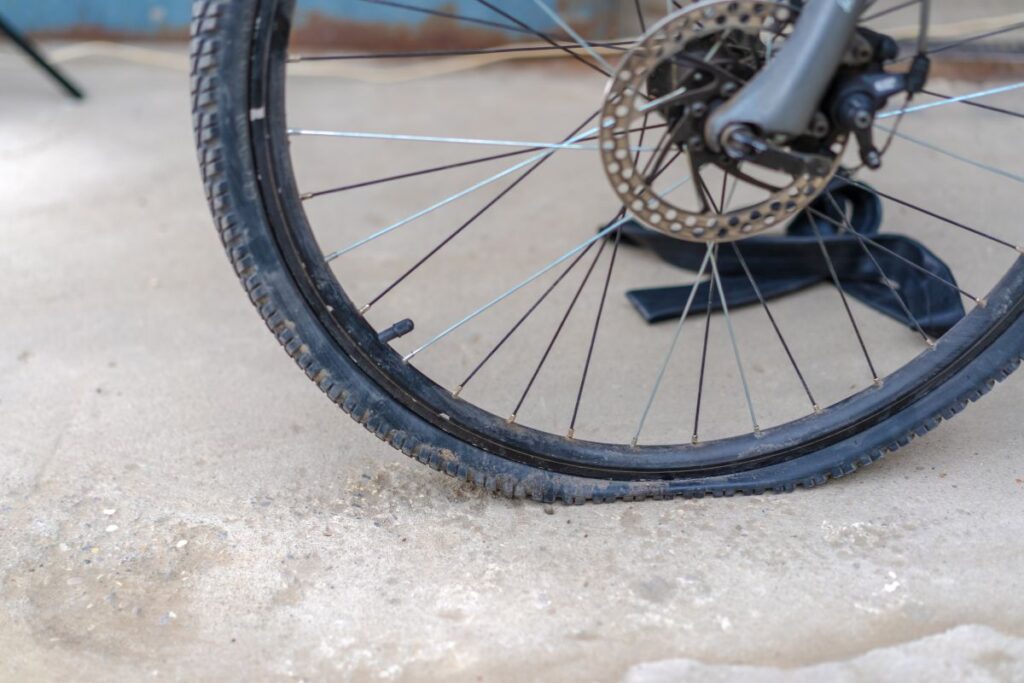
How many times in a year do you get punctures? Once, twice, 20 times?
If you keep on getting punctures, it could be because your tires are too thin, worn down, or you’re not using the right tire for your riding conditions.
Thin tires offer far less puncture protection to stop debris and objects from penetrating the tire.
So if you’re riding super fast thin tires designed for speed and smooth roads, and you run them on surfaces covered in grit and grime, then you might get more punctures than you would.
Tread
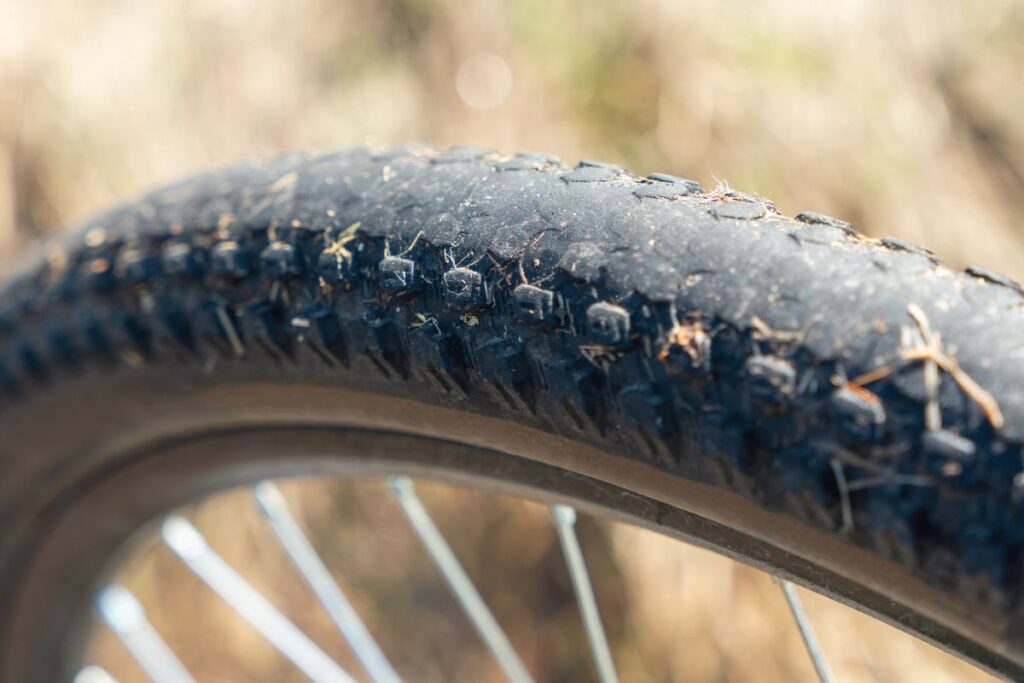
If there are any visible threads under the tire’s rubber, change your tires as soon as you can. Tires with threads are no longer suitable for riding. Thin tires with showing threads may be due to aging and poor maintenance.
Flat Spots
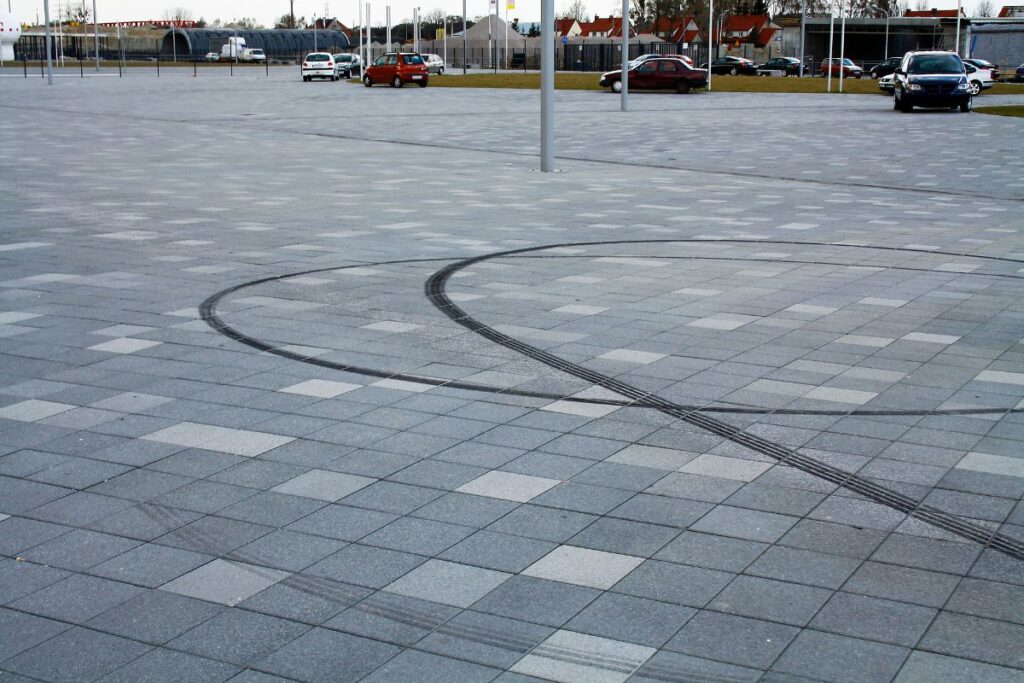
Do you like skidding on your bike? Cool right? But that actually causes flat spots on some parts of your tires.
That means, you could have a tread wear sign showing that your tire is working perfectly fine, but some spots of your tire could be worn down all the way to the casing.
That is why, you should make it a habit to visually inspect your tires all around to ensure that there are no areas that have a worn away tread.
Big Cuts
Big cuts on your bike tires could only mean one thing: tire replacement. If you get a big cut on the sidewall of your tires, your inner tube will poke out to escape from the tire.
This can cause the tire to easily deflate and you’ll surely lose control of the bike. So if you spot any cuts on your tires, inspect them before it becomes bigger then replace it.
When inspecting your tires, remove stuck debris into the tire that can eventually work its way inside the rubber and cause a puncture or split into the tyre.
If there are large cuts around the sides of the tires, you can do a temporary fix by patching them up using an old tire that’s cut-up into sections to cover the tire and keep the inner tube in place.
Old Rubber
Over time the rubber of the tire will degrade and its natural oils will evaporate. When you’ve noticed that your tires have hardened, it might be because it’s old.
If you’ve been using your tires for several years, give it a visual inspection to make sure that it’s okay.

How to Make Your Bike Tires Last Longer?
Cleaning your Bike
How long your bike tires can last may depend on the manner you clean them. Clean your bike after every ride to check if all its parts are working properly. Cleaning your bike after rides leads to better performance from your bike.
Be aware that chemicals can degrade the rubber inside your tires so you have to make sure that you use bike specific products when you clean.
Proper Pressure
Proper pressure is the first thing you have to keep in mind.
Following the recommended tire pressure (found on the sidewall of your tires) will not only result in quicker rolls, and a smooth ride, it will also save your tires from flats!
Check your tire pressure regularly because air may seep out of tires.
Do the pressure inspection before every ride at least once a week. Stick to the habit of having regular checks, so to make sure you’re running the right pressure.
Regular Tune-ups
Have regular tune-ups with your local bike shop. Regular tune-ups will help extend the life of your tires. Bike tune-ups usually cost between $60 to $100.
If you’re a new bike owner, you can go to the bike shop where you bought your bike and ask them if they offer free tune-ups.

Which Tire Wears Faster?
Riding style and tire quality are the ultimate determinants—no one-size-fits-all answer. But higher-end compounds and consistent maintenance always win the longevity race.
Should You Replace Both Tires at the Same Time?
Personal preference. Replace both if you notice uneven wear; otherwise, swapping one at a time is fine—just aim to match tire age and type.


Conclusion on How Long Do Bike Tires Last
As a general rule of thumb, it is wise to consider replacing your bicycle tires every two years. Or annually if you are a regular cyclist. However, many factors can affect this timeline, including terrain type, tire quality, and maintenance habits.
So it’s always best to check with an expert or do some research before replacing them too soon! Taking care of your bicycle’s wheels and keeping them in good condition will ensure safe rides for many years!