Best Road Bike Helmets Under $100
- Best Overall: Giro Register MIPS
- Best Value for Money: BASE CAMP Bike Helmet
- Best Premium Option: Giro Tremor MIPS
- Best Helmet for Kids: Giro Scamp Recreational Cycling Helmet
- Best Style: Giro Isode MIPS Road Cycling Helmet
- Best Budget Helmet: Schwinn Intercept Bike Helmet
- Best for Comfort: SAEROVIE Road Recreational Cycling Helmet
Looking for the best road bike helmet under $100?
Every rider that loves speed knows that the joy that comes with riding a road bike is unparalleled.
But then, safety is also a vital consideration when you ride your bike, particularly in today’s rate of traffic accidents.
Indeed, we want a FUN and SAFE ride.
Need a Few Practical Extras for Your Next Ride?
Browse cycling-related clothing and simple bike accessories that may help with comfort, visibility, storage, or everyday riding.
Paid links. As an Amazon Associate we earn from qualifying purchases.
And what’s the best thing to keep us safe but a helmet?
A helmet is simple and costs a small fraction of your bike. But with as little as $20, you can find a decent helmet that adds to your safety and protection.
To help you save time and effort, we made a review on the best road bike helmets under $100 that you can find in the market today.
Here we go…

15,483
Customer Reviews

11
Testing Hours

7
Tested Products

12
Sources Researched
- Best Road Bike Helmets Under $100
- 7 Best Road Bike Helmet Under $100
- Best Overall: Giro Register MIPS
- Best Value for Money: BASE CAMP Bike Helmet
- Best Premium Option: Giro Tremor MIPS
- Best Helmet for Kids: Giro Scamp Recreational Cycling Helmet
- Best Style: Giro Isode MIPS Road Cycling Helmet
- Best Budget Helmet: Schwinn Intercept Bike Helmet
- Best for Comfort: SAEROVIE Road Recreational Cycling Helmet
- What to Look for When Buying a Road Bike Helmet
- Most Commonly Asked Questions
- Conclusion on the Best Road Bike Helmet Under $100
7 Best Road Bike Helmet Under $100
Best Overall: Giro Register MIPS
No products found.
One great feature of the Giro Register helmet is the Multi-Directional Impact Protection System (MIPS). This gives you an added protection from rotational forces in case of impact. The full hard body coverage and compact shape of the helmet also complete the safety package for you.
With its quick-dry padding and 22 vents, you are ensured with air circulation to keep a cool head, especially during hot days cycling. Giro Register also follows a universal fit sizing. So almost anyone will be accommodated with the right fit.
Best Value for Money: BASE CAMP Bike Helmet

- Ventilation: 6 vents
- Construction: EPS (Expanded Polystyrene foam) liner / ABS outer shell / denim fabric
- Weight: 450 g
- Size: 22-24 inches
- Adjustable chin strap and quick compass fitting
- Includes 5-mode rear light
The BASE CAMP bike helmet features a built-in detachable rear light, which you can set in steady or flashing mode. It increases night-time visibility and safety for you.
This helmet also features denim fabric covering and built-in sun visor. May it be rain or sun rays, your eyes and face are protected. The two positions of vertical adjustability are suitable for daily use.
And if you have sensitive skin, this helmet is best for you because of its soft padding under the chin-strap clasp.
Overall, it’s an awesome helmet perfect for urban riding. Feels and fits just like the more expensive helmets. You won’t go wrong on this one.
Best Premium Option: Giro Tremor MIPS

- Ventilation: 18 vents
- Material: PC (Polycarbonate outer shell) / EPS (Expanded Polystyrene foam)
- Circumference: One Size / 45-49 cm / 47-54 cm
- Retention system: Roc Loc Sport MIPS
Giro Tremor uses several of the adult line’s best features packed into this younger ones’ helmet. It offers a multi-directional impact protection system that redirects energy during impact. With the in-mold construction and hardbody shell, your head is safeguarded in case of a crash.
Another feature of Tremor is the slimline webbing for a quick-dry aided by its 18 vents for a more relaxed feeling with removable visor. If you want to spend more bucks for better design than Giro Register, consider buying this helmet.
Best Helmet for Kids: Giro Scamp Recreational Cycling Helmet

- Ventilation: 8 vents
- Construction: PC (Polycarbonate outer shell) / EPS (Expanded Polystyrene foam)
- Weight: 230 g
- Circumference: XS: 17.75 -19.25 inches / 45-49 cm; S: 19.25 -21 inches/ 49-53 cm
- Retention system: Roc Loc Jr. fit system
The Giro Scamp is designed with great features intended to fit your child. It comes with a built-in visor for any weather protection. It is a ponytail compatible for girls, so tying your kid’s hair will not be a hurdle for a proper fit.
It is also equipped with a Roc Loc Jr. fit system that ensures a pinch-free buckling. Rotating knob at the back of the head and chin strap are fully adjustable. This provides a convenient and easy way to adjust your kid’s helmet quickly.
Best Style: Giro Isode MIPS Road Cycling Helmet

- Ventilation: 22 vents
- Construction: In-Mold polycarbonate shell with EPS liner
- Weight: 285 g
- Circumference: 54-61 cm
- Retention system: Roc Loc Sport MIPS
The Isode MIPS helmet gives an easy fit for riders who want classic style but features the latest innovations.
Its in-mold construction gives full hard body coverage and compact shape, which is a perfect fit no matter how fast you ride.
It also features a reflective accent which adds safety, especially when riding at night or early morning. This helmet is identical to Giro Register except for the visor. So if you want to save a few bucks and have no need for a visor, consider buying Giro Isode.
Best Budget Helmet: Schwinn Intercept Bike Helmet
No products found.
This Schwinn bike helmet features a dial fit system which gives you a superior 360° adjustment for custom fitting. It also has a detachable visor for eye protection. The outer shell lining and its webbing strap are fused to give you extreme comfort.
It also offers cool colors and graphics for the kids to choose from. With 10 vents, the helmet still provides enough ventilation to keep your head cool.
Although, this is the least expensive helmet we have reviewed, it does not look and feel cheap. You still get a cool-looking helmet from the famous Schwinn bike brand.
Best for Comfort: SAEROVIE Road Recreational Cycling Helmet
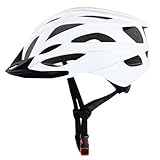
- Ventilation: 24 vents
- Construction: PC (Polycarbonate outer shell) with EPS liner
- Weight: 0.58 lb. / 265 g
- Circumference: 56-62 cm
- Retention system: rotary dial
The SAEROVIE Road Recreational Cycling Helmet uses a simple dial system which can be easily adjusted. It also has a unique aerodynamic design with 24 vents to keep you cool during your ride.
With only 265 g in weight, there is less pressure on your neck. Plus, its detachable visor can block ultraviolet rays and also reduces glare and wind drag. At less than $30, this helmet meets the needs of most recreational cyclists.

What to Look for When Buying a Road Bike Helmet
Fit and Sizing
Make sure the helmet sits level on your head without being too tight. It should stay in place during impact. Check individual sizing charts, as different brands shape their helmets differently.
Primarily, in the event of a crash, the helmet should stay on your head to be helpful. A proper helmet should be close-fitting but not annoyingly tight. It should sit level on your head and not tilted back.
And just like our shoes, sizes and shape differs on each brand. So it is highly recommended that you check the helmet’s size first before purchasing it.
Note also that the shape of the helmet varies on each brand. American brands typically are more round in shape, while Italian helmets are basically narrower.
The retention system should also support an easy adjustment while securing the helmet in its place.
Materials
Look for helmets made with expanded polystyrene foam (EPS) covered by a durable polycarbonate or ABS shell for optimal impact absorption.
Helmets are created, of course, to protect the head in case of impact or tremendous pressure. It is crucial, therefore, that your helmet is reliable in these scenarios.
The helmet foam is made of expanded polystyrene or EPS. It is also covered in a hard polycarbonate shell to add strength and protection to the EPS foam from bumps and scratches.
In the event of an impact, the polycarbonate shell is designed to crack to spread the initial burst of energy across the entire surface. The force then moves to the EPS foam, which compresses while absorbing more of the blow.
Helmets are called “one-and-done. If your helmet receives a hit, don’t take the risk, and better buy a new one.
Safety Features
Consider helmets with added features such as MIPS technology, visors, and reflective accents. These elements not only improve safety but also boost visibility on the road.
Visors help protect your eyes from sun rays and rain. Some even feature a visor that blocks ultraviolet rays. So in choosing a helmet, this is a significant consideration.
Reflectivity and rear light are also important. Some helmets have built-in rear lights, but others offer mounts that can hold light and if you want to, a camera for recording.
While it is less noticed, helmet color can hugely improve safety. A brightly colored helmet, or those that contrast with your cycling attire, can enhance your visibility to other road users.
Ventilation
Adequate vents are essential to manage sweat and regulate temperature. More vents generally indicate better airflow, which is crucial during long rides.
Sweat build-up while on a ride can be very uncomfortable and can obstruct your vision. Thanks to the vents which enhance wind flow over your head to keep you cool and comfortable.
Note also that the more vents, the lighter the helmet, too. However, helmets with more vents are more expensive. This is due to added internal bracing on the foam between the vents.
Aerodynamics
In the world of cycling competition, speed is critical. And wind resistance is a significant factor affecting this. Since the human head is not exceptionally aerodynamic, helmets reduce wind resistance significantly.
The best helmet to use if you are after speed is aero helmets. They have a smooth and fittingly shaped surface. Note, however, that these helmets have lesser vents which result in a “hot head.” Vented helmets, though not as aerodynamic, have a more excellent airflow across the head.
Other features
Consider extras such as built-in lights, adjustable visors, and compatibility with sunglasses. If you have long hair, a hair port can be beneficial.
Hair port is excellent for those with long hair. It accommodates ponytails without affecting the fit or safety of the helmet.
If you want to use sunglasses while riding your bike, check if your helmet is fitting for sunglasses. Try it with your helmet, and make sure that the helmet’s shell or retention system doesn’t touch the frame of your glasses.

Helmet Effectiveness and Safety: Key Facts and Statistics
Understanding the real impact of helmet use can boost your confidence in choosing the right gear:
- Reduction in Head Injuries: Research shows that helmets can reduce the risk of head injuries by 69% and fatalities by 37% to 42% (National Highway Traffic Safety Administration, as cited in Christensen Hymas, 2023; Thompson, 1996, as cited in Thompson, 1996; McDermott, 1993, as cited in McDermott, 1993).
- Severe Brain Injuries: Helmets can lower the risk of severe brain injuries by as much as 88% (Thompson, 1996, as cited in Thompson, 1996).
- Facial Injuries: They are also effective in reducing facial injuries by about 65% (Thompson, 1996, as cited in Thompson, 1996).
- Helmet Use Statistics: In the United States, roughly 29% of adults report always wearing helmets while cycling (CDC, 2016). For children aged 5 to 17, helmet usage varies significantly, with younger children more likely to wear them (CDC, 2016).
- Impact of Helmet Laws: For instance, mandatory helmet laws in New South Wales, Australia, have been linked with a 36% reduction in cycling participation (Cycling UK, 2020), although some regions reported a 25.6% increase in injuries post-legislation (Australian Institute of Health and Welfare, as cited in Cycle-Helmets, n.d.).
- Fatalities Without Helmets: In New York City, a staggering 97% of cyclists who died in accidents weren’t wearing helmets (Helmets.org, n.d.).
Furthermore, some studies suggest that while helmets provide significant protection, they may also lead to increased risk-taking behavior if riders feel overly secure—a concept known as the risk compensation hypothesis. Mandatory helmet laws have also been observed to reduce overall cycling participation, potentially affecting safety through decreased numbers on the road.
These findings underscore why selecting a quality helmet is essential—not just for protection but also for encouraging safe cycling habits.
Most Commonly Asked Questions
Conclusion on the Best Road Bike Helmet Under $100
The helmet’s primary goal is to protect your head in case of impact or tremendous pressure. With this, the best road bike helmet in our review is the Giro Register MIPS. It passed CPSC and ECE helmet standards for safety. Plus it is integrated with a multi-directional impact protection system. You won’t be having a problem with sweat builds up because of the 22 vents for air circulation.
So take now your bike helmet and have a fun and safe ride!
References
CDC. (2016). Bicycle helmet use among persons 5 years and older in the United States. https://pmc.ncbi.nlm.nih.gov/articles/PMC5189688/
Christensen Hymas. (2023). The Importance of Wearing a Helmet: Data and Statistics. https://christensenhymas.com/blog/the-importance-of-wearing-a-helmet-data-and-statistics/
Cycling UK. (2020). Cycle helmets: An overview of the evidence. https://www.cyclinguk.org/sites/default/files/document/2020/01/helmets-evidence_cuk_brf_0.pdf
Helmets.org. (n.d.). Bicycle Helmet Statistics and Research. https://helmets.org/stats.htm
McDermott, F. T. (1993). The effectiveness of bicycle helmets in preventing head injury. Journal of Trauma and Acute Care Surgery, 34(2), 258–265.
Thompson, D. C. (1996). Effectiveness of bicycle safety helmets in preventing head injuries: A case-control study. Journal of the American Medical Association, 276(24), 1968–1973.
Thompson, R. S. (1989). A case-control study of the effectiveness of bicycle safety helmets. New England Journal of Medicine, 320(21), 1361–1367.