Key Takeaway:
- Understand the main valve types (Presta, Schrader, Dunlop) to select the best fit for your bike and riding style.
- Match valve choice to riding conditions (road racing vs. mountain trails vs. city commuting) to optimize inflation ease, durability, and performance.
- Maintain and troubleshoot your valves regularly—clean cores, swap adapters/extenders, and keep sealants fresh—to prevent flats and maximize ride safety.
Types of bike tire valves can make or break your ride, whether you’re carving urban streets or tackling rugged trails. There are three types of bike tire valve: Presta, Schrader, and Dunlop (Woods). While tubeless valves come in Presta or Schrader.
Types of Bike Tire Valves: Statistics and Facts
Bicycle tire valves are critical for inflation, air retention, and overall cycling performance. Here’s what the data shows:
Design & Use
Need a Few Practical Extras for Your Next Ride?
Browse cycling-related clothing and simple bike accessories that may help with comfort, visibility, storage, or everyday riding.
Paid links. As an Amazon Associate we earn from qualifying purchases.
- Presta valves are narrower (≈6 mm) and feature a threaded stem with locking nut—ideal for high-performance road, gravel, and some mountain bikes.
- Schrader valves mirror car tire valves (≈8 mm), with spring-loaded cores for easy use at pumps and gas stations.
- Dunlop (Woods) valves sit between Presta and Schrader in diameter and are common on city/utility bikes in Europe and Asia.
- Tubeless valves borrow Presta or Schrader designs but add a rubber bung for a sealed rim–tire interface, enabling lower pressures and better off-road traction.
| Feature | Presta Valve | Schrader Valve | Dunlop Valve | Tubeless Valve |
|---|
| Diameter | 6 mm | 8 mm | 6–8 mm | Varies (often 6 mm) |
| Pressure Range | Up to 150 PSI | Up to 100 PSI | Up to 80 PSI | 20–50 PSI (off-road) |
| Weight | Lightweight | Heavier | Moderate | Lightweight |
| Pump Compatibility | Adapter/head | Standard pump | Adapter needed | Presta/tubeless pump |
| Common Usage | Road, gravel | MTB, hybrids | City/utility | Tubeless MTB/road/gravel |
| Price Range (USD) | 5–10 | 3–7 | 4–8 | 10–20 |
| Lifespan | Long-lasting | Very durable | Moderate | Long-lasting (with sealant) |



Market Trends & Growth
- The bicycle inner-tube valves market was valued at USD 1.2 billion in 2024 and is projected to reach USD 1.8 billion by 2033 (5.0 % CAGR) (Market Research Intellect, 2024).
- The overall global bicycle market topped USD 60–70 billion in 2023, driving increased valve demand (Verified Market Reports, 2025).
- Innovations like wider “Fillmore” tubeless valves (Reserve) boost airflow for faster tire seating and reduce sealant clogs.

Presta Valves
A Presta valve (also called “high pressure” valves or French valve) is the most common valves found on road bike inner tubes. They have a small diameter shaft and screw-on cap.
To inflate or deflate:
- Unscrew the retaining ring.
- Remove the core to adjust pressure.
- Tighten, then replace the cap.
A Presta valve is easy to use and don’t require much maintenance. However, they can be difficult to inflate if you don’t have the right tools.
Take care of the stem shaft and central pin, as they are easy to bend when using push-fit hand pumps. A Presta valve is easier to use when a hose is attached to your bicycle pump and the pump head locks in place.
It’s important to note that not all Presta valves are created equal. Some have a smaller diameter and require an adapter to use a standard pump.


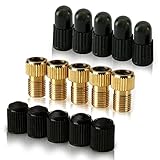
Parts of a Presta Valve

- Valve core: This is the innermost component of the valve and is responsible for regulating air pressure. The core is also removable, which makes it easy to add sealant or make repairs.
- Valve stem: The Presta valve stem is the metal or plastic part that protrudes from the rim. It’s what you unscrew in order to remove the valve core.
- Valve cap: The Presta valve cap screws onto the valve stem and helps to keep dirt and debris out of the valve.
- Nut: The nut is the metal or plastic piece that secures the Presta valve stem to the rim.
Note: Adapters are required to use a Presta valve with a bicycle pump that has a Schrader’s head. The adapter fits onto the valve stem and provides a tight seal.
Pros of Using Presta Valves
- Easy adjustable air pressure
- Lightweight
- Requires a smaller valve hole
- Unlikely to get clogged with dirt
- Multiple lengths available
- Compatible with drilled rims for Schrader and Dunlop
Cons of Using Presta Valves
- Central pin and nut can be easily damaged
- Stem shaft can be easily snapped
Schrader Valves
Schrader valves (also called “car” valves or American valves) are the main bike tire valves found on mountain bikes’ inner tubes. They have a larger diameter shaft and spring-loaded valve core. The main advantage to Schrader valves is that they are easier to inflate than Presta valves, as you don’t need a valve adapter or lock-on bicycle pump head.
Simply press to open or screw on a standard pump.
However, Schrader valves can be more difficult to use to deflate your tires. You have to unscrew the core to let all the air out, which can be time-consuming. Additionally, if you lose the spring inside the valve, it can be difficult to find a replacement.

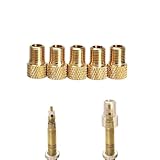
Parts of a Schrader Valve

- Valve stem: The Schrader valve stem is the metal or plastic part that protrudes from the rim. It’s what you unscrew to remove the core.
- Valve core: The Schrader valve core is the innermost component of the bike valve and is responsible for regulating tire pressure. It is also removable, which makes it easy to add sealant or make repairs.
- Valve cap: The Schrader valve cap screws onto the valve stem and helps to keep dirt and debris out of the valve.
Pros of Using Schrader Valves
- Wide valve stem
- Strong bike valve stem
- Replaceable core
- Ideal for holding high pressures
- Inexpensive
Cons of Using Schrader Valves
- Requires larger hole in wheel rims
- Presta valve-incompatible
- Heavier than Presta valves
- Small air is lost when removing pump
Dunlop Valves (Woods Valves)
A Dunlop valve, or Woods valve, is the rarest among bicycle valve types and is mostly found on older bikes. They have a larger diameter shaft but the core is not spring-loaded. Dunlop valves are inflated and deflated in the same way as Presta valves.
The main advantage of a Dunlop valve is that they are less likely to leak than a Schrader valve. However, they can be difficult to find replacement parts for and are not as widely compatible with pumps and other inflation devices.


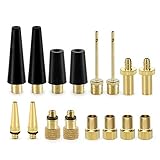
Parts of a Dunlop (Woods) Valve

- Valve stem: The Dunlop valve stem is a metal or plastic component that sticks out from the wheel rim. The core is located inside.
- Valve core: The Dunlop valve core is the innermost component of the bike valve and is responsible for regulating air pressure. The core is also removable, which makes it easy to add sealant or make repairs.
- Valve cap: The Dunlop valve cap is a small, screw-on component that helps to keep dirt and debris out of the valve.
Pros of Using Dunlop Valves
- Inexpensive
- Less likely to leak than Schrader valves
- Core does not need special equipment for replacement and maintenance
- Thick and strong stem valve
Cons of Using Dunlop Valves
- Can be difficult to find replacement parts
- Not as compatible
- Heavier than Presta and Schrader valves
Types of Bike Tire Valves for Tubeless Tires
Tubeless bicycle valve types are Presta and Schrader valves modified for use with tubeless tires. They have a larger diameter shaft and an integrated tire valve stem that can be inflated or deflated without removing the tire from the rim.
Tubeless bike valves are becoming more popular as tubeless tires become more common. They offer a secure connection between the tire and rim, making it easier to inflate and deflate your tires.
Cyclists use liquid sealant in their tubeless tire set-ups. The sealant is used to fill any small holes or punctures that occur in the tire. This prevents air from escaping and keeps the tire inflated.
Additionally, tubeless valves are less likely to leak than traditional Presta or Schrader bicycle valve types.


Parts of a Tubeless Valve
The parts are the same as a Presta or Schrader valve, with the addition of a rubber bung.
- Rubber bung: A rubber bung is a small, round piece of rubber that fits snugly over the tire valve stem. It helps to keep air from leaking out of the tire.

Which pump should I use with these valves?
There are a few types of bicycle pumps that work with different bicycle valve types. floor pump, mini-pump, and CO2 inflator all have adapters that allow them to be used with different types of bike tire valves.
- Floor Pumps: Floor bicycle pumps are the most common type of bike pump. They are larger than mini-pumps and can inflate a tire to full pressure with fewer strokes. This pump typically has a gauge that lets you know how much air is in the tire.
- Mini-Pumps: Mini-pumps are small, portable pumps that can be carried on your bike. They are not as effective as floor pumps but can get the job done in a pinch. Mini-pumps typically do not have a gauge, so you will have to estimate the pressure by feel.
- CO2 Inflators: CO2 inflators are small, disposable canisters that contain pressurized carbon dioxide gas. They are very effective at inflating a tire but can be expensive to use on a regular basis. CO2 inflators do not have a gauge, so you will have to estimate the pressure by feel.
A Presta-only pump will not work with a Schrader valve and vice versa. Make sure you get the right type of pump for your valves! But you can buy a dual-head pump that will work with both types of valves.
Choosing the Right Valve for Your Ride
- Road & Racing: Presta for high-pressure, lightweight rims.
- Mountain & Commuter: Schrader for durability and pump convenience.
- City & Utility: Dunlop if parts are available locally.
- Off-Road & Gravel: Tubeless for puncture resistance and traction.
Valve Maintenance & Troubleshooting
- Clean regularly: Remove caps, rinse cores under warm water, and dry fully.
- Replace cores: Swap worn cores every 6–12 months—carry a spare core tool on long rides.
- Sealant checks: Top up tubeless sealant seasonally to avoid dry-rot.
- Adapter care: Lubricate Presta adapters and inspect O-rings for leaks.

Frequently Asked Questions
Is my valve Schrader or Presta?
If your valve has a small, threaded cap that unscrews to reveal the valve core, it is most likely a Presta valve. If your bike tire valve has a large, knurled nut that unscrews to reveal the valve core, it is most likely a Schrader valve.
What is the best type of valve for my bike?
The best type of bike tire valve for your bike depends on your personal preferences and what type of tires you are using. If you are using tubeless tires, then you will need to
Where is the valve located on my bike?
The bike tire valve is located on your wheel rims, extending toward the hub. It is usually located near the spoke nipples.
Why are Presta valves so difficult?
A Presta valve’s diameter is smaller than standard Schrader valves, making them trickier to inflate. Also, the air pressure in a Presta tube is maintained by a small screw-on cap which can be easily be misplaced. If this happens, all of the air will escape from the tube.
What is a Presta valve extender?
A Presta valve extender extends the length of the valve stem. This extension is designed to ensure that bike tires, using a Presta valve type, have proper clearance when installing or removing bike tubes. Valve extenders allow the bike tube to fit wheels with deeper rims. The extension is typically threaded on the top, and when properly installed, it should remain securely in place.
Do bike tires lose pressure without the valve cap fitted?
No, bike tires should not lose pressure without the valve cap fitted. The valve core is designed to prevent air from exiting the bike tire. As long as the valve core is not compromised, bike tires should hold air without difficulty. By fitting the valve cap, you can help make sure that small particles and dust don’t enter the bike tire and cause issues.
Is it possible to use Schrader valve tubes in Presta rims?
No, a Schrader valve tube will not work in a Presta rim. The rim hole must be made to match the size of the valve. A Presta valve is usually thinner than a Schrader valve, so it requires a smaller hole in bike rims, and a Schrader rim has a larger hole.
Do you need a special tire inflator to pump Presta valve tubes?
No, you need a regular bike tire inflator with a special adapter for Presta valves. The adapter has a thin side that fits snugly into the bike tire valve, and it also has a wider end to attach the bike pump. Most inflators come with an adapter, but if yours did not, you could purchase one separately.
Summary: Which Type of Bike Tire Valve is Right for You?
Presta valves are the most common bicycle valves types found on road bikes. They are easy to use and don’t require a lot of maintenance. However, they can be difficult to inflate if you don’t have the right tools.
Schrader valves are the most common bike tire valve found on mountain bikes. They are easy to inflate but can be more difficult to use when deflating your tires.
Dunlop valves are less common than Presta or Schrader valves and are mostly used in developing countries.
References
- Market Research Intellect. (2024). Aufblasen des Wachstums – die steigende Nachfrage im Markt für Fahrradventile.
- Verified Market Reports. (2025). Bicycle Inner Tube Valves Market Size, Share, Demand & Forecast.