Key Takeaways:
- Spinning vs cycling delivers distinct benefits: one thrives on group energy, the other on solo control.
- Spinning burns 300–600 kcal per session and elevates post-exercise metabolism by 14 hours.
- Outdoor/stationary cycling offers versatile terrain training but depends on weather.
- Instructor-led spinning enhances adherence; self-paced cycling suits tailored interval goals.
- Cost comparison: spinning classes (~$20–$30/session) vs. home-trainer setup ($200–$1,000).
Spinning vs cycling is a popular debate for those who seek the most effective, eco-friendly fitness option.
Whether you crave the high-energy buzz of a class or the freedom of solo rides, understanding each workout’s pain points—cost, intensity, and muscle engagement—helps you choose the perfect fit.
If you plan to use cycling for fitness, then you’ve probably heard of spinning classes. But what exactly are they? And how do they compare to indoor cycling? In this post, we’ll explore the differences between spinning and cycling, and help you decide which is right for you. So keep reading to learn more!
Need a Few Practical Extras for Your Next Ride?
Browse cycling-related clothing and simple bike accessories that may help with comfort, visibility, storage, or everyday riding.
Paid links. As an Amazon Associate we earn from qualifying purchases.

What is indoor cycling?
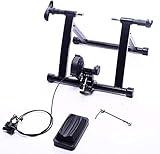
On the other hand, indoor cycling or indoor bike training is a workout that you can do on an outdoor bike attached to a trainer in the comfort of your own home. Trainers can be direct-drive wheel-on trainers, smart trainers, rollers, or an exercise bike.
In some cases, you need to replace your rear wheel with a special trainer-specific wheel that has a resistance unit built in. These trainer wheels can be used with any type of bike, including road, mountain, and even triathlon and time-trial bikes.



Read also: Indoor vs Outdoor Cycling (Which is Better?)
What is spinning?
Spinning is a type of exercise that uses a stationary bike. Unlike indoor cycling, spinning is usually done in a class setting with music and lights. Bikes used in spinning classes have a weighted flywheel that provides resistance. The faster you pedal, the more resistance you feel.
While both spinning and indoor cycling are great workout options, they each have their own benefits and drawbacks.


Read also: Best Exercise Bike for Bad Knees (Our Top 7 Picks)
Key Differences Between Spinning and Cycling
Here’s a look at some of the key differences between spinning and indoor cycling:
1. Cost Comparison: Spinning vs Home Trainer
- Spinning classes typically cost $20–$30 per session or $100–$150 monthly for unlimited access.
- Home-trainer setup ranges from $200 for basic wheel-on models to $1,000+ for direct-drive smart trainers.
- ROI: Break-even after ~10–20 sessions compared to class fees.
Tip: Look for trial memberships and second-hand trainers to reduce upfront costs.
2. Benefits: Spinning vs Indoor Cycling
| Benefits of Spinning | Benefits of Indoor Cycling |
|---|---|
| Spinning classes are usually high-energy and motivating, thanks to the music and group setting. | You can do indoor cycling at your own pace, without the pressure of a group setting. |
| The weighted flywheel on spinning bikes provides a smooth, resistance-based workout. | You have more control over your workout, as you can adjust the resistance to suit your needs. |
| You don’t need any equipment to participate in a spinning class—just show up and pedal! | You can use indoor cycling to train for specific events or goals, such as a road race or triathlon. |
| Indoor cycling is ideal for specialized interval training sessions, lung-bursting races, and virtual adventure. |
3. Energy Expenditure & Calorie Burn
Key Statistics and Research Findings
Typical calorie expenditure per session: 300–600 kcal, aligning with ACSM recommendations for effective exercise.
A 175 lb (79 kg) person burns about 354 calories in a 30-minute spinning class vs. 312 calories for general bicycling and 292 calories on a stationary bike.
45-minute spinning sessions can boost metabolic rate for up to 14 hours, burning an extra 190 calories post-workout.
Reference: Chavarrias, M., Carlos-Vivas, J., Collado-Mateo, D., & Pérez-Gómez, J. (2019). Health Benefits of Indoor Cycling: A Systematic Review. Medicina (Kaunas, Lithuania), 55(8), 452. https://doi.org/10.3390/medicina55080452
4. Body Composition & Fitness
- A 16-week study on adolescent females showed spinning participants had greater reductions in BMI and body fat than traditional cyclists, plus improved core strength and agility (sit-ups, back extension, side-steps).
- A 6-week women’s spinning program yielded significant improvements in body composition, supporting its effectiveness for fat loss and cardiovascular fitness.
Reference: Yoon, J. G., Kim, S. H., & Rhyu, H. S. (2017). Effects of 16-week spinning and bicycle exercise on body composition, physical fitness and blood variables of middle school students. Journal of exercise rehabilitation, 13(4), 400–404. https://doi.org/10.12965/jer.1735052.526
5. Cardiovascular & Metabolic Health
- Spinning reaches 70–85% of maximum heart rate, compared to lower averages in typical cycling.
- Improvements include enhanced VO₂ max, lower blood pressure, and better lipid profiles—especially when paired with dietary changes.
- Standing or climbing intervals in spinning drive higher respiratory rates and oxygen consumption than seated cycling.
Reference: Kaya, F., Nar, D., & Erzeybek, M. S. (2018). Effect of spinning cycling training on body composition in women. Journal of Education and Training Studies, 6(4), 154–160. https://doi.org/10.11114/jets.v6i4.3028
6. Muscle Engagement & Technique Tips
- Spinning offers full-body engagement with upper-body stabilization movements and choreographed routines.
- Cycling focuses on lower-body muscles: quadriceps, hamstrings, calves, and glutes.
- Form Tips:
- Keep a neutral spine—avoid hunching shoulders.
- Engage core to stabilize hips.
- Maintain a slight knee bend at full extension.
7. Recovery & Injury Prevention
- Spinning Risks: Higher intensity can lead to overuse injuries—monitor knee and hip strain.
- Cycling Risks: Outdoor hazards (traffic, terrain) increase accident risk.
- Recovery Strategies:
- Foam rolling quads and IT bands.
- Static stretching for hamstrings and calves.
- Rest days with low-impact cross-training (swimming, yoga).
8. Group Classes vs Solo Sessions
- Spinning Classes: Instructor motivation, synchronized playlists, community support boost adherence.
- Solo Cycling: Flexible scheduling, personalized interval training, virtual platforms (Zwift, Sufferfest) for engagement.
- Hybrid Approach: Combine both to maximize variety and prevent burnout.
9. Outdoor Cycling vs Indoor Options
- Outdoor Cycling: Scenic routes, variable terrain, wind resistance—great for skill development and mental well-being.
- Indoor Cycling: Weather-proof, consistent training environment, data-driven workouts, and minimal setup time.

Comparative Table: Spinning vs Cycling
| Factor | Cycling (Outdoor/Stationary) | Spinning (Indoor Cycling) |
|---|---|---|
| Calorie Expenditure | Moderate to high (varies) | High (structured, intense) |
| Cardiovascular Intensity | High (variable) | Very high (70–85% HRₘₐₓ) |
| Muscles Worked | Primarily lower body | Full body (upper & lower) |
| Post-Exercise Burn | Lower | Higher (up to 14 hrs increased) |
| Injury Risk | Higher outdoors | Moderate (vigorous, controlled env.) |
| Convenience | Weather-dependent outdoors | Consistent indoor environment |
| Structure | Self-paced | Instructor-led, choreographed |

Frequently Asked Questions
Which burns more calories—spinning or cycling?
At similar intensities, spinning edges out cycling (354 kcal vs. 312 kcal in 30 min for a 175 lb person).
Can I train for a triathlon with a spinning bike?
Yes—use interval drills and resistance adjustments to mimic race conditions; supplement with outdoor rides for handling skills.
Conclusion on Spinning vs Cycling
Ultimately, spinning vs cycling each offers unique advantages for health and performance. Try both to discover which aligns with your goals and lifestyle—you’ll pedal your way to stronger fitness, whether indoors or out.
Whichever you choose, you’re sure to get a great workout!